
A frozen island, a familiar headline — and a serious reason the world keeps paying attention.
By Swikriti • Published: Jan 5, 2026 • Swikblog
When Donald Trump talks about Greenland, it can sound like a repeat of an old controversy — a dramatic line built for attention. But the reaction from Denmark and Greenland’s leaders suggests the stakes are not just rhetorical. In recent days, Denmark’s prime minister publicly pushed back on renewed talk of “taking over” Greenland, while Greenland’s own leadership rejected the idea outright. The pushback is a reminder that Greenland isn’t a punchline in international politics. It’s one of the most strategically important places on Earth.
Here’s the reader-friendly version of what’s happening — and why it matters more than it first appears.
Greenland isn’t “remote” anymore
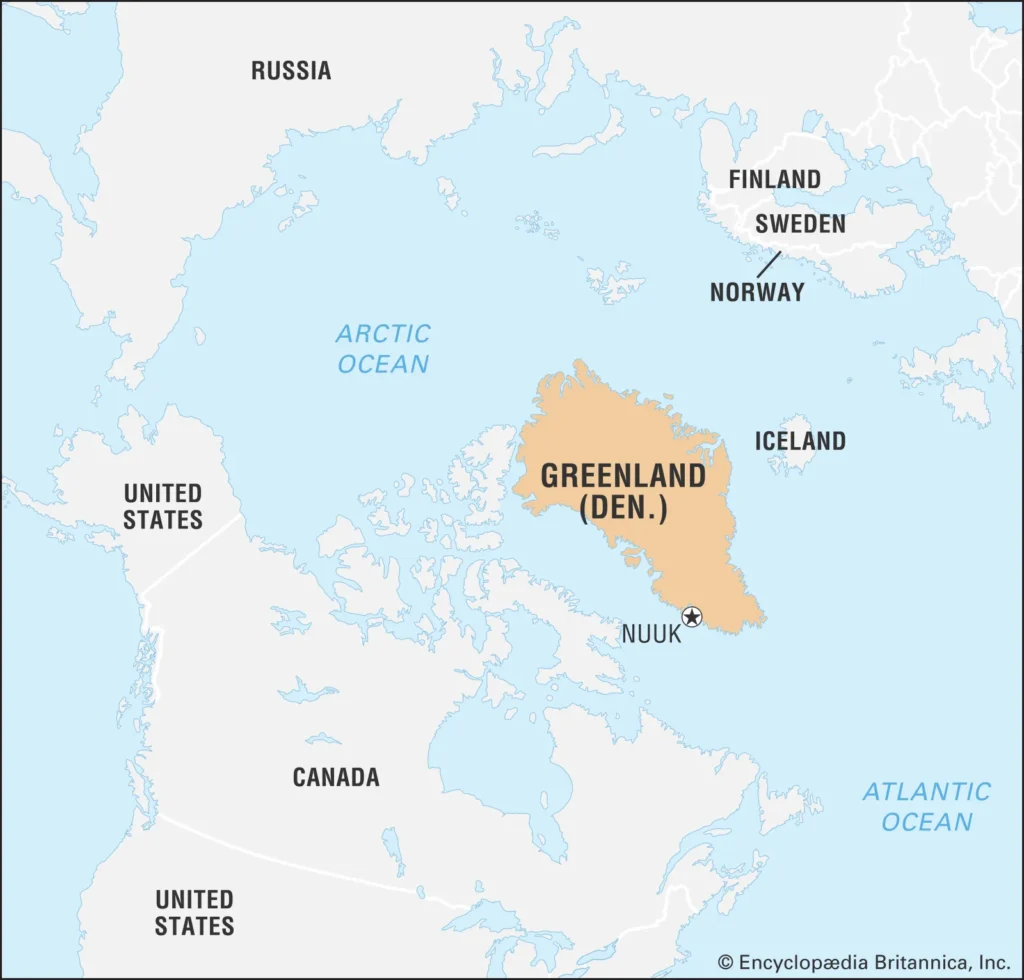
Greenland sits at the top of the world map — literally. It lies between North America and Europe, close to Arctic air and sea routes that matter for defence, shipping, and communications. As the climate warms and Arctic ice retreats, routes that were once blocked for much of the year become more navigable, and that changes the world’s logistics and security calculus.
The Arctic has also become a zone of growing competition between major powers. That doesn’t mean conflict is inevitable — but it does mean the region is watched more closely than it was a decade ago.
The US already has a major footprint there
A key detail often lost in the “annexation” headlines: the United States already has a long-running defence presence connected to Greenland. For Washington, the island is central to early-warning and surveillance needs in the far north. That’s one reason Greenland repeatedly appears in US national security conversations — regardless of which administration is in office.
In short: the argument from US strategists is less about “owning land” and more about ensuring control, access, and security coverage in an evolving Arctic.
Minerals and supply chains add a second layer
The Arctic is not only about geography. Greenland is often described as mineral-rich, with resources linked to modern supply chains — including materials used in electronics, defence technology, and clean energy infrastructure. As the US and Europe look to reduce dependence on single-country supply chains, resource security becomes part of the conversation.
That’s why “Greenland talk” tends to return during moments of geopolitical uncertainty: it bundles climate, trade, defence, and industrial strategy into one place.
Why Denmark and Greenland are pushing back so hard
Greenland is an autonomous territory within the Kingdom of Denmark, with its own government and leaders who are deeply sensitive to outside pressure. The leadership position has been consistent: Greenland is not for sale, and its future is for Greenlanders to decide. Denmark, meanwhile, is treating renewed annexation-style rhetoric as a direct challenge to sovereignty and alliance norms.
Reporting from Reuters notes Denmark’s prime minister urging Trump to stop “threats” over Greenland, while also emphasizing long-standing alliance ties. Separately, the UK’s Guardian reported Greenland’s prime minister calling for an end to “fantasies about annexation,” framing the issue as unacceptable and insisting on proper diplomatic channels.
So, is annexation actually likely?
On the evidence available right now, there is no clear path to annexation. International law, Danish sovereignty, Greenland’s autonomy, and alliance politics create major barriers. But that’s not the whole story. Even without formal annexation, big powers can still try to shape outcomes through economic leverage, defence arrangements, investment, or political pressure — and that’s exactly why both Denmark and Greenland respond quickly when the language shifts.
For readers watching this unfold, the most useful takeaway is this: Greenland has become a symbol of the next era of geopolitics, where climate change alters trade routes and security priorities, and where strategic resources matter as much as territory. That’s why a single headline can travel so far — and why leaders feel compelled to answer it.
Read more on Swikblog: Latest global explainers

Make Swikblog your go-to source on Google for reliable updates, smart insights, and daily trends.