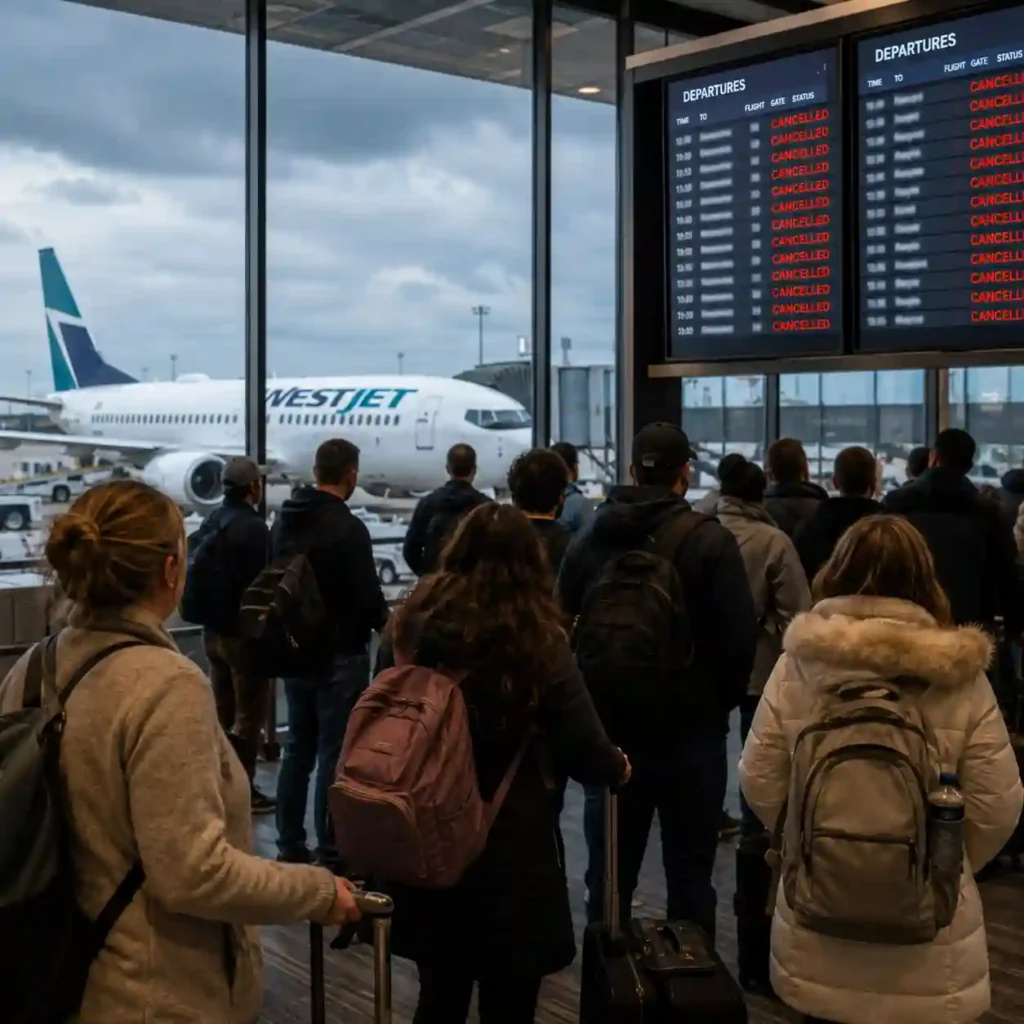

WestJet is facing fresh pressure in Canada as more passengers challenge the airline’s handling of cancelled flights and denied compensation claims. The dispute has moved beyond routine travel disruption, raising bigger questions about how airlines explain cancellations, how much detail passengers are entitled to receive, and whether Canada’s passenger-rights system is strong enough to hold carriers accountable.
The controversy centers on passengers who say they were delayed for many hours, rerouted through other cities, or forced into overnight travel plans after WestJet cancelled flights. In several cases, compensation claims were later rejected after the airline described the disruption as safety-related maintenance.
That explanation matters because Canada’s Air Passenger Protection Regulations allow compensation of up to CAD $1,000 for long delays or cancellations when the issue is within an airline’s control and not required for safety. When a disruption is classified as safety-related, airlines generally do not have to pay compensation.
The latest scrutiny has grown after flight records and passenger accounts raised questions about whether some cancellations were tied to last-minute aircraft swaps rather than sudden mechanical failures. For travelers, the difference is important: a safety issue can close the door on compensation, while an operational decision may leave the airline responsible for payment.
Passenger complaints put aircraft swaps in focus
One case involved a passenger returning from Los Cabos to Edmonton who said his direct WestJet flight was cancelled shortly before departure. Instead of flying home as planned, he and his partner were rerouted through Victoria, had to stay overnight, and arrived roughly 16 hours late.
After filing a compensation claim, the passenger said WestJet rejected the request and pointed to unscheduled maintenance required for safety. But flight data reviewed in public reporting suggested the aircraft originally scheduled for the route was replaced by another plane that had already been grounded. The cancellation followed around the same time as the aircraft change, while the originally assigned aircraft was reportedly used elsewhere.
That detail has become central to the debate. If an airline knows a replacement aircraft is not available or not fit to operate, passenger-rights advocates argue it becomes harder to describe the cancellation as a sudden safety event beyond compensation rules.
Other passengers have described similar experiences involving cancelled WestJet flights to vacation destinations including Montego Bay, Puerto Plata and Puerto Vallarta. Some said they lost vacation time, missed work, paid extra expenses or spent hours trying to get clear answers from the airline.
Several affected travelers also said they asked WestJet to explain the exact maintenance issue and when it was discovered, but did not receive enough detail to understand why their claims were denied.
Why the WestJet compensation dispute matters
The WestJet case has become a wider test of transparency in air travel. Passengers often receive short cancellation notices with broad language such as “maintenance” or “safety.” But when hundreds of dollars in compensation depend on that explanation, vague wording can leave travelers with little ability to judge whether the airline’s decision was fair.
Consumer advocates say airlines should be required to provide clearer timelines, including when a maintenance issue was first identified, which aircraft was affected, and why another aircraft could not be used without causing the cancellation.
Legal experts have also noted that simply applying a safety label may not be enough if records suggest the disruption was connected to scheduling, aircraft allocation or other operational choices. The key question is whether there was a direct cause-and-effect link between a genuine safety issue and the passenger’s cancelled flight.
The Canadian Transportation Agency has already launched an enforcement investigation linked to aircraft-swap concerns. The agency has not publicly ruled on the latest passenger claims, but the active review increases pressure on WestJet and other carriers to show how compensation decisions are being made.
WestJet has said aircraft swaps can be used to reduce disruption for the greatest number of guests across its network. Airlines often move aircraft around when schedules are tight, especially during busy travel periods, bad weather, crew limitations or maintenance backlogs.
However, critics argue that the issue is not the aircraft swap itself. The concern is whether passengers are being denied compensation after an operational aircraft decision is later presented as a safety-related cancellation.
The financial stakes are significant. Passenger-rights advocates estimate that avoiding compensation on a fully booked cancelled flight could save an airline tens of thousands of dollars, and in some cases much more when delays exceed nine hours.
What passengers should do after a cancelled flight
Travelers affected by a WestJet cancellation should keep all emails, text alerts, boarding passes, hotel receipts, meal receipts and screenshots from the airline app. Passengers can also save flight-tracking records showing aircraft changes, scheduled aircraft details and actual departure history.
When filing a claim, travelers should ask the airline to provide the specific reason for the cancellation, whether the issue was discovered before the aircraft was assigned, and whether the original aircraft was used on another route. These details may help determine whether the disruption was truly safety-related or connected to an operational decision.
Passengers can review official compensation guidance through Canada’s Air Passenger Protection Regulations before submitting or challenging a claim.
The WestJet dispute is now being watched closely because it could influence how Canadian airlines explain cancellations going forward. If regulators find that passengers were not given accurate or complete information, the case may push for stronger enforcement and clearer disclosure rules.
For WestJet, the challenge is no longer just about individual cancelled flights. It is about trust. Passengers want to know whether the reason given for a disruption matches what actually happened behind the scenes. Until regulators provide more answers, the compensation battle is likely to remain a major issue for Canadian travelers.

Make Swikblog your go-to source on Google for reliable updates, smart insights, and daily trends.