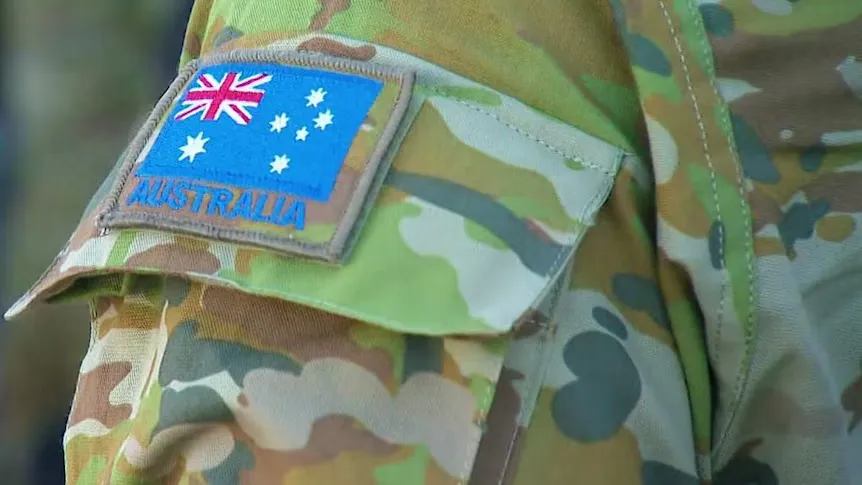

A veteran Australian special forces soldier has died during a night parachute training exercise at Jervis Bay Airfield, after a mid-air collision involving two highly experienced Army paratroopers.
The soldier has been identified as Warrant Officer Second Class Lachlan Muddle, aged 50, a long-serving member of the Australian Army’s Special Air Service Regiment. The accident happened on Monday evening during a specialist parachute training activity on the New South Wales South Coast.
Defence officials said both soldiers had already opened their parachutes when they collided several hundred feet above the ground while moving toward the drop zone. The exercise was being conducted in low-light conditions, and the soldiers were using night-vision equipment at the time.
After the impact, both paratroopers fell from height. Warrant Officer Muddle died from his injuries, while the second soldier, a sergeant from the Australian Defence Force Parachute School, survived with minor injuries and did not need hospital treatment.
Highly experienced soldier killed during specialist jump
Australian Army Special Operations Commander Major General Garth Gould said the two soldiers involved were not inexperienced trainees. Between them, they had completed several thousand jumps, making the fatal collision especially confronting for the military community.
Warrant Officer Muddle joined the Army in 1994 and spent most of his career serving in Special Operations Command’s Special Air Service Regiment. He was a highly qualified special forces sniper and military free-fall parachutist, with decades of service in one of Australia’s most demanding military units.
Major General Gould described him as a respected professional who would be remembered not only for his skill, but also for his humour and deep commitment to serving Australia.
The accident occurred at Jervis Bay Airfield, a location used for Defence training activities. Military free-fall parachuting is among the more complex and dangerous forms of training because soldiers must control their canopy, maintain separation from others, judge wind and altitude, and land accurately — often in darkness or challenging conditions.
Night parachute exercises add another layer of risk. Even with night-vision goggles and detailed planning, paratroopers must make rapid decisions while visibility is limited and the ground is approaching quickly. That is why investigators are expected to closely examine the spacing between jumpers, the approach to the drop zone, weather conditions, communication procedures and equipment use.
The Department of Defence has said further updates will be provided when possible. At this stage, officials have not confirmed whether parachute training at the site will be paused while the incident is examined.
Second fatal ADF parachute incident in two years
Warrant Officer Muddle’s death is the second fatal parachute-related Australian Defence Force training accident in two years.
In March 2024, Lance Corporal Jack Fitzgibbon died after being injured during a routine parachute training activity at RAAF Base Richmond, about 50 kilometres north-west of Sydney. Fitzgibbon, 33, was the son of former Labor defence minister Joel Fitzgibbon. He received first aid at the scene and was taken to Westmead Hospital in a serious condition before later dying from his injuries.
That incident led to a temporary pause in parachute training and investigations by the New South Wales Coroner and the Inspector-General of the Australian Defence Force. Defence later announced the staged return of parachute training, saying military training involves inherent risk but must be managed through strong safety systems. The official Defence update on the return to parachute training can be read here.
The latest tragedy is likely to bring renewed attention to safety inside high-risk military training programs. While special operations soldiers train for dangerous real-world missions, every training death raises questions about whether procedures, oversight and risk controls are strong enough.
Australia’s Defence community has faced several serious training accidents in recent years. In October 2025, an Army soldier died and two others were injured in a vehicle rollover at the Townsville Field Training Area in north Queensland. Two soldiers were also killed in a truck rollover south of Townsville in August 2021. Defence was later charged in relation to alleged breaches of federal workplace health and safety laws over that 2021 incident.
Read More
Federal minister Mark Butler described the Jervis Bay death as a “very deep tragedy”, reflecting the seriousness of the loss for the soldier’s family, colleagues and the wider military community.
For the Special Air Service Regiment, Warrant Officer Muddle’s death represents the loss of a soldier with more than 30 years of service and specialist expertise built across decades. His career placed him among Australia’s most highly trained military personnel, making the circumstances of the accident even more sobering.
Swikblog has also covered other emergency incidents in the Jervis Bay region, including a fatal drowning at Green Patch Beach. You can read that report here: Man, 34, Drowns at Green Patch Beach in Jervis Bay.
The investigation into the parachute collision will now determine how two experienced paratroopers came together in the air after canopy deployment. Until those findings are released, the incident stands as another painful reminder that some of the most dangerous moments in military service can occur not on the battlefield, but during the training required to prepare for it.

Make Swikblog your go-to source on Google for reliable updates, smart insights, and daily trends.