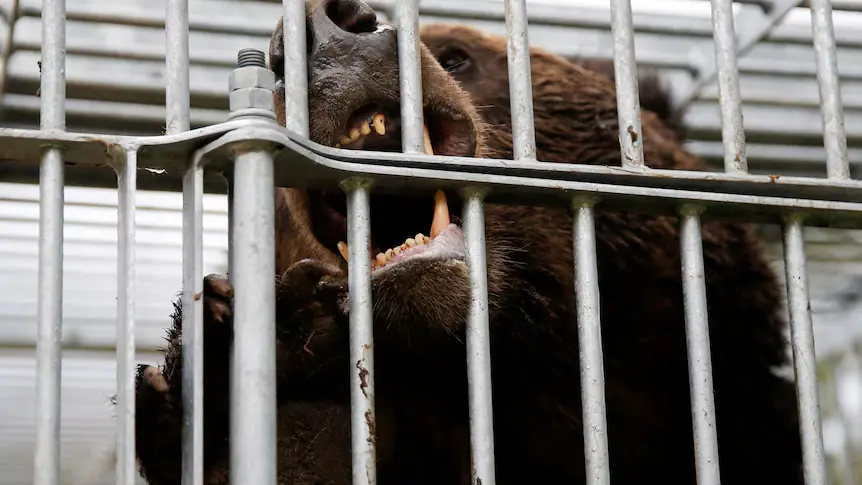

Japan has confirmed its first deadly bear attack of 2026, putting rural communities back on alert after a record year of fatal encounters between people and bears.
The confirmed case involves a 55-year-old woman whose body was found on April 21 in Iwate prefecture, a northern region where bear sightings have become increasingly common. Authorities later concluded that she had been killed by a bear, making it the country’s first officially confirmed fatal bear attack of the year.
The death comes at a sensitive moment for Japan. Bears are emerging from winter hibernation, and several prefectures are already reporting a sharp rise in sightings. For residents in mountain towns and farming communities, the danger is no longer seen as a rare wilderness problem. It is becoming part of daily life.
Japan recorded 13 bear-related deaths in 2025, the highest annual toll on record and more than double the previous peak of six. More than 200 people were also injured last year, turning bear management into a national safety issue rather than a local wildlife concern.
Two more deaths are now being examined after human remains were discovered this week in northern and mountainous parts of the country. Police have not officially confirmed those cases as bear attacks, but Japanese media have reported possible links to bears.
One body was found in another area of Iwate, while another was discovered in a forested part of Yamagata prefecture. Local reports identified one of the victims as 69-year-old Chiyoko Kumagai, who had reportedly gone into a mountain forest to collect edible wild plants before she went missing.
Search teams later found her body near the area where her car had been parked. Reports said she had injuries to her face and head that appeared consistent with an animal attack. Following the discovery, local officials said hunters would begin patrolling the surrounding forest.
Why Japan’s bear encounters are becoming more dangerous
The rise in bear attacks is being driven by a mix of population growth among bears, climate pressure, changing food supplies, and Japan’s shrinking rural population.
Many villages near forests and mountains have fewer residents than they once did. As farmland is abandoned and human activity declines, bears are moving closer to places where people still live, farm, walk, shop, and travel. That overlap has created more frequent and more unpredictable encounters.
Japan’s geography adds to the challenge. Mountains and forests make up around 80 percent of the country, giving bears large areas to live and breed. But as their numbers increase, some animals are being pushed out of traditional habitats and closer to towns.
A 2025 government report estimated that Japan’s brown bear population had doubled over three decades to roughly 12,000. Brown bears are found mainly on Hokkaido and can weigh up to half a tonne. Asian black bears, which are smaller but more widespread, have also increased, with around 42,000 estimated on Honshu.
Black bears are responsible for most attacks in Japan because they live across large parts of the main island, including regions where human settlements sit close to forested hills.
Food supply is another major factor. Bears usually rely on natural foods such as acorns, nuts, deer, and boars. When forest food is scarce, they travel farther and may enter farms, orchards, and residential areas. Poor harvests in 2025 pushed more bears toward villages in search of fruit, crops, and garbage.
Experts have also warned that younger bears can lose their fear of people after repeated exposure to human food sources. Once that happens, the risk of aggressive encounters increases, especially when residents surprise a bear at close range.
Last year, bears were reported near schools, inside homes, around hot spring resorts, and even in supermarkets. The situation became serious enough that Japan deployed troops in some regions to help local authorities trap and hunt dangerous animals.
Authorities increase patrols as sightings surge
Japan culled more than 14,000 bears between April 2025 and March 2026, almost three times the previous year’s total. Even so, sightings have continued to rise this spring.
Reports from Miyagi, Akita, and Fukushima suggested that April sightings were around four times higher than a year earlier. That has raised concern that 2026 could bring another difficult season for rural areas, even though forecasts for nuts and other natural foods are expected to be better than last year.
Local governments are urging residents to avoid entering forests alone, especially early in the morning or near dusk when bears are more active. People are also being advised to carry bells or other noise-making devices, secure food waste, avoid leaving fruit on trees near homes, and report sightings quickly.
The confirmed death in Iwate shows how quickly a familiar rural activity can turn dangerous. For many elderly residents, gathering wild plants in spring is a long-standing tradition. But in areas where bear sightings are rising, even routine trips into the forest now carry greater risk.
Read More
Wildlife officials face a difficult balance. Bears are part of Japan’s natural ecosystem, but growing populations and closer contact with people have made public safety a more urgent priority. The challenge is no longer only about protecting wildlife. It is also about helping communities adapt to a changing landscape.
Japan’s Ministry of the Environment provides official information on wildlife management and conservation policies through its official environment portal.
As bear sightings continue to rise nationwide, residents in northern and mountain regions are likely to face more warnings, patrols, and restrictions in the months ahead. For more coverage on wildlife, climate, and environmental stories, visit Swikblog.

Make Swikblog your go-to source on Google for reliable updates, smart insights, and daily trends.