
If you have No Name frozen beef burgers in your freezer, it’s worth checking the package carefully today. The Canadian Food Inspection Agency (CFIA) has issued a Canada-wide recall for certain No Name brand beef burgers due to a possible risk of E. coli contamination. Importantly, food contaminated with E. coli may not look or smell spoiled — but it can still make you sick.
For the most up-to-date recall details and product photos, refer to the official CFIA recall notice.
Which No Name burgers are recalled?
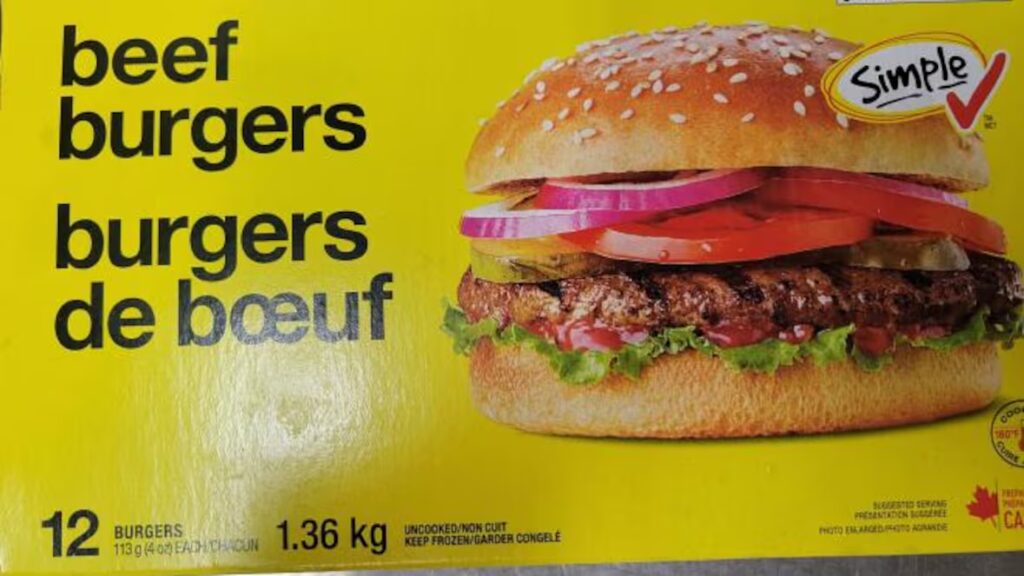
The recall applies to No Name brand Beef Burgers sold nationally in 1.36 kg boxes. Check your package for the following identifiers:
- Product: No Name Beef Burgers (frozen)
- Package size: 1.36 kg
- Best-before date: May 5, 2026 (often printed as 2026 MA 05)
- UPC: 0 60383 37333 7
According to the CFIA, the recall was triggered by test results, and no illnesses have been reported in connection with this product at the time of the notice. The agency says it is conducting a food safety investigation and that this may lead to additional recalls.
What to do if you bought them
If your burgers match the details above, the safest steps are straightforward:
- Do not cook or eat the burgers.
- Bag them and remove them from your freezer to prevent cross-contamination.
- Dispose of them safely, or return them to the store where they were purchased (follow the retailer’s return instructions).
- Clean and sanitize any surfaces, containers, or hands that may have touched the package (especially if the box or burgers were handled).
If you’re unsure whether your package is affected, compare it against the official details in the CFIA listing, which may include photos of the best-before code on the packaging.
E. coli symptoms to watch for
The CFIA warns that E. coli (including E. coli O157:H7) can cause illness even when the food looks normal. Symptoms may appear after exposure and can range from mild to severe.
- Nausea and vomiting
- Mild to severe abdominal cramps
- Watery diarrhea that can become bloody
In severe cases, E. coli infection can lead to serious complications, including kidney damage. If anyone in your household becomes ill after consuming potentially affected food, contact a healthcare professional promptly—especially for young children, older adults, pregnant people, or anyone with a weakened immune system.
Why cooking isn’t the “fix” for a recalled product
Many people assume they can “cook it extra” and be fine. But when a product is under active recall, public health agencies advise consumers to not rely on cooking alone as a solution. The safest approach is to not consume the product at all and follow recall instructions (return or dispose). Recalls are issued because the product has been identified as potentially unsafe for consumers, and the goal is to remove it from homes and stores.
How to stay on top of future recalls
If you want to keep an eye on food recalls and alerts, you can check the Government of Canada’s recall portal regularly: Recalls and safety alerts. The CFIA notes that investigations can expand and additional products may be added, so it’s worth checking if you’ve purchased related items.
Bottom line: if you have No Name frozen beef burgers in a 1.36 kg box with best-before May 5, 2026 and UPC 0 60383 37333 7, don’t eat them — return them or throw them out, and monitor for symptoms if anyone may have consumed the product.

Make Swikblog your go-to source on Google for reliable updates, smart insights, and daily trends.