
By Swikriti • Updated: January 14, 2026
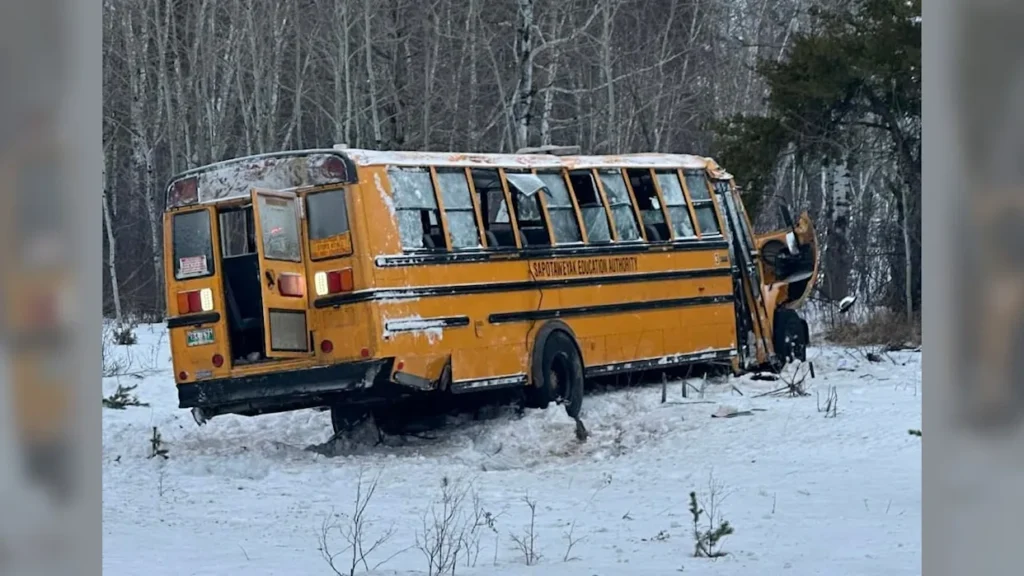
A school bus carrying students from Sapotaweyak Cree Nation rolled over on an icy stretch of Highway 10 in rural Manitoba this week, sending 14 high school students and the adult driver to hospital and leaving four people with significant but non-life-threatening injuries, according to police and multiple Canadian news reports.
The crash happened near Swan River, roughly northwest of Winnipeg, as the bus travelled from Sapotaweyak Cree Nation to schools in the Swan River area. Families rushed to the scene and to local hospitals as updates spread through the community—relieved, many said, that no one was killed.
What authorities say happened
The RCMP said initial information suggests the driver lost control while attempting to pass another bus on a slippery, icy roadway. Forensic collision experts are investigating, and officials have urged patience as investigators confirm the factors that led to the rollover.
Police and health officials reported that four people—three teenagers and one adult—were transported with “significant” injuries, while others were treated for less severe injuries and evaluated at a local health facility. Some coverage described extensive damage to the bus after it left the roadway and rolled.
For readers looking for primary updates and confirmed information, local reporting has cited police statements and briefings. You can also follow mainstream reporting from Global News and Indigenous-led coverage via APTN News.
A mother’s message: “A long way to recovery”
In an interview carried by CBC, a Sapotaweyak Cree Nation mother described the fear of learning about the crash and racing to find her daughter. She said the 16-year-old suffered serious injuries including broken bones, and that recovery could take weeks.
The story echoed what many parents say after crashes involving school transportation: the immediate relief that children are alive, followed by the reality of injuries, pain, and a long road back to normal routines. Several families stayed close to the hospital in Swan River as students were assessed and treated.
While the investigation continues, the incident has already sparked renewed questions about school bus safety—especially for routes that require highway travel in winter conditions.
Seatbelts on school buses: why the debate is resurfacing
The mother told CBC she wants to see seatbelts added on school buses, calling students “precious cargo” and arguing that safety should match the risks of long daily highway trips—particularly when roads are icy.
A teacher who witnessed the aftermath told reporters he has rarely, if ever, seen seatbelts on school buses over decades in education, and questioned whether this crash should prompt a rethink—especially when rollovers can throw passengers against hard surfaces inside the cabin.
Manitoba Premier Wab Kinew described the crash as a “very scary situation” and said he is open to discussions about seatbelt requirements, while emphasizing that officials need to understand what happened in this case before proposing the right solution.
What parents can do right now
- Check for updates from your local school division and police (they’ll confirm timelines, road closures, and support services).
- Ask the school about winter driving protocols: route changes, speed guidelines, and decisions to cancel service during freezing rain.
- If your child is anxious after the incident, request school-based supports (many divisions deploy counsellors after traumatic events).
- Follow verified reporting for confirmed injury updates and investigation findings—avoid rumors on social media.
What happens next in the investigation
RCMP and collision reconstruction specialists will typically examine vehicle condition, road surface, visibility, speed, driver decision-making, and the sequence of events leading into the rollover. In this case, investigators are also expected to review the passing maneuver described in early reports and the role winter road conditions may have played.
For families, the next phase is often a mix of medical follow-ups, physiotherapy, school accommodations, and emotional recovery. Communities may also push for changes—whether that means updated policies around winter cancellations, more training, additional safety equipment, or highway-specific precautions for student transport.
As more details are confirmed, this story may evolve into a broader conversation about rural student transportation across the Prairies, where long distances and harsh winters can turn routine commutes into higher-risk journeys.
You May Like
What’s known so far, why press groups are alarmed, and what could happen next as questions mount over federal actions involving a major newsroom.
Read more →

Make Swikblog your go-to source on Google for reliable updates, smart insights, and daily trends.