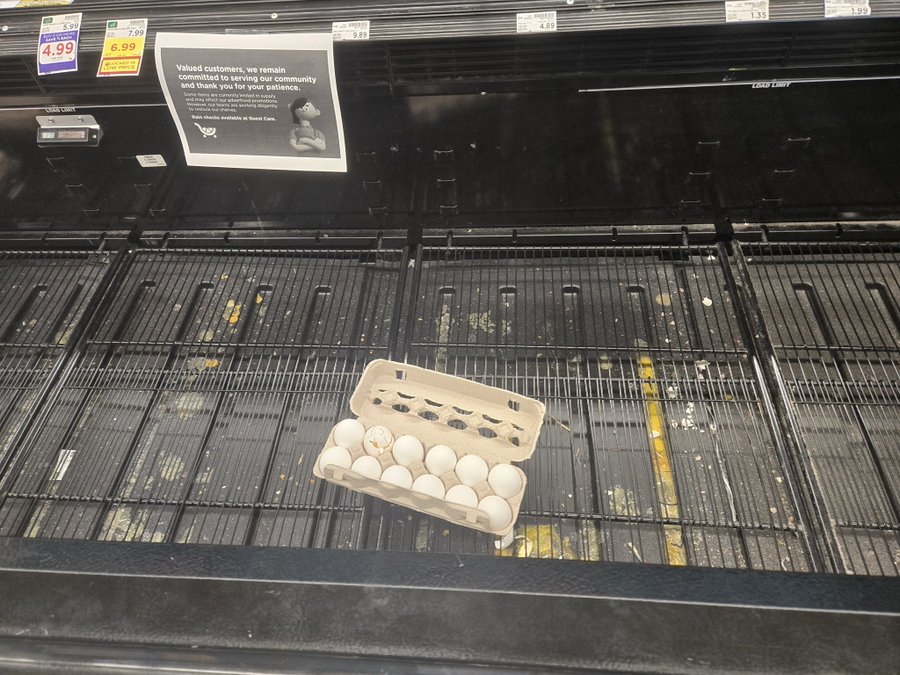
Ahead of a winter storm watch, a familiar scene is spreading across American grocery aisles: carts stacked with staples, shelves thinning fast, and shoppers trying to outrun ice, cold and the threat of power outages.
If your local supermarket looks unusually busy right now, you’re not imagining it. In the hours before a winter storm, America’s supply chain doesn’t usually “break” — but shopping behavior often does. A single forecast update can compress days of routine buying into one frantic afternoon, turning ordinary weekend errands into a sprint for pasta, bread, canned soup and bottled water.
In central North Carolina, one local report described a pre-storm rush across the Triangle, with shoppers making last-minute grocery runs as icy conditions and an arctic blast were expected to settle in. Customers at a Raleigh-area supermarket said some pantry items had already been picked clean: pasta cleared out, certain canned soups gone, and bread running short. Another shopper said she found most essentials, but bottled water had vanished.
Hundreds of miles north, the same pattern has been showing up in winter-storm coverage focused on New England, including Worcester, Massachusetts: a surge of shoppers, quick-selling basics, and the sense that “everyone came at once.” These bursts can look dramatic on camera — bare shelves where bread or milk usually sits — but they’re often less about true shortages and more about timing. Stores stock to meet normal daily demand. When demand triples for a few hours, the shelf goes empty long before the next pallet arrives from the back room.
Why the same items disappear first: bread and bakery goods have limited daily production; bottled drinks are bulky and may be stored off-site; and pantry staples are easy to grab in quantity. Add batteries, flashlights and ice melt, and a “storm list” forms quickly in shoppers’ heads.
The biggest driver is rarely snow itself. It’s the fear of being stuck — or being cold — without power. When forecasters warn of ice, freezing rain, or a rapid temperature drop, shoppers hear a different message: downed tree limbs, slippery roads, and the possibility that even a short outage could turn into a long, uncomfortable night. In areas where homes rely on electric stoves or electric heat, the stakes feel higher. Stocking up becomes a form of insurance.
That anxiety explains why “storm shopping” often includes two different kinds of purchases: food you can cook, and food you can eat without cooking. Non-perishables rise first — pasta, rice, canned soups, peanut butter — followed by items that keep morale up during a forced stay at home: snacks, coffee, hot chocolate, pet food, baby supplies. Even when people plan to cook, they often buy as if they might not be able to.
Small businesses are adjusting to that reality in creative ways. In the Triangle, the restaurant Cheeni introduced snow-day meal kits — prepared food meant to help families eat well even if they don’t have ingredients, don’t want to cook, or can’t cook due to outages. The owner described the kits as both a community service and a lifeline: a winter storm can force restaurants to close for two or three days, and in a slow month, that lost revenue can be the difference between stability and crisis.
📍 New York
— Anadolu Ajansı (@anadoluajansi) January 24, 2026
📍 Washington
ABD'nin büyük bir kesiminde beklenen yoğun kar ve dondurucu soğuk öncesi süpermarketlerde rafların çoğu boşaldı https://t.co/xO2bkuuYP1 pic.twitter.com/EMI9pRowLs
The result is a storm economy that moves faster than the weather itself. Grocers race to restock and reroute shipments; restaurants tweak menus and prep meals that travel well; families charge devices and fill bathtubs “just in case.” And the visual cues — salt trucks staging on overpasses, empty bread racks, long checkout lines — amplify the sense that something big is coming, even when the exact track and intensity remain uncertain.
There’s a practical way through the rush: shop earlier if you can, aim for substitutes, and focus on what matters most — warmth, light and safe food. Public safety guidance generally stresses staying off roads once icing begins, keeping devices charged, and having supplies for at least a couple of days. For storm preparedness basics, the US government’s winter weather guidance is a solid starting point at Ready.gov.
The empty shelves, in other words, are less a mystery than a mirror. When winter weather threatens, people don’t just prepare for snow — they prepare for uncertainty. And in that moment, a grocery aisle becomes a weather map: the faster it empties, the more seriously a community is taking what could come next.

Make Swikblog your go-to source on Google for reliable updates, smart insights, and daily trends.