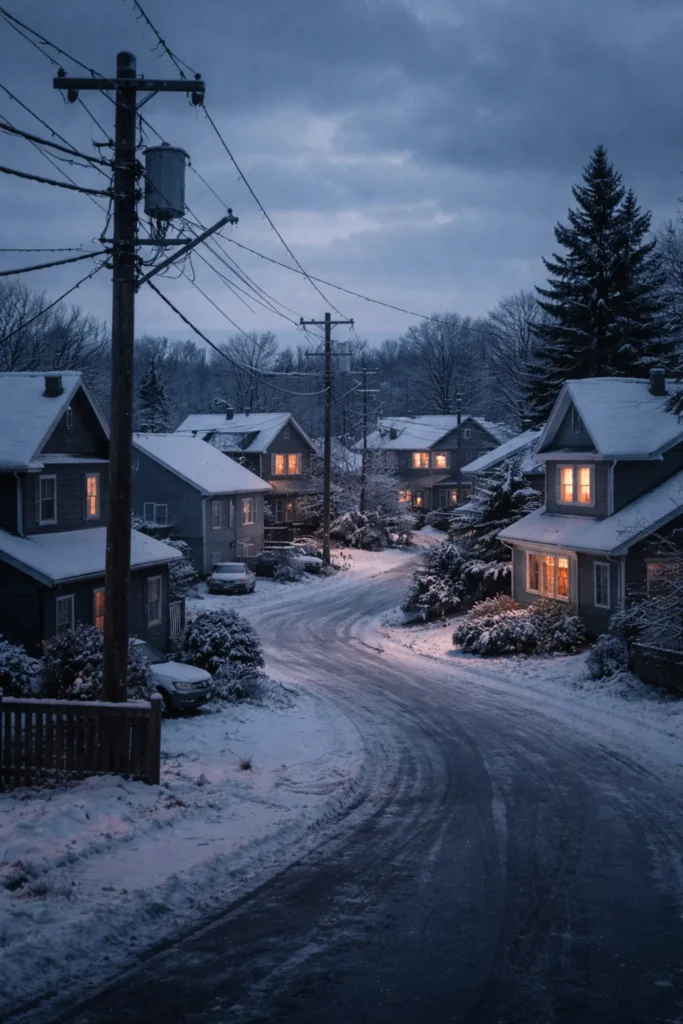

Rotating power outages are rolling across Newfoundland as electricity generation dips and the grid strains to keep up with demand. For many households, the first sign is sudden flickers, brief dropouts, or a neighborhood-wide cut that returns after a short interval, only to shift elsewhere. The goal of these controlled “rotations” is to protect the wider system by reducing load in smaller blocks, rather than risking a longer, larger disruption.
In plain terms, rotating outages are a pressure-release valve. When available generation falls or demand climbs too quickly, utilities may temporarily shut off power to selected areas for a limited time, then restore it and move the outage to another circuit. It is disruptive, but it is designed to stabilize the network and prevent equipment from being pushed beyond safe operating limits. That distinction matters: rotations are intentional, managed, and reversible, even if they still feel sudden on the ground.
What’s driving the situation is a mismatch between supply and demand. A generation drop can happen for several reasons, including operational constraints, equipment issues, or reduced output from key sources. When that drop lands during a period of high winter demand, the margin disappears fast. The result is a system that needs immediate load-shedding to stay balanced, which is where rolling cutbacks come in.
Residents are also being urged to conserve power where possible, not because every home’s usage is the sole cause, but because small reductions across thousands of customers add up quickly. Cutting peak demand can reduce the frequency and duration of rotations, and it can help the system recover faster once generation stabilizes. Practical conservation steps include turning down thermostats a notch, avoiding large appliance use during peak hours, switching off non-essential lights, and unplugging devices that draw standby power.
If you’re wondering whether this is the same kind of event as the province’s most memorable large-scale outage, it helps to separate headlines from mechanics. Rotating outages can be part of a broader “power emergency” posture, but they are not automatically a repeat of a worst-case scenario. They reflect a system under stress that is being actively managed. That said, a managed situation can still evolve quickly, so it is smart to prepare as if more interruptions are possible.
The most useful thing you can do right now is stay connected to official updates and local alerts so you can time essential tasks. Utilities may provide outage maps, advisory notices, and conservation guidance as conditions change. If you need a primary source for operational updates and customer guidance, check Newfoundland and Labrador Hydro’s public information page through Newfoundland and Labrador Hydro.
At home, treat this like a short-notice disruption plan rather than a one-off inconvenience. Charge phones and power banks when electricity is on, and keep a flashlight or headlamp in an easy-to-reach spot. If you rely on electric heat, consider how quickly your indoor temperature drops and close interior doors to retain warmth. Keep extra blankets handy, and avoid opening the fridge and freezer more than necessary. A closed refrigerator can hold safe temperatures for several hours, and a full freezer holds longer, but frequent door-opening shortens that window.
For people with medical devices, mobility needs, or care responsibilities, rotating outages can be more than inconvenient. If you have a device that depends on power, make sure backup batteries are charged, and keep key numbers accessible in case you need assistance. It can also help to check on neighbors who live alone, older adults, and anyone new to the area who may not be familiar with how rotations are handled locally.
Businesses, meanwhile, often feel the knock-on effects immediately. Restaurants, small retailers, and service providers can lose sales in a short interruption, and the uncertainty makes staffing and deliveries harder. If you run a business, consider posting a simple update on your storefront and social channels so customers know what to expect. If you’re a customer, call ahead before making a trip and assume traffic lights and card machines may be affected in certain pockets.
It’s also worth remembering that power interruptions ripple into communications. Wi-Fi routers, home internet modems, and sometimes local cell coverage can weaken if backup systems are strained. If you need to keep in touch, use low-bandwidth options when possible and save battery by reducing screen brightness and turning off non-essential app notifications.
Looking for broader context and ongoing coverage on major public-service disruptions? You can follow updates and explainers on Swikblog as the situation develops and more details emerge about the scale of rotations, the areas most affected, and what conservation measures are making the biggest difference.
For now, the key points are straightforward: rotating outages mean the system is being managed under strain, a drop in generation has tightened the margin, and conservation can help reduce pressure at peak times. If you plan for brief cuts, keep devices charged, protect heat where you can, and track official updates, you’ll be in the best position to ride out the rotations with minimal disruption.

Make Swikblog your go-to source on Google for reliable updates, smart insights, and daily trends.