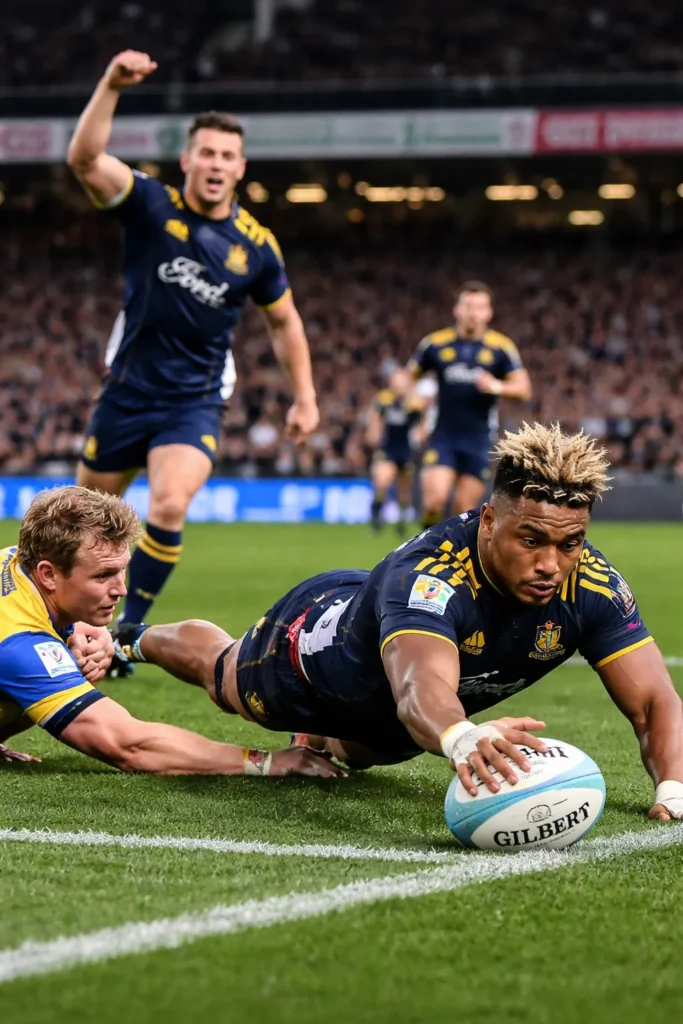

The Highlanders found their spark again on Saturday with a gripping 39-31 win over the Western Force at Forsyth Barr Stadium, producing the kind of fast, fearless rugby that had been missing during a difficult stretch. After back-to-back defeats and a chaotic week around the club, the Dunedin side responded with energy, invention and enough late composure to close out one of their most entertaining victories of the Super Rugby Pacific season.
For long spells, this felt less like a routine regular-season fixture and more like a wild momentum swing that refused to settle. Both teams scored five tries, the lead changed hands repeatedly, and the Highlanders were still forced to finish strongly after playing the final minutes with 14 men. In the end, though, their sharper attacking edge and ability to create something from broken play made the difference.
The result was exactly the kind of lift the Highlanders needed. They had been hit hard in recent weeks, including a bruising defeat in Brisbane, and there was genuine pressure on this performance. Instead of tightening up, they opened the game up. The crowd of 13,570 got a match full of ambition, pace and chaos, and the home side finally gave their supporters something to celebrate again.
Related on Swikblog: Follow more global sports and breaking match coverage on Swikblog.
The first-half story was strange, loose and full of missed control
The Highlanders began with real intent and looked the more dangerous side early. Their first try came after a sequence that summed up the game’s unpredictability. A bouncing ball created opportunity, Cameron Millar regathered, the move stayed alive through several pairs of hands, and Veveni Lasaqa ran a sharp support line to finish. It was clever, instinctive rugby and gave the home side a deserved start.
The second try was even better. Jonah Lowe, continuing an excellent run of form, collected possession out wide with plenty still to do and turned it into a winger’s finish from a centre’s jersey. He shrugged off one challenge, accelerated through space and beat the cover to score from distance. It was the kind of individual moment that immediately lifted the stadium and suggested the Highlanders might run away with the contest.
But this was never going to be that simple. The Force offered relatively little for parts of the opening half, yet they remained ruthlessly efficient when chances arrived. Their lineout platform caused the Highlanders repeated trouble, and Vaiolini Ekuasi got the visitors moving with a close-range score. The lineout would remain a problem area for the Highlanders all afternoon, and it nearly cost them the match.
Even with the Highlanders carrying more attacking threat, the Force found points at the right moments. A second lineout-based try kept them close, then came the most frustrating sequence for the home side. A loose kick led to a counter, Ben Donaldson cut through with a gliding run, and Hamish Stewart finished to give the Force an unlikely 21-17 halftime lead. It was the sort of scoreboard that left the Highlanders with plenty of regret. They had looked more dangerous, but their errors and set-piece issues let the visitors stay alive.
The Highlanders’ best rugby arrived when the pressure climbed
What followed in the second half was the most encouraging part of the Highlanders’ afternoon. Rather than forcing miracle plays, they trusted their speed and shape. Under a penalty advantage, Jacob Ratumaitavuki-Kneepkens threaded through a clever grubber and Lowe read it perfectly, gathering to score his second try and push the Highlanders back in front.
From there, the home side started to look like a team enjoying itself again. Quick hands and confident movement created the next opening, and Caleb Tangitau did the rest. Given space 15 metres out and a defender to beat, he finished with the kind of certainty that top-class wings are expected to show. Suddenly it was 29-21, and the Highlanders had the match back on their terms.
Still, the Force would not disappear. They returned to the lineout and struck again, this time through prolific flanker Carlo Tizzano, to cut the margin and keep the final quarter tense. When former All Blacks wing George Bridge finished a sweeping counterattack to nudge the Force back in front, the stadium had another sharp intake of breath. The Highlanders had done so much right and were suddenly behind again.
That moment could have broken them. Instead, it sparked their best response of the day. Jona Nareki lit up the right edge with a blistering chip-and-chase that turned defence into attack in seconds. The initial move was stopped just short, but the pressure remained. With another advantage in hand, Ratumaitavuki-Kneepkens showed his touch once more, dropping a delicate kick into space for Tangitau to gather and score his second. It was imaginative, composed and exactly the right decision in a high-pressure moment.
The standout names told the story of the win
Lowe and Tangitau each crossed twice, and both felt central to everything good about the Highlanders’ attack. Lowe’s finishing was superb, while Tangitau brought the kind of cutting edge that can change a match in one stride. Timoci Tavatavanawai again delivered the surging carries and highlight-reel power that have become part of the Highlanders’ identity, and the pack had major contributions from Ethan de Groot and Lasaqa.
Millar added key points from the tee with three conversions and a penalty, while Reesjan Pasitoa sealed the victory with a late penalty that finally gave the Highlanders breathing room. It mattered because this was not a clean, polished performance from start to finish. The lineout was poor for stretches, the defensive discipline wobbled, and the match remained alive far longer than it should have. But there was enough character, enough attacking quality and enough nerve to get the result.
The final scoreline captured the spirit of the afternoon. Highlanders 39, Force 31. Not perfect, not calm, and not always under control, but full of life. After a rough patch, the Highlanders needed a response more than they needed style points. They got both.
For supporters in Dunedin, that was the real reward. This was a match with tries, momentum swings, individual brilliance and late tension, the exact opposite of a forgettable grind. The Highlanders left the field having bounced back in the most convincing way possible: not by surviving, but by playing rugby bold enough to win an emotional, high-scoring contest.
You May Also Like
Super Rugby Pacific has the latest competition coverage, fixtures and team updates.

Make Swikblog your go-to source on Google for reliable updates, smart insights, and daily trends.