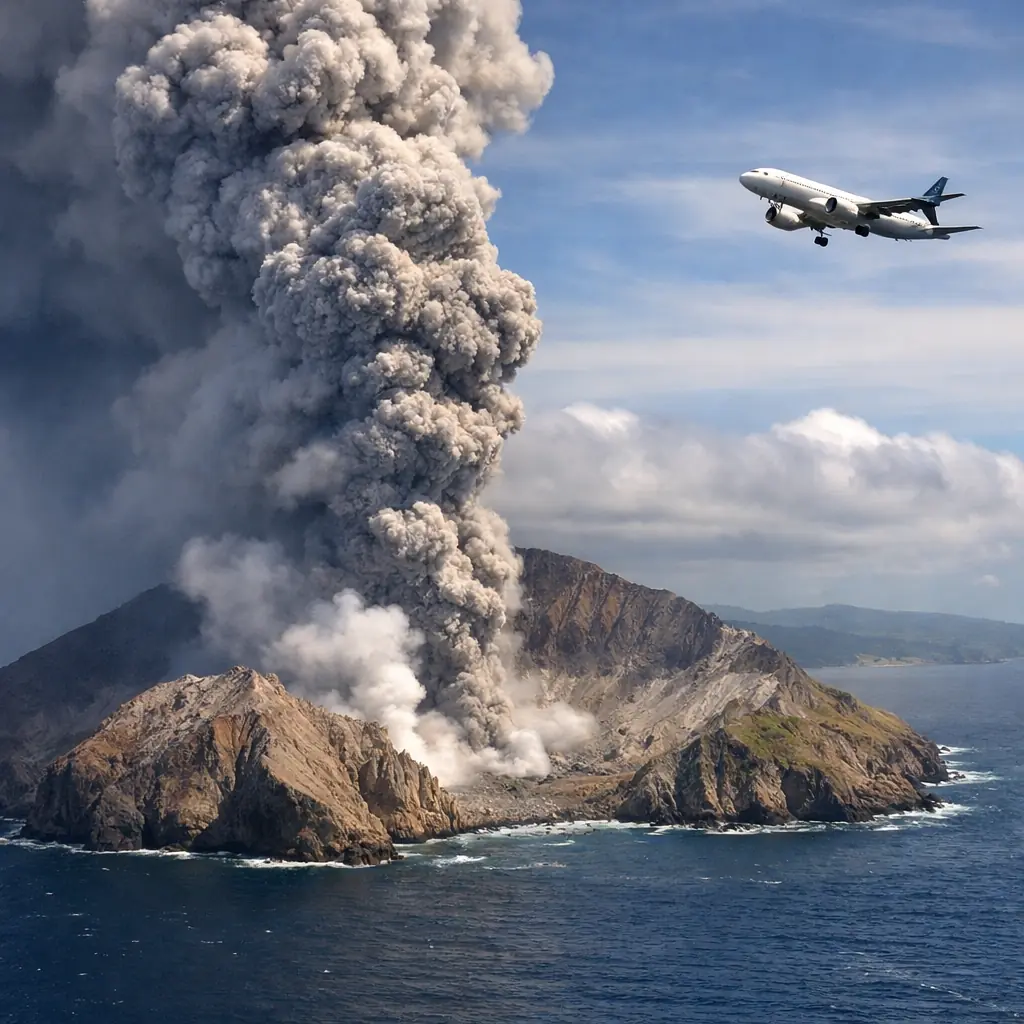

Air travel in New Zealand faced sudden disruption after an ash cloud from Whakaari / White Island forced Air New Zealand to cancel 19 flights in and out of Tauranga Airport. The cancellations came after volcanic activity on the island increased, sending ash into flight paths used by aircraft operating in the Bay of Plenty region.
The airline confirmed that safety concerns around volcanic ash in the airspace led to the decision to suspend services temporarily. Volcanic ash poses a serious threat to aircraft engines and onboard systems, which is why even a weak eruption can trigger widespread flight cancellations.
19 Flights Cancelled as Ash Cloud Reaches Flight Paths
Air New Zealand said the ash cloud from Whakaari was impacting aviation routes near Tauranga, forcing the airline to cancel 19 scheduled flights. The disruption affected both arrivals and departures, leaving many passengers stranded or forced to rebook.
Regional air services are vital for Tauranga and the wider Bay of Plenty, connecting the region with major cities across New Zealand. Because of limited daily services compared to larger airports, cancellations can quickly create travel backlogs.
According to the Tauranga Airport website, flights were still listed as cancelled as of 4pm, indicating the disruption continued throughout the day.
Air New Zealand Responds to the Situation
Air New Zealand’s chief safety and risk officer Nathan McGraw said the airline was closely monitoring the situation and would reassess conditions later in the afternoon.
“The safety of our customers and crew is our priority, and we are closely monitoring the situation,” McGraw said.
He added that affected customers would be rebooked onto the next available service so they could reach their final destinations safely.
Passengers were advised to regularly check the airline’s mobile app or official website for the latest updates regarding flight schedules and rebooking options. Travelers can monitor updates through the Air New Zealand website.
Volcanic Alert Level Raised as Activity Increases
Scientists monitoring Whakaari reported an increase in volcanic activity, prompting authorities to raise the volcanic alert level from 2 to 3. At the same time, the aviation colour code was upgraded from yellow to orange, signalling an elevated risk to aircraft operating near the area.
Earth Sciences New Zealand said steam and gas plumes had been visible from the Bay of Plenty coastline since late last week. More recently, pilots reported seeing ash emissions coming from the volcano’s main vent.
The eruption was described as a weak, non-explosive event, but even minor ash emissions can affect aviation operations. Images shared with scientists showed ashfall on the main crater floor, although there were no clear signs of major vent changes or explosive rock eruptions.
Gas Emissions and Satellite Monitoring
Scientists also detected small amounts of volcanic sulphur dioxide gas using the TropOMI satellite sensor. These readings suggested that volcanic activity had increased slightly, although the eruption remained relatively small.
Monitoring Whakaari is challenging because there are currently no sensors directly on the island. As a result, scientists rely on remote cameras, satellite imagery, and occasional observation flights to track changes in activity.
Authorities said a gas-measuring and observation flight would be conducted as soon as weather conditions allowed, which would help provide a clearer picture of the volcano’s behavior.
Risk to Mainland Remains Low
Despite the eruption, experts said the chances of significant ashfall reaching the mainland remain low. With the current wind direction and forecast conditions, only minute traces of ash could potentially reach the Bay of Plenty coast.
Even if ash reaches land, scientists say it is unlikely to be noticeable at ground level.
However, the risk for aircraft remains much higher because ash suspended in the atmosphere can cause serious damage to engines and reduce visibility for pilots.
Volcano Could Escalate Without Warning
Scientists warned that volcanic activity at Whakaari could escalate with little or no warning. If the activity intensifies, it would mainly affect the crater floor and the immediate area surrounding the island.
Because monitoring relies heavily on remote systems, cloud cover and weather conditions can sometimes limit visibility from cameras and satellites. Forecast conditions suggested that imagery could remain unclear for some time, making direct observation flights even more important.
Authorities said the volcano monitoring group and the National Geohazards Monitoring Centre would continue watching the island closely for any further changes.
Second Disruption in Four Months
This is the second time in four months that flights in and out of Tauranga have been disrupted by ash from Whakaari. The recurring disruptions highlight the challenges airlines face when operating near active volcanic zones.
Even relatively small eruptions can lead to significant travel disruptions because aviation safety protocols require airlines to avoid ash-contaminated airspace.
Travelers looking for airport updates can check the Tauranga Airport website for the latest flight information.
Airline Industry Already Facing Pressure
The flight cancellations come at a time when Air New Zealand is already dealing with broader industry challenges. Earlier this week, the airline warned that a global fuel crisis linked to the Iran war could force schedule changes and ticket price increases.
The airline also announced plans to cancel around 1100 flights due to fuel supply pressures, a move expected to affect approximately 44,000 passengers.
Because of the uncertainty in global fuel markets and operating conditions, the airline said it had suspended its earnings guidance until the situation stabilises.
What Travelers Should Expect
Passengers travelling through Tauranga should continue checking flight status updates, as cancellations or delays could continue depending on volcanic activity and ash movement.
Airlines will resume normal services only when aviation authorities confirm that the airspace is safe for aircraft operations.
For now, the situation highlights how natural events like volcanic eruptions can quickly disrupt regional travel. While the eruption at Whakaari remains relatively small, the ash cloud has already had a noticeable impact on aviation in the Bay of Plenty.
Authorities will continue monitoring the volcano closely in the coming days to determine whether activity stabilises or escalates further.

Make Swikblog your go-to source on Google for reliable updates, smart insights, and daily trends.