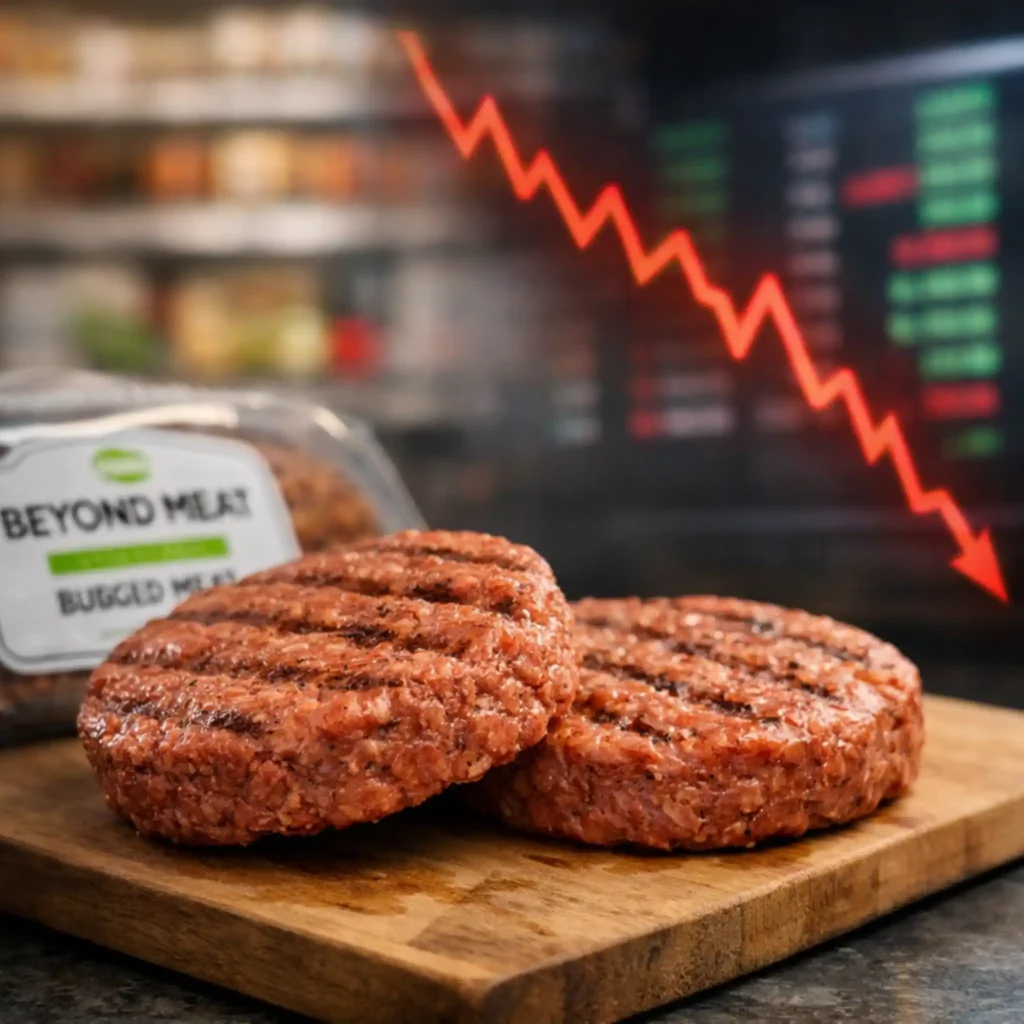

Beyond Meat (BYND) stock is trading near $0.76, a staggering collapse from its once-celebrated peak of $234.90. The plant-based meat pioneer has now lost roughly 99% of its value since its 2019 public debut, raising serious questions about whether the company can stabilize its shrinking business.
The latest financial results showed the depth of the challenges. Beyond Meat reported quarterly revenue of $70.2 million, representing a 13.3% year-over-year decline. The slowdown reflects weakening demand across nearly every part of the company’s business, from supermarket retail channels to restaurant partnerships.
The financial pressure is even more visible on the bottom line. Operating losses surged dramatically from $30.9 million a year earlier to $112.3 million, highlighting the widening gap between Beyond Meat’s revenue and its costs.
Operations show mounting pressure
Beyond Meat’s operational slowdown has been visible across several areas of its business. One of the most striking declines came from its U.S. food-service segment, where sales to restaurants dropped 27.3%. This category once helped fuel the company’s rapid expansion through partnerships with major restaurant chains.
International operations have also faced setbacks. The company exited the Chinese market after struggling to generate consistent customer demand. The decision reflects a broader challenge: while plant-based foods generated early excitement globally, maintaining sustained consumer interest has proven far more difficult.
For investors, the declining revenue trend is especially concerning because Beyond Meat was historically viewed as a high-growth company that would eventually scale its way into profitability. The current trajectory suggests that growth may not arrive soon enough to offset the company’s rising losses.
The fading momentum of plant-based meat
When Beyond Meat first surged into the spotlight, the company benefited from a powerful narrative around sustainability and health. Environmental studies suggested traditional beef production contributes roughly 15% of global greenhouse-gas emissions, while plant-based alternatives could reduce emissions by up to 77%.
Despite those environmental advantages, consumer enthusiasm has cooled. Early curiosity encouraged many customers to try plant-based burgers and sausages, but repeat purchases have been weaker than expected.
Some analysts believe the slowdown stems from concerns about product authenticity compared with traditional meat. Others argue the simpler explanation is taste: consumers experimented with plant-based substitutes but ultimately did not adopt them as everyday replacements.
This shift in consumer behavior has become a major obstacle for Beyond Meat, which built its entire brand around the long-term expansion of the plant-based meat market.
Rebranding signals a strategic shift
Facing these challenges, Beyond Meat is attempting to reposition itself. The company recently shortened its name from “Beyond Meat” to “Beyond”, a move designed to broaden its product portfolio beyond meat substitutes.
The company plans to expand into categories such as protein beverages, a market expected to grow at a compound annual rate of about 9.4% and reach approximately $76.56 billion by 2032. Diversifying into new product segments could give the company additional revenue streams beyond plant-based meat.
However, this pivot will also bring new competition. The protein drink market already includes established brands such as Muscle Milk and vegan-focused brands like OWYN, both of which have stronger positions in the category.
Beyond Meat’s management has also begun aggressive cost-cutting and layoffs in an effort to reduce cash burn. While the company has dismissed rumors about potential bankruptcy, the scale of its operating losses and falling revenue has intensified investor concerns about its long-term financial stability.
For now, the company’s extremely low share price may look attractive compared with its former highs. But the sharp decline reflects deeper structural challenges — weakening demand, shrinking revenue, and a business still searching for a sustainable path to profitability.
Until Beyond Meat proves it can reignite growth and narrow its losses, the pressure on BYND stock is unlikely to ease.

Make Swikblog your go-to source on Google for reliable updates, smart insights, and daily trends.