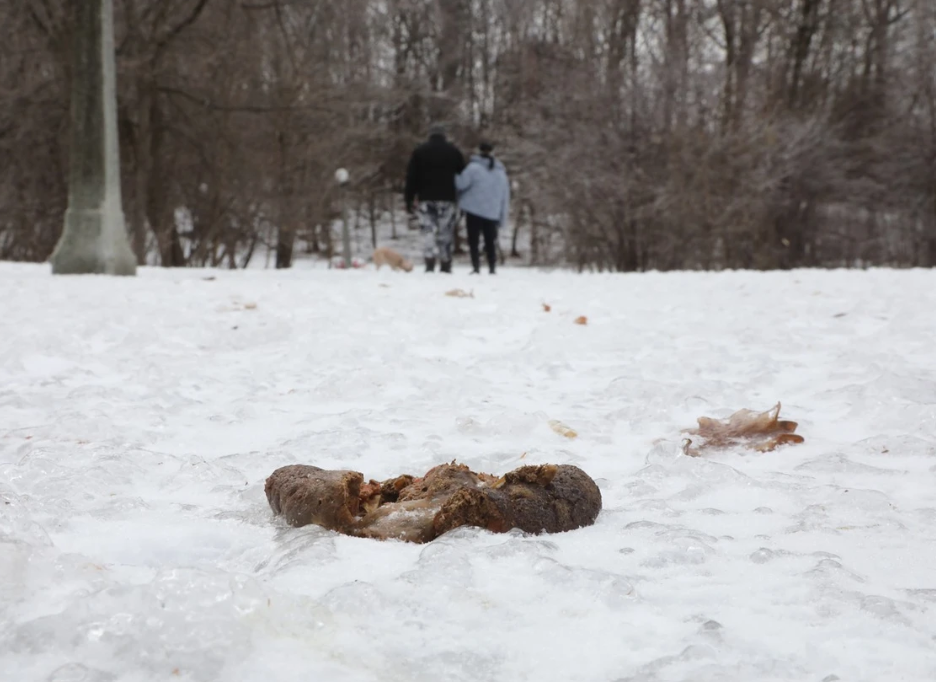

As winter fades and temperatures begin to rise, many residents are discovering an unpleasant seasonal reality: the melting snow is revealing weeks’ worth of dog waste hidden beneath the surface. What was once buried under ice is now scattered across sidewalks and public pathways, turning everyday walks into a frustrating and messy experience.
Across neighborhoods, especially in areas with popular walking trails and community pathways, people are finding themselves dodging piles of waste or, worse, stepping into it. The situation becomes even more challenging where melting snow creates puddles, forcing pedestrians to navigate narrow dry spots—only to encounter dog waste lurking nearby. One wrong step, and it ends up splattered on shoes, making what should be a refreshing walk feel like navigating a minefield.
Melting Snow Is Exposing a Hidden Problem
This issue is not new, but it becomes highly visible every year during the transition from winter to spring. During colder months, snowfall covers dog waste, temporarily hiding it from view. However, as the snow melts, the accumulated waste resurfaces all at once, creating a sudden spike in visible mess across public spaces.
Residents in multiple neighborhoods have noticed the same pattern. Conversations with neighbors, friends, and other community members suggest that this is not an isolated issue. It appears widespread, particularly in areas with high pet ownership and frequent foot traffic.
The problem is especially noticeable along pathways designed for walking, jogging, and exercising—spaces that are meant to promote health and outdoor activity. Instead of clean routes, people are forced to carefully watch every step, often adjusting their path to avoid both waterlogged sections and exposed waste.
The Real Issue Is Not Pets—It’s People
It is important to clarify that the problem is not dogs. Pets naturally need to relieve themselves, and they are an important part of many families. The real issue lies with irresponsible pet owners who fail to clean up after their animals, particularly during winter months.
Owning a pet comes with responsibilities, and cleaning up after them is one of the most basic. While many dog owners consistently do the right thing, a noticeable number choose not to—especially when conditions make it easier to avoid accountability.
This selective responsibility creates a ripple effect. Even if most owners are responsible, it only takes a minority neglecting their duty to create a visible and widespread problem for the entire community.
Why Winter Makes the Problem Worse
One of the key reasons this issue intensifies in winter is reduced social visibility. In warmer months, parks and pathways are filled with people. The presence of others creates a form of social pressure—what many describe as “public shaming.” When others are watching, people are far more likely to pick up after their pets.
However, winter changes that dynamic. Fewer people are outdoors, especially during early mornings or late evenings. This reduced visibility lowers accountability, making it easier for irresponsible behavior to go unnoticed.
In addition, shorter daylight hours and colder temperatures discourage people from lingering outside, further reducing the chances of someone calling out improper behavior. As a result, some pet owners take advantage of the situation, leaving waste behind with the assumption that snow will cover it.
But as the thaw begins, the consequences of those decisions become visible to everyone.
Limited Enforcement Adds to the Challenge
Most cities have bylaws requiring pet owners to clean up after their dogs, often accompanied by fines for non-compliance. Signs reminding people of these rules are common in parks and along pathways. However, enforcement remains a challenge.
It is unrealistic to expect city officials or bylaw officers to monitor every pathway, especially during winter or nighttime hours. If violations occur when no one is around to witness them, enforcement becomes nearly impossible.
This limitation highlights an important reality: regulations alone cannot solve the problem. While rules set expectations, consistent compliance depends on individual responsibility and community values.
A Growing Public Frustration
For many residents, this issue goes beyond inconvenience. It affects daily routines, especially for those who rely on walking for transportation, exercise, or commuting to public transit. Navigating messy pathways can be frustrating, unpleasant, and, at times, unavoidable.
The situation can also feel unfair. Those who follow the rules and maintain clean habits are forced to deal with the consequences of others’ negligence. Over time, this can create tension within communities and reduce the overall enjoyment of shared public spaces.
Even casual conversations among neighbors reveal a common sentiment: this is a recurring problem that people are tired of dealing with every year.
Health and Environmental Concerns
Beyond aesthetics, dog waste can pose environmental and health risks if left uncollected. According to the U.S. Environmental Protection Agency, pet waste can contribute to pollution when it is washed into storm drains and waterways.
Additionally, organizations like the CDC Healthy Pets program emphasize the importance of proper hygiene around animal waste to reduce potential exposure to harmful bacteria and parasites.
These concerns reinforce that this is not just about cleanliness—it is also about maintaining healthier, safer environments for everyone.
The Solution Starts With Responsibility
While enforcement may be limited, the solution is straightforward: consistent responsibility from pet owners. Picking up after a dog should not depend on the season, time of day, or presence of other people.
Communities can also play a role by encouraging awareness and promoting shared standards of cleanliness. Small actions—such as carrying waste bags at all times and using proper disposal methods—can collectively make a significant difference.
Importantly, this is not an unsolvable issue. Many neighborhoods do not experience this problem to the same extent, proving that responsible behavior can effectively prevent it.
Final Thoughts
The melting snow is doing more than signaling the arrival of spring—it is revealing a recurring issue that reflects on community habits and personal responsibility. Public pathways, parks, and shared spaces are meant to be enjoyed by everyone, not avoided because of preventable messes.
Ultimately, the responsibility lies with pet owners. A simple act—cleaning up after a dog—can make the difference between a pleasant neighborhood walk and a frustrating experience. As spring begins, keeping public spaces clean should be a shared priority, not a seasonal afterthought.

Make Swikblog your go-to source on Google for reliable updates, smart insights, and daily trends.