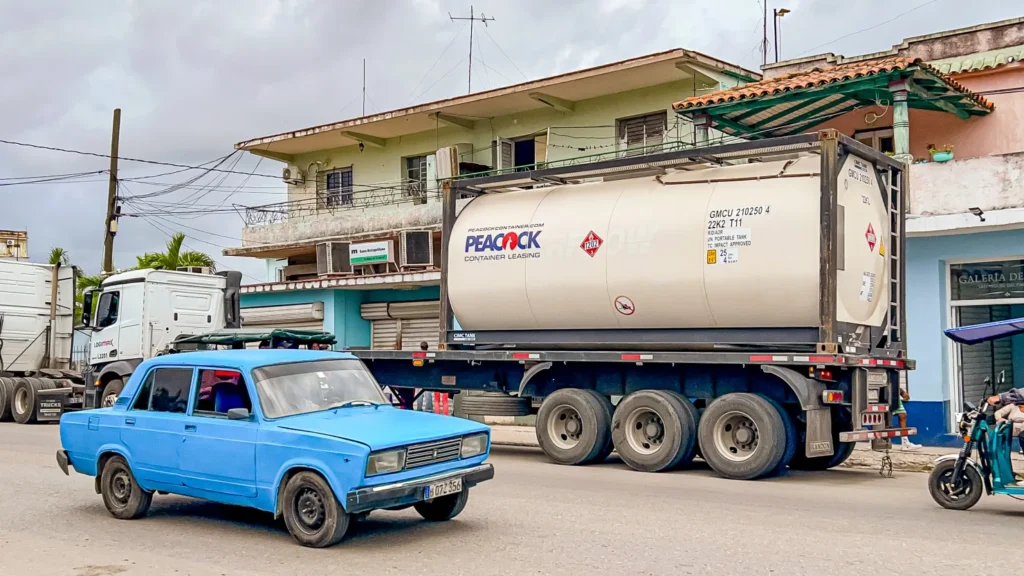

Cuba’s energy crisis is rapidly escalating after the United States tightened restrictions on Russian oil deliveries, putting a massive 730,000-barrel shipment at risk. The development comes at a critical moment, as at least two tankers carrying Russian fuel are reportedly heading toward the island, raising tensions across global energy markets and signaling a potential sanctions showdown.
The Caribbean nation, already grappling with widespread blackouts and severe fuel shortages, now faces one of its biggest economic challenges in decades. With traditional suppliers disrupted and new supply routes under pressure, Cuba’s energy security is hanging by a thread.
U.S. tightens sanctions as Russian oil heads to Cuba
The U.S. Treasury Department’s Office of Foreign Assets Control (OFAC) has made it clear that Cuba is now prohibited from receiving Russian-origin crude and petroleum products. The updated guidance adds Cuba to a list of restricted destinations, effectively blocking transactions involving the delivery, sale, or offloading of Russian oil.
This marks a sharp reversal from a temporary relaxation just days earlier, when the U.S. had briefly allowed certain stranded Russian oil shipments to stabilize global energy markets amid geopolitical tensions. The sudden tightening highlights Washington’s increasing focus on cutting off Cuba’s energy lifelines.
The warning comes at a time when maritime intelligence firms are tracking two key tankers approaching Cuba, setting up a direct test of sanctions enforcement.
730,000 barrels and 190,000 barrels at the center of the crisis
The biggest concern revolves around the Russian-flagged tanker Anatoly Kolodkin, which is believed to be carrying approximately 730,000 barrels of crude oil. According to maritime data, the vessel loaded cargo from Russia’s Primorsk port earlier this month and is expected to reach Cuba’s Matanzas terminal within days.
Alongside it, the Hong Kong-flagged tanker Sea Horse is transporting roughly 190,000 barrels of gasoil (diesel). The cargo was loaded via a ship-to-ship transfer near Cyprus, a method often used in complex oil trading routes.
Together, these shipments represent nearly 920,000 barrels of fuel, a significant volume for a country facing acute energy shortages. If delivered, the cargo could provide short-term relief to Cuba’s strained power grid and transportation sector.
Sea Horse raises red flags with deceptive shipping behavior
The Sea Horse tanker has drawn particular attention due to suspicious maritime activity. According to shipping intelligence analysis, the vessel engaged in several deceptive practices commonly associated with sanctions evasion.
These include:
- Switching off its AIS (Automatic Identification System) during oil transfers
- Broadcasting a misleading status of “not under command” while drifting in the Atlantic
- Changing its declared destination from Havana to “Gibraltar for orders”
- Lack of Western insurance coverage
The tanker reportedly spent nearly three weeks drifting in the Sargasso Sea at very low speeds, raising questions about whether it was attempting to obscure its movements. Analysts suggest these patterns may indicate efforts to avoid detection while moving sanctioned fuel.
Such behavior significantly increases the geopolitical risk surrounding the shipment, making it a focal point for regulators and enforcement agencies.
Cuba’s fuel crisis hits critical levels
The urgency of these shipments is underscored by Cuba’s worsening domestic situation. The island has been facing severe fuel shortages, culminating in a nationwide blackout in mid-March that exposed the fragility of its energy infrastructure.
Cuba has not received a confirmed oil shipment since early January, when Mexico delivered one of the last known cargoes. Since then, supply disruptions have intensified following major geopolitical shifts.
One of the biggest turning points was the collapse of Venezuelan supply. Venezuela had long been Cuba’s primary oil provider, but shipments effectively stopped after political upheaval and U.S. intervention earlier this year. This has left Cuba scrambling for alternative sources, with Russia emerging as a key fallback partner.
Russia steps in as tensions with the U.S. escalate
Russia has strongly criticized the U.S. oil blockade on Cuba and pledged continued support, including potential financial aid and energy supplies. The shipments currently heading toward the island are widely seen as a direct challenge to U.S. restrictions.
The situation has escalated into a broader geopolitical standoff, with Washington signaling it may impose tariffs or penalties on countries supplying oil to Cuba. Meanwhile, Moscow has downplayed such threats, noting limited direct trade exposure with the United States.
Cuban officials have also pushed back firmly, stating that the country’s political system and sovereignty are not open to negotiation.
Sanctions enforcement becomes the key risk
The biggest uncertainty now is whether these shipments will actually be delivered. The U.S. policy shift has turned both tankers into test cases for sanctions enforcement.
If the cargoes are successfully offloaded in Cuba, it could signal gaps in enforcement or the emergence of alternative trading networks capable of bypassing restrictions. On the other hand, if the vessels are delayed, rerouted, or blocked, Cuba’s energy crisis could worsen dramatically within days.
For global markets, the outcome matters beyond Cuba. It could shape expectations around how effectively sanctions can control Russian oil flows, especially in regions heavily dependent on imports.
Energy traders, shipping companies, and insurers are closely watching developments, as any escalation could impact freight costs, insurance premiums, and broader oil market dynamics.
What happens next
The coming days will be critical. Maritime tracking suggests at least one of the tankers could reach Cuban waters soon, setting the stage for a high-stakes geopolitical moment.
If Cuba manages to receive the shipments, it may gain temporary relief from its energy crisis. But if the U.S. successfully blocks delivery, the island could face deeper blackouts, economic strain, and increased reliance on uncertain supply routes.
For readers tracking global energy trends, this story highlights how quickly oil markets can be reshaped by politics, sanctions, and supply disruptions. You can follow broader developments in energy markets via CNBC Energy and global geopolitical coverage on The Guardian World.
For now, one thing is clear: Cuba’s oil crisis is deepening, nearly 920,000 barrels of Russian fuel are at stake, and the outcome could have ripple effects far beyond the island’s shores.

Make Swikblog your go-to source on Google for reliable updates, smart insights, and daily trends.