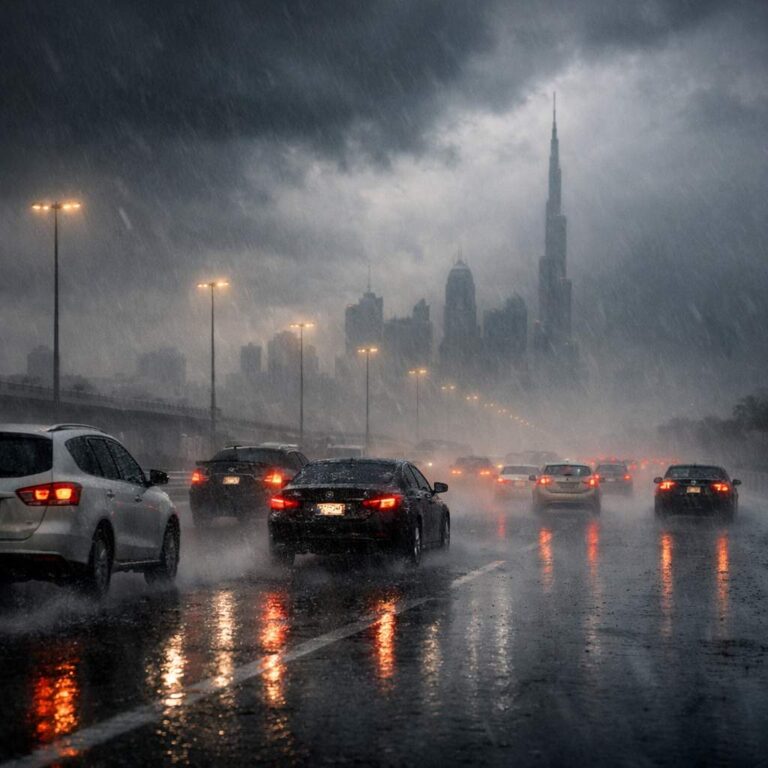

Dubai and the wider UAE are bracing for a week of severe weather as authorities issue urgent alerts over heavy rain, strong winds and dust storms that could significantly disrupt daily travel. With wind speeds expected to reach up to 45 km/h and visibility dropping sharply on key highways, Dubai Police has warned motorists to remain extremely cautious on the roads.
The latest advisory comes as unstable atmospheric conditions sweep across the Emirates, bringing a mix of torrential rain, thunderstorms and blowing dust. These conditions are not only affecting comfort but are creating real safety risks for drivers, commuters and logistics movement across major transit corridors.
Dubai Police Issues Urgent Safety Warning
Dubai Police has officially issued a public safety advisory, highlighting the dangers posed by reduced visibility and wet road conditions. In multiple updates shared via its official channels, authorities urged residents to strictly follow safety guidelines and avoid reckless driving behavior during this period.
Officials also emphasized the importance of relying only on verified government sources for updates. Residents have been warned not to spread rumors or unconfirmed information, as the situation may evolve quickly depending on weather intensity.
Emergency response units across Dubai are currently on high alert and prepared to issue real-time warnings if conditions worsen.
Heavy Rain, Winds and Dust to Impact Entire UAE
The National Centre of Meteorology (NCM) has confirmed that the unstable weather is not limited to Dubai alone. The impact will be felt across Abu Dhabi, Dubai and the Northern Emirates, with rain of varying intensity expected throughout the week.
Strong winds reaching up to 45 km/h are likely to lift dust and sand into the air, causing hazardous driving conditions. Combined with rainfall, this creates a dangerous mix of slippery roads and low visibility — one of the leading causes of traffic disruptions in the UAE.
According to the latest weather bulletin, these conditions are expected to persist until at least March 27, making this a prolonged weather event rather than a short-term disturbance.
Drivers Face Major Travel Disruptions
Motorists across the UAE are expected to face challenging road conditions, especially during peak hours. Major highways like Sheikh Zayed Road and key inter-emirate routes could see slower traffic, delays and minor accidents due to sudden weather changes.
Rainfall has already caused minor flooding in parts of Dubai, with water accumulation reported along busy roads. Even light flooding can disrupt traffic flow and increase the risk of vehicle breakdowns.
Drivers heading to airports or planning long-distance travel are advised to allow extra time and check conditions before departure. Reduced visibility due to dust storms may also impact highway driving, making it difficult to judge distances and lane positions.
Authorities Activate Emergency Preparedness Measures
The UAE’s National Emergency Crisis and Disaster Management Authority (Ncema) has confirmed that it is closely monitoring the situation in coordination with the Ministry of Interior and the NCM. Authorities have already activated readiness plans to ensure rapid response if conditions escalate.
Ncema stated that all sectors are prepared and business continuity plans may be implemented if required. Preventive safety guidance will continue to be shared with the public as the weather develops.
This coordinated response highlights the seriousness of the current weather system, especially given the potential for widespread disruption.
Regional Impact Raises Concerns
The severe weather is not limited to the UAE. Neighboring countries in the Gulf region have also been affected. In Oman, torrential rain and flooding led to tragic incidents, with two people losing their lives after being trapped in vehicles. Several others had to be rescued as floodwaters swept through valleys and residential areas.
Saudi Arabia has also issued warnings over heavy rain, fog and dust conditions expected during the Eid Al Fitr period, indicating a broader regional weather disturbance.
These developments have raised concerns about the intensity of the current weather pattern and underline the importance of taking precautions seriously in the UAE.
Safety Measures Drivers Must Follow
Authorities have issued clear guidelines for motorists during this period of unstable weather. Drivers should reduce speed, maintain a safe distance from other vehicles and avoid sudden braking or lane changes.
Using headlights in low visibility conditions is essential, while hazard lights should only be used when necessary. Drivers are strongly advised to avoid flooded areas, as water depth can be deceptive and may damage vehicles or cause accidents.
Residents should also avoid distractions such as mobile phone use while driving and should not attempt to film or photograph weather conditions from the road.
For real-time updates, residents can refer to the National Centre of Meteorology and official alerts from Dubai Police.
Looking Back: UAE’s Previous Storm Impact
The UAE has experienced severe weather events in the past that caused widespread disruption. The April 2024 storm, for example, led to major flooding across the Emirates, affecting homes, roads and air travel. Similarly, Ras Al Khaimah recorded unusually high rainfall in a short period during December.
These past events serve as a reminder of how quickly conditions can escalate and why early warnings like the current alert are critical.
Outlook: A Week of Caution Ahead
With unstable weather expected to continue for several days, residents should prepare for ongoing disruptions. Daily routines, commuting schedules and travel plans may all be affected.
The combination of heavy rain, thunderstorms, strong winds and dust storms makes this one of the more challenging weather periods for road users in recent months. While authorities are fully prepared, public cooperation remains essential to ensure safety.
The key message is clear: stay informed, drive carefully and avoid unnecessary travel where possible. As conditions evolve, following official guidance could make all the difference in staying safe during this high-risk weather period.

Make Swikblog your go-to source on Google for reliable updates, smart insights, and daily trends.