
Updated: October 10, 2026
Hurricane Isaias made landfall near Destin, Florida, late Friday as a Category 2 storm with sustained winds of 105 mph, bringing destructive winds, coastal flooding and widespread electricity disruptions to the northern Gulf Coast. In South Mississippi, more than 5,000 customers were affected by power outages earlier in the evening.
Harrison and Jackson counties were among the affected areas as Mississippi Power and Singing River Electric deployed emergency crews. The hurricane also disrupted traffic signals, flights and coastal activities, while dangerous weather threatened to complicate restoration work.
HURRICANE WINDS 💨: Hurricane-force winds are hammering Florida as Hurricane Isaias approaches the Gulf Coast. In Destin, FOX Weather crews captured insane gusts while taking shelter from the dangerous storm. https://t.co/2WLpQRsdlj
— FOX Weather (@foxweather) October 10, 2026
The 5,000-plus outage figure reflects Friday evening reports, not a verified Saturday morning total.
Hurricane Isaias Makes Landfall Near Destin, Florida
The National Hurricane Center reported that Isaias made landfall near Destin at approximately 8:30 p.m. CDT Friday, October 9, with maximum sustained winds of 105 mph and a minimum central pressure of 971 millibars.
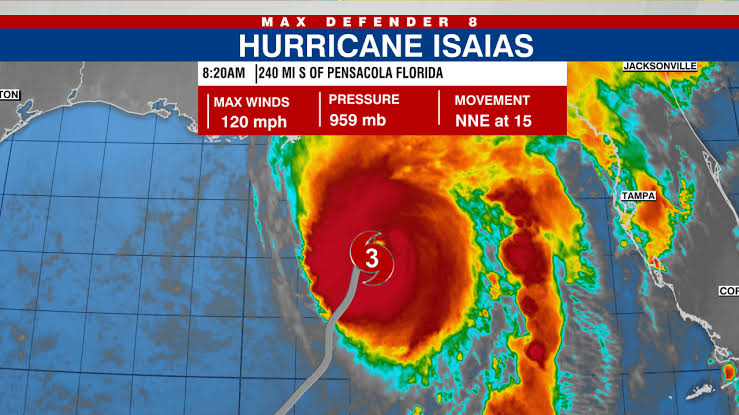
Before landfall, Isaias had intensified into a Category 3 hurricane with winds reaching 120 mph. It weakened to Category 2 strength as it approached the Florida Panhandle.
A wind gust of 116 mph was reported near Santa Rosa Sound, while a weather station near Pensacola recorded a 100 mph gust.
A NOAA water-level gauge at Panama City Beach recorded approximately 5.6 feet above mean higher high water, indicating significant coastal flooding.
Although the storm’s center crossed the Florida coast, its extensive circulation brought hazardous conditions to Mississippi and Alabama.
For background on the hurricane’s earlier intensification, see our report on Hurricane Isaias reaching Category 3 strength before Florida landfall.
Over 5,000 Customers Affected by Mississippi Power Outages
Electricity disruptions developed across South Mississippi before the hurricane reached land.
At 6:10 p.m. Friday, Singing River Electric reported approximately 4,400 customers without electricity, while Mississippi Power reported 792. The combined total reached approximately 5,192 customers.
By 6:35 p.m., Singing River Electric reported around 5,200 affected customers, while Mississippi Power recorded more than 600.
Restoration efforts subsequently reduced the reported numbers. By 7:35 p.m., Singing River Electric’s outage count had fallen to approximately 920 customers.
A Mississippi Power outage map screenshot updated at 8:55 p.m. showed 16 active outages affecting 147 customers out of 194,924 served.
That later reading covered Mississippi Power only. It did not represent the combined regional outage total.
Harrison and Jackson Counties Report Power Failures
Outages affected communities across Harrison and Jackson counties, including Ocean Springs and Pascagoula.
In Pascagoula, police reported traffic signals without power at Highway 90 and Chicot Street and at Highway 90 and Hospital Street.
In George County, a fallen tree caused an earlier outage. Crews removed the tree and restored electricity.
Damaged electrical lines, fallen trees and flooded roads can delay repairs even after hurricane winds begin weakening.
Mississippi Power Deploys Emergency Restoration Crews
Mississippi Power activated its storm center and mobilized more than 1,000 employees, contractors and support personnel ahead of Isaias.
The utility also secured nearly 500 additional resources, including line crews, vegetation management teams and damage assessors.
Workers were positioned across southeast Mississippi, while storm precautions were implemented at Plant Watson in Gulfport and Plant Daniel in Escatawpa.
Singing River Electric separately activated its emergency response plan and dispatched crews to restore service.
Storm Surge, Flooding and Warnings Across the Gulf Coast
Isaias brought dangerous coastal flooding, with the National Hurricane Center warning that life-threatening storm surge and flash flooding could continue spreading inland after landfall.
Earlier forecasts indicated potential storm surge inundation of 4–6 feet between Ocean Springs, Mississippi, and Dauphin Island, Alabama, and 3–5 feet between the Mississippi River mouth and Ocean Springs.
Coastal Jackson County was under a hurricane warning, while tropical storm warnings affected Hancock, Harrison, George and inland Jackson counties.
Across Florida and Alabama, more than 400,000 electricity customers were reported without power during the storm, according to Associated Press reporting. Those figures were separate from Mississippi’s outage totals.
Flights Canceled and Gulf Coast Transportation Disrupted
Gulfport-Biloxi International Airport reported Friday afternoon flight cancellations involving Atlanta, Houston and Charlotte.
In Biloxi, Popp’s Ferry Bridge was temporarily closed to vehicle and boat traffic as officials prepared for strong winds.
Friday’s Cruisin’ the Coast activities at Beach Park in Pascagoula were canceled, while emergency shelters and sandbag distribution locations opened in parts of South Mississippi.
Mississippi Power Outage Map and Restoration Information
Residents can check the official Mississippi Power outage map for current interruptions and available restoration estimates.
Singing River Electric customers can report outages by texting OUT to 601-947-1744.
No regionwide restoration deadline has been confirmed. Repair times depend on damaged infrastructure, weather conditions and safe access for utility workers.
Similar restoration challenges can occur during other severe-weather events, including the San Antonio power outage.
Safety Advice as Restoration Work Continues
Residents should avoid fallen power lines, flooded roads and damaged electrical equipment. Generators must be operated outdoors, away from windows and doors, to prevent carbon monoxide poisoning.
Keep refrigerators closed during outages and arrange backup electricity for essential medical devices when necessary.
Although Isaias is expected to weaken inland, heavy rainfall, flash flooding and additional electricity disruptions remain concerns across the Southeast. Residents should follow local emergency instructions and utility restoration updates.

Make Swikblog your go-to source on Google for reliable updates, smart insights, and daily trends.