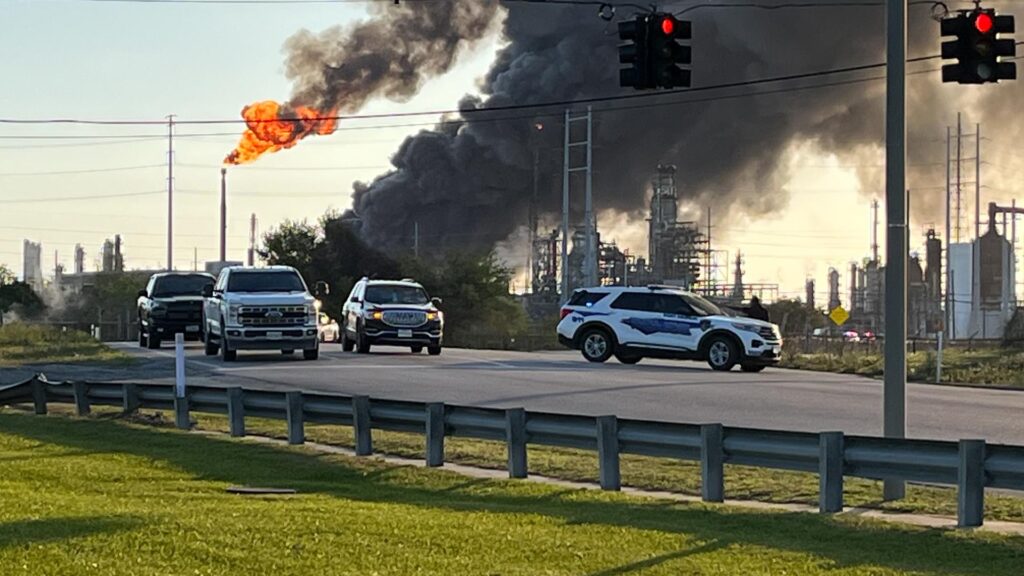

Valero (NYSE: VLO) is in sharp focus after a sudden explosion at its massive Port Arthur refinery in Texas sent a towering plume of black smoke into the sky, rattled homes miles away, and forced authorities to issue an urgent shelter-in-place order for nearby residents.
The incident, which occurred Monday evening, immediately sparked panic across the Mid-County area as residents reported hearing a loud boom strong enough to shake windows and buildings. While officials have confirmed no injuries so far, the scale of the explosion and emergency response has raised a bigger market question — could this disruption push oil prices up by 5% or more?
This is not just a local incident. Valero’s Port Arthur refinery is one of the largest in the United States, processing around 435,000 barrels of crude oil per day. Any disruption at a facility of this size can ripple through fuel markets, supply chains, and investor sentiment almost instantly.
What exactly happened at the Valero refinery
According to early reports from the Port Arthur Fire Department and local officials, the explosion may have involved a heater unit inside the refinery. However, authorities stressed that the exact cause of the incident remains under investigation.
First responders quickly moved to the scene, with multiple fire engines deployed along with a specialized hazmat team. The Beaumont Fire Department and Jefferson County Sheriff’s Office also joined the response, highlighting the seriousness of the situation.
Jefferson County Sheriff Zena Stephens confirmed that while the explosion was significant, there were no injuries or fatalities reported at the time. Importantly, no evacuations were ordered, but officials advised residents on the west side of Port Arthur, Sabine Pass, and Pleasure Island to stay indoors as a precaution.
Witnesses described the moment as “terrifying,” with some saying it felt like a small earthquake. Others reported a strong “rotten egg” smell in the air, raising concerns about potential gas or chemical exposure.
Thick black smoke could be seen rising from the refinery from miles away, prompting immediate air quality monitoring by the Texas Commission on Environmental Quality, which deployed mobile and handheld monitoring units to assess the situation.
Shelter-in-place and emergency response details
Authorities issued a shelter-in-place advisory for parts of the region, urging residents to remain indoors, shut windows, and avoid exposure until further notice. Meanwhile, the City of Nederland confirmed that, at the time, there was no direct impact on its area, though patrols and air monitoring continued as a precaution.
Traffic disruptions also followed the explosion. The Texas Department of Transportation urged drivers to avoid key routes near the refinery, including State Highway 87 and State Highway 82, as emergency crews worked to contain the situation.
Inside the refinery, Valero teams were reportedly working to control the fire using water suppression systems, while emergency crews coordinated efforts through incident command.
For background on the facility, Valero’s Port Arthur refinery is one of its flagship operations on the Gulf Coast. You can review details directly on the official Valero refinery page.
Why this explosion matters for oil prices
The immediate reaction from many investors is to assume that an explosion at a major refinery will push crude oil prices sharply higher. However, the reality is more complex.
Refinery incidents typically impact refined products like gasoline, diesel, and jet fuel more directly than crude oil itself. That’s because refineries process crude into usable fuels — so when a refinery goes offline, it reduces fuel output rather than crude supply.
That said, the size of the Port Arthur facility makes this situation important. If operations are disrupted for an extended period, it could tighten fuel supply across the Gulf Coast region, potentially pushing gasoline and diesel prices higher.
In such scenarios, crude oil prices can also rise indirectly, especially if the disruption adds to existing supply concerns or coincides with global market tightness.
According to data from the U.S. Energy Information Administration, refinery outages in key regions like Texas can significantly influence fuel price trends and refining margins.
Will oil prices really spike 5%+
A 5% spike in crude oil prices from this event alone is possible but not guaranteed. Markets typically need sustained supply disruptions or multiple catalysts to trigger such a sharp move.
Right now, the key variable is duration. If Valero confirms that the damage is limited and operations resume quickly, the market impact may remain short-lived. However, if the outage extends for days or weeks, traders could begin pricing in tighter supply, leading to upward pressure on both fuel and crude prices.
In short, the explosion increases volatility — but whether it drives a major price surge depends on how the situation develops over the next 24–72 hours.

Make Swikblog your go-to source on Google for reliable updates, smart insights, and daily trends.