
Atlanta’s spring allergy season has officially arrived, and it’s making an immediate impact. The latest pollen count has surged to 2,792 grains per cubic meter, placing it deep in the very high category and signaling a tough stretch ahead for allergy sufferers across the city.
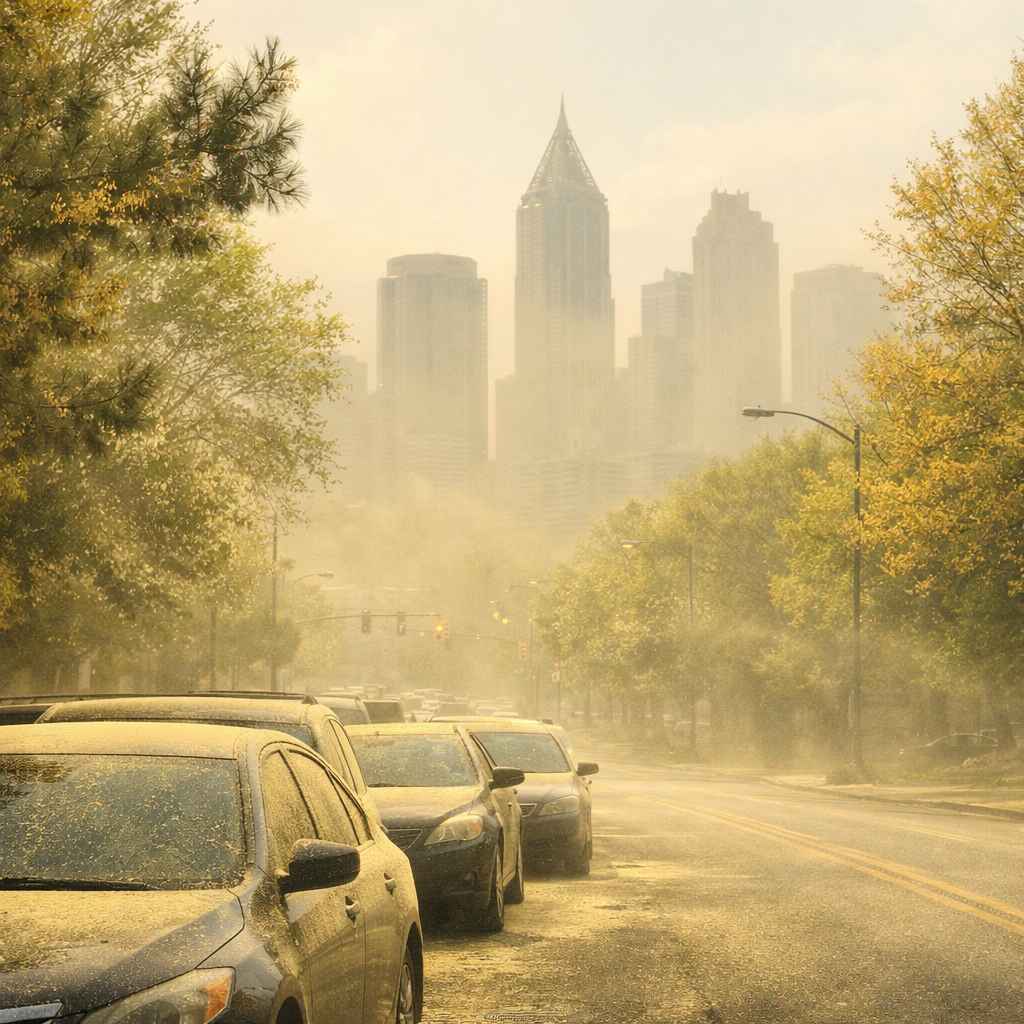
For many residents, the effects are already impossible to ignore. Sneezing, itchy eyes, congestion, and the visible yellow dust covering cars and outdoor surfaces are all signs that tree pollen has taken over Atlanta’s air. And based on early-season data, this could be just the beginning of another intense allergy season.
Tree pollen dominates Atlanta’s air
The current spike is being driven almost entirely by tree pollen, with several species contributing at the same time. The main culprits include pine, oak, sweet gum, sycamore, and birch trees.
While pine pollen is the most visible — often coating cars, sidewalks, and porches in a thick yellow layer — it is not always the biggest trigger for allergies. Trees like oak and birch tend to cause stronger allergic reactions, making the situation more uncomfortable for sensitive individuals.
The data comes from Atlanta Allergy & Asthma’s pollen counting station, the only National Allergy Bureau (NAB)-certified station in the Atlanta area. This station measures the number of pollen grains in a cubic meter of air over a 24-hour period, providing a reliable snapshot of what residents are breathing each day.
2026 pollen season is already showing strength
This year’s allergy season did not ease in slowly. In fact, it started aggressively. On March 12, 2026, Atlanta recorded a pollen count of 3,226, marking the second-highest early-season reading ever recorded for the mid-February through mid-March period.
So far in 2026, the city has already experienced:
- 10 high pollen days
- 3 extremely high pollen days
These numbers are significant because they show that elevated pollen levels are not isolated events — they are becoming frequent. And when high counts arrive this early, it often signals a prolonged and challenging allergy season ahead.
Last year’s trend raises concerns for 2026
If last year is any indication, Atlanta residents may need to prepare for sustained exposure. Between mid-February and mid-May of 2025, pollen levels were in the high or extremely high range 63% of the time.
That means most days during peak spring brought difficult conditions for allergy sufferers. With 2026 already showing similar early intensity, there is a strong possibility that this season could follow a comparable pattern — or even exceed it if weather conditions remain favorable for pollen production.
Why pollen feels worse on days like this
Even beyond the numbers, certain weather conditions can make pollen feel more intense. Today’s discomfort is being amplified by a combination of environmental factors:
- Dry weather: Prevents pollen from being washed away
- Light winds: Allow pollen to linger instead of dispersing
- Simultaneous tree pollination: Multiple species releasing pollen at once
This combination creates a situation where pollen simply hangs in the air, leading to that noticeable haze seen across parts of Atlanta, including Midtown.
How today compares to record-breaking levels
While today’s reading of 2,792 is very high, it is still far below Atlanta’s most extreme pollen day on record. That record was set on March 29, 2025, when the city reached an astonishing 14,801 grains per cubic meter, breaking a 35-year record.
That day was considered exceptionally severe, but even current levels are more than enough to trigger symptoms in a large portion of the population. For individuals with asthma or severe allergies, even moderate increases can significantly impact daily life.
Health impact and symptoms to expect
At very high pollen levels like today’s, most people can expect symptoms such as:
- Sneezing and nasal congestion
- Itchy or watery eyes
- Runny nose
- Scratchy throat
- General fatigue or “spring haze” feeling
For those with respiratory conditions, exposure can be more serious. According to the CDC’s guidance on allergens, high pollen levels can worsen asthma and other breathing-related issues.
Simple ways to reduce pollen exposure
While it’s difficult to completely avoid pollen during peak season, a few practical steps can help reduce exposure:
- Keep windows closed, especially during the afternoon
- Shower and change clothes after spending time outdoors
- Use air purifiers or HVAC filters indoors
- Avoid outdoor activities during peak pollen times
- Clean surfaces regularly to remove accumulated dust
For more details on managing seasonal allergies, the American Academy of Allergy, Asthma & Immunology provides detailed insights on pollen levels and prevention strategies.
Outlook: More high pollen days likely ahead
The early surge in pollen levels suggests that Atlanta may continue to see elevated counts in the coming weeks. With spring bloom still progressing and weather conditions favoring pollen accumulation, the risk of repeated high and extremely high days remains strong.
For now, the message is clear — Atlanta’s allergy season has arrived with intensity. The current 2,792 pollen count is not just a spike, but a signal that tree pollen is already dominating the environment. Residents, especially those sensitive to allergens, should prepare for continued exposure as the season develops.

Make Swikblog your go-to source on Google for reliable updates, smart insights, and daily trends.