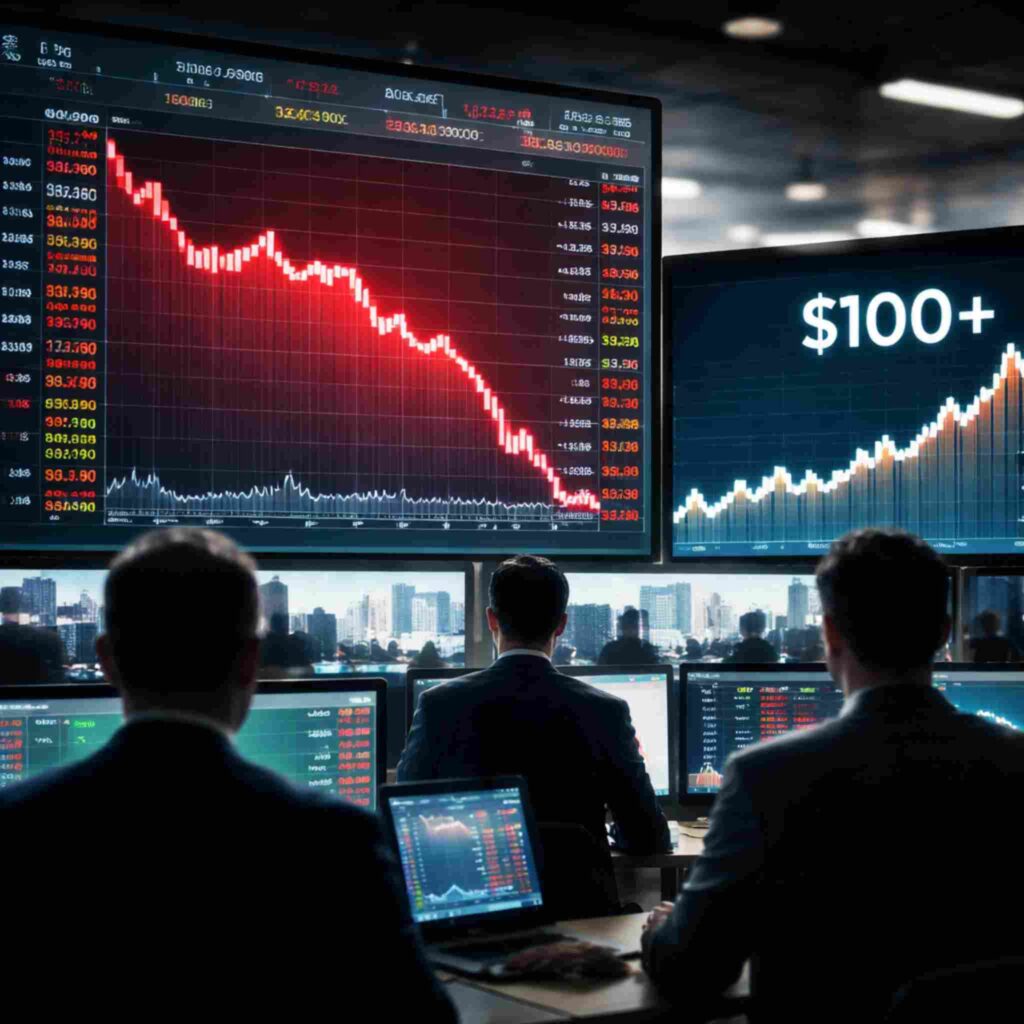

Dow futures are down more than 400 points ahead of Monday’s market open, with oil surging past $100 amid Iran war tensions, intensifying fears of fresh volatility after major indexes slid to six-month lows.
Wall Street heads into Monday with fear back in charge. After a punishing Friday selloff pushed the major indexes to fresh six-month lows, investors are now staring at a market that must reopen under the weight of war headlines, surging oil and a risk mood that has turned decisively defensive. The pressure is not coming from one weak earnings report or one hot inflation print. It is coming from a much broader shock. Crude has climbed back above $100 a barrel in the US market, the Dow has slipped deeper into correction territory, and traders are preparing for a Monday open that could feel far more fragile than the usual start to a new week.
That “ahead of market open” angle matters because sentiment often hardens before the opening bell when geopolitical risk is driving the tape. Futures trading resumes on Sunday evening, long before cash trading begins at 9:30 a.m. Eastern on Monday, and that early futures action is where investors first test whether fear is cooling or accelerating. When the market is already under strain, the hours before the opening bell can shape the tone of the entire session. This time, traders are walking into those hours with oil, shipping disruption and global growth concerns all colliding at once.
Friday’s close offered little comfort. The Dow Jones Industrial Average fell 1.7% to 45,166.64, the S&P 500 dropped 1.7% to 6,368.85 and the Nasdaq Composite slid 2.1% to 20,948.36. Those losses capped another bruising week and left the market with very little momentum heading into Monday. What makes this decline more threatening is that it is happening at the same moment oil has become the market’s central fear trade again.
Oil above $100 is changing the entire mood
The oil move is not just another commodity headline. It is the core reason this story has become so dangerous for equities. West Texas Intermediate moved back above $100, while Brent also jumped sharply as traders repriced the risk of a prolonged supply shock tied to the Iran war. Investors are not just reacting to the latest battlefield headlines. They are reacting to the possibility that this conflict could keep key energy routes unstable for longer than initially expected.
The Strait of Hormuz sits at the center of that fear. Roughly a fifth of the world’s oil flows through that chokepoint, so any sustained disruption there instantly ripples through inflation expectations, transport costs, refinery margins and broader market psychology. On top of that, broader shipping stress in the region has become another pressure point. The latest escalation involving Iran-backed Houthis has also raised concern around the Bab el-Mandeb route, another major artery for global trade. For investors, that creates a scarcity narrative that reaches well beyond gasoline prices. It raises questions about freight, chemicals, fertilizers, manufacturing inputs and the cost structure facing companies across multiple sectors.
This is why the market is treating the oil spike as more than a short-term scare. Higher crude can quickly feed into worries that inflation will stay sticky just as investors had hoped for a calmer second quarter. If energy stays elevated, rate-cut optimism can fade, Treasury yields can stay firm and richly valued growth stocks can remain under pressure. That helps explain why the Nasdaq has been hit especially hard. In a market like this, oil does not need to go to $150 to do damage. It only needs to stay high enough for long enough to force investors to rethink what earnings, margins and consumer demand may look like in the months ahead.
Ahead of Monday open, traders are watching for three things
The first thing that matters is the futures reaction on Sunday night. Futures do not always predict the exact finish of the next cash session, but they do reveal how urgently traders want to price in weekend news. If oil keeps climbing or new conflict headlines hit before Monday morning, the opening tone could worsen quickly. If crude steadies and futures stop falling, markets may at least get a chance to open without full panic. Either way, the hours before the bell will matter because they will show whether sellers still have complete control.
The second thing to watch is whether the selloff remains broad or starts narrowing. Markets can absorb bad news more easily when leadership survives somewhere under the surface. Right now, that leadership looks thin. Energy has held up far better than technology and consumer names, but a healthy market usually needs more than one defensive pocket. If Monday opens weak and the same sectors continue to break support, confidence may erode even further.
The third issue is the week’s incoming catalysts. Tesla deliveries are one of the standout company-specific events on the calendar, and they matter because Tesla still acts as a sentiment gauge for high-beta growth trading. The March jobs report is also approaching, which means traders are about to weigh labor-market strength against the inflation risk that elevated oil is already reviving. Investors wanting to track the official timing can follow the U.S. employment report schedule, because that release now lands in a market that is far more nervous than it was just a few weeks ago.
For now, the real message ahead of Monday is simple. This is not an environment that rewards casual dip-buying. The market has been sliding, crude has become a fresh macro threat and war risk is no longer sitting quietly in the background. Traders want to see whether the opening bell brings forced selling, a reflex bounce or a more orderly reset. Until that answer arrives, caution is likely to stay in demand.
If Monday does open under pressure, investors will be looking less for bold predictions and more for proof that the selling is starting to exhaust itself. That proof usually comes from the market’s behavior, not from hope. Strong stocks hold up. Weak stocks stop dragging everything lower. Volume begins to shift. Right now, though, the market is still telling a harsher story: oil is back above $100, war risk is shaking confidence and Wall Street is heading into Monday with panic still very much in the room.
By Swikblog News Desk

Make Swikblog your go-to source on Google for reliable updates, smart insights, and daily trends.