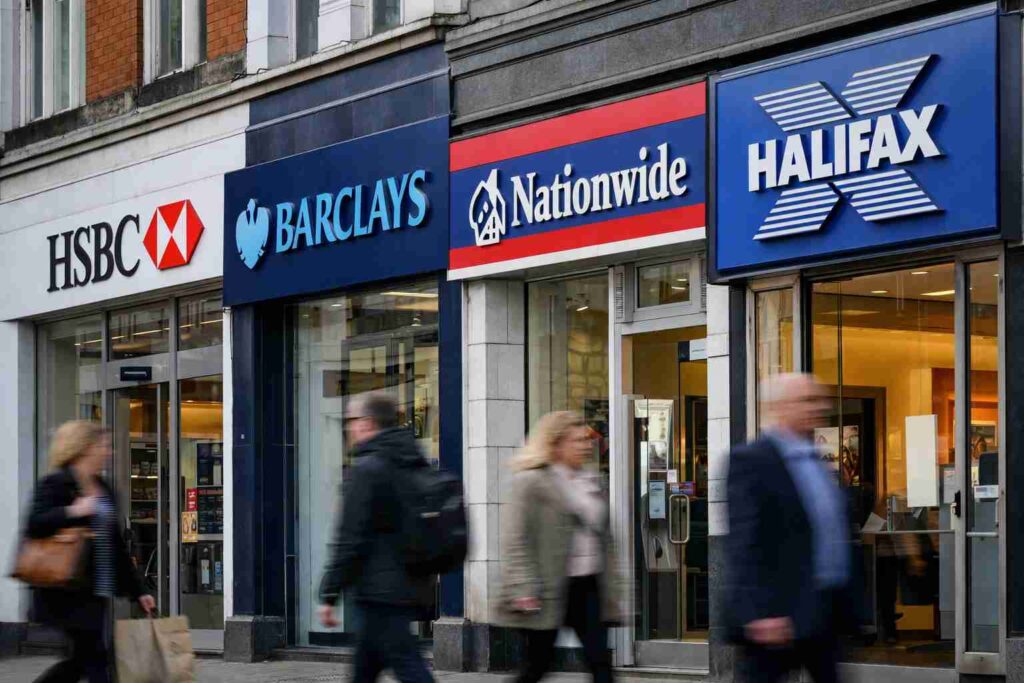

HSBC, Barclays, Nationwide and Halifax have all hiked mortgage costs, triggering a fresh wave of concern across the UK housing market and wiping out sub-4% mortgage deals almost entirely. The shift marks a sharp reversal from just weeks ago, when borrowers were beginning to see signs of easing rates.
The latest repricing comes as lenders react to rising gilt yields, renewed inflation fears and global uncertainty linked to the conflict in the Middle East. For borrowers, the impact has been immediate. Average mortgage rates have surged back above 5%, pushing affordability further out of reach for many buyers.
Data shows the average two-year fixed mortgage rate has jumped to 5.23%, up from 4.99% last week. Meanwhile, the average five-year fix has climbed to 5.32% from 5.05%. These figures are based on 75% loan-to-value mortgages, meaning borrowers must still put down a 25% deposit to access these average rates.
Perhaps the most striking development is the disappearance of sub-4% deals. Products priced below that level had briefly returned earlier this year, raising hopes that borrowing costs were finally trending downward. That optimism has now faded, with lenders rapidly pulling cheaper deals and replacing them with higher-priced alternatives.
Major lenders reprice as market pressure builds
HSBC has increased its two-year fixed mortgage rate to 4.57% for borrowers with a 40% deposit, up from 4.09% previously, while its five-year deal has risen to 4.68% from 4.28%. For customers with smaller deposits, the cost climbs even higher. Its 95% loan-to-value deals — aimed at buyers with just a 5% deposit — come with rates as high as 5.42%.
Barclays has also moved quickly, raising its two-year fixed rate to 4.60% and its five-year option to 4.80%, marking the second consecutive week of increases. The lender is also offering support through initiatives such as 95% loan-to-value mortgages for new-build homes and its “Mortgage Boost” scheme, which allows family members to help increase borrowing capacity.
Nationwide has followed a similar path, increasing its two-year fixed deal for first-time buyers to 4.75% and its five-year option to 5%. Both require a 40% deposit and come with a £999 fee. The building society has also expanded its lending limits, allowing some borrowers to access up to six times their annual income.
Halifax, the UK’s largest mortgage lender, has introduced some of the most noticeable increases. Its two-year fixed rate has jumped to 4.91% from 4.31%, while its five-year deal has climbed to 4.90%. In a rare twist, its five-year fix is now slightly cheaper than its two-year option.
NatWest stood out as the only major lender not to increase rates this week, offering a two-year deal at 4.04% and a five-year option at 4.49%. However, these headline rates require a 40% deposit, putting them out of reach for many borrowers.
Fewer deals, higher costs and rising pressure on buyers
The pace of change has been rapid. Nearly 1,000 mortgage products have been withdrawn from the market in just three weeks, according to industry data, leaving borrowers with fewer options at a time when costs are already rising.
For first-time buyers, the challenge is particularly acute. While lenders continue to offer higher loan-to-value products — including deals requiring deposits as low as 5% or even 2% in some cases — these come with significantly higher interest rates. Santander, for example, is offering a 98% loan-to-value mortgage with a fixed rate of 5.19%.
The deposit hurdle remains one of the biggest barriers. With the average UK house price at £273,176, securing the cheapest rates often requires a deposit of around £109,000, a level that remains out of reach for many households.
At the same time, borrowers coming off ultra-low fixed deals secured in 2021 are now facing a steep jump in monthly repayments. Moving from rates below 2% to new deals above 4% or 5% can add hundreds of pounds to monthly costs.
The broader outlook remains uncertain. The Bank of England has held interest rates at 3.75%, but expectations for rate cuts have weakened, feeding directly into higher mortgage pricing across lenders.
For now, the direction of travel is clear. Mortgage rates are rising again, cheap deals have disappeared, and the pressure on UK homebuyers is building once more.
Borrowers looking for guidance on the wider rate outlook will be watching updates from the Bank of England, but the reality is already being felt across the market.
You may also like: WA $4,000 Relief After Cyclone Narelle Damage Triggers Exmouth Power Outage

Make Swikblog your go-to source on Google for reliable updates, smart insights, and daily trends.