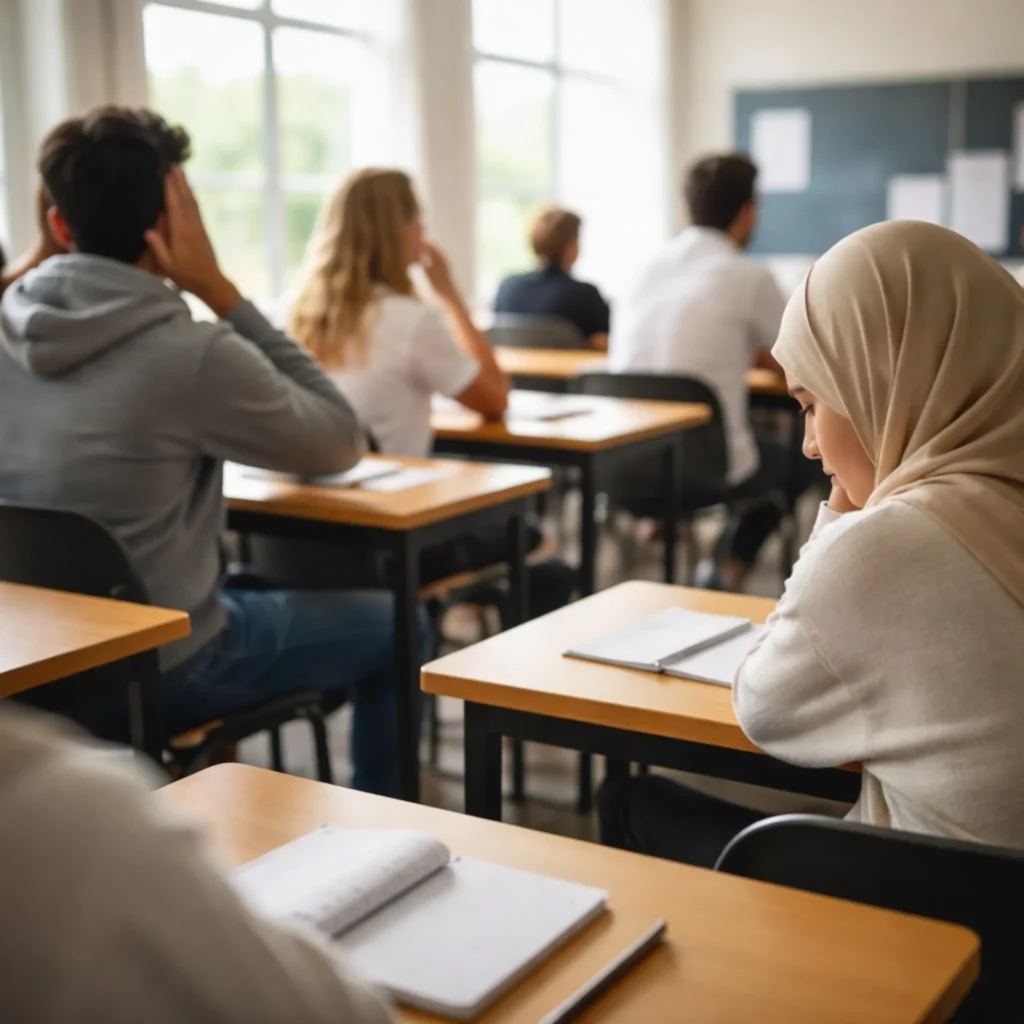

GCSE exams cancelled across the UAE, Gulf countries and Lebanon has quickly become one of the most significant education disruptions of 2026, with thousands of students now facing an entirely different path to their final grades. What was expected to be a normal exam season has instead turned into a major shift in how academic performance will be measured.
The decision, confirmed by major UK exam boards including Pearson and Cambridge, affects students preparing for international GCSE and A-Level exams in the UAE, Bahrain, Kuwait and Lebanon. Schools that had been preparing for the traditional May–June exam window will now move toward alternative grading systems as regional instability continues to disrupt education.
This follows a wave of earlier exam cancellations across the region. International Baccalaureate (IB) exams have already been scrapped, with students assessed through coursework and teacher evaluations instead of written tests :contentReference[oaicite:0]{index=0}. Similarly, CBSE and other international curricula have also cancelled exams, showing how deeply the crisis has impacted schooling across multiple systems.
Why GCSE exams cancelled is such a major shift
GCSEs are not just routine school exams. They are key academic milestones that shape future study options, sixth-form pathways, and university admissions. For many students, this moment defines years of preparation. The sudden cancellation changes that structure overnight.
Across the Gulf, British curriculum schools form a large part of the education system. Thousands of students rely on Pearson Edexcel, Cambridge International, and AQA qualifications, making this disruption particularly wide-reaching. In countries like the UAE, where international schooling is dominant, the impact is immediate and widespread.
What makes this situation different from past disruptions is its scale. Multiple exam boards, multiple countries, and multiple curricula have all been affected at once. Reports indicate that the cancellations are directly linked to the broader regional conflict, which has already forced schools into remote learning and disrupted normal academic schedules :contentReference[oaicite:1]{index=1}.
How students will now be graded
With exams no longer taking place, the focus shifts to what exam boards call “alternative assessment” or “portfolio of evidence”. This means final grades will be based on a combination of:
• Coursework and internal assessments
• Mock exam performance
• Classwork and teacher evaluations
• Predicted grades submitted by schools
This approach is not entirely new. It was used globally during the pandemic, and exam boards have contingency frameworks designed for situations where exams cannot be safely conducted. Cambridge has already confirmed that students in affected regions will submit evidence portfolios instead of sitting written papers.
For IB students, a similar system is already in place. Their grades will rely on cumulative assessments and coursework rather than final exams, reinforcing a broader shift across education systems in the region.
Official update: Pearson has confirmed that contingency grading methods and alternative pathways will be used where exams cannot go ahead, ensuring students can still receive valid qualifications. You can read the latest update on the Pearson qualifications website.
What this means for students and families
The biggest concern now is not preparation for exams, but confidence in grading. Students who were relying on final exams to improve their results may feel uncertain, while others who performed consistently throughout the year may benefit from a broader evaluation.
Parents are also seeking clarity on how fair and accurate these new systems will be. Since results still play a crucial role in university admissions, the credibility of these grades is essential. Exam boards have stressed that moderation and standardisation processes will be applied to maintain fairness across all candidates.
Schools are now under pressure to build a strong academic record for each student. Teachers are increasing focus on mock exams, past papers, and continuous assessment to ensure there is enough evidence to support final grades.
At the same time, many schools have emphasised student well-being. With uncertainty already high, maintaining routine learning and structured preparation has become just as important as academic performance.
A wider education disruption across the Gulf
The cancellation of GCSE exams is not happening in isolation. Across the Gulf region, education systems are facing one of their most challenging periods in recent years. The cancellation of IB, CBSE, and other board exams highlights how widespread the disruption has become.
For many families, this situation feels similar to the pandemic-era exam cancellations, but with added uncertainty due to the ongoing geopolitical situation. Schools have returned to remote learning in some areas, and academic calendars have been repeatedly adjusted.
What stands out is how quickly exam systems have adapted. Instead of delaying exams indefinitely, boards have moved toward alternative grading to ensure students can continue their education without losing an academic year.
This moment reflects a broader shift in education — one where flexibility, continuous assessment, and adaptability are becoming just as important as traditional exam performance.
For students across the UAE, Gulf countries and Lebanon, the focus now moves forward. The exam hall may be gone this year, but the outcome still matters. What replaces it will shape not only results, but also how this generation is remembered — not for cancelled exams, but for how they navigated one of the most uncertain academic years in recent memory.

Make Swikblog your go-to source on Google for reliable updates, smart insights, and daily trends.