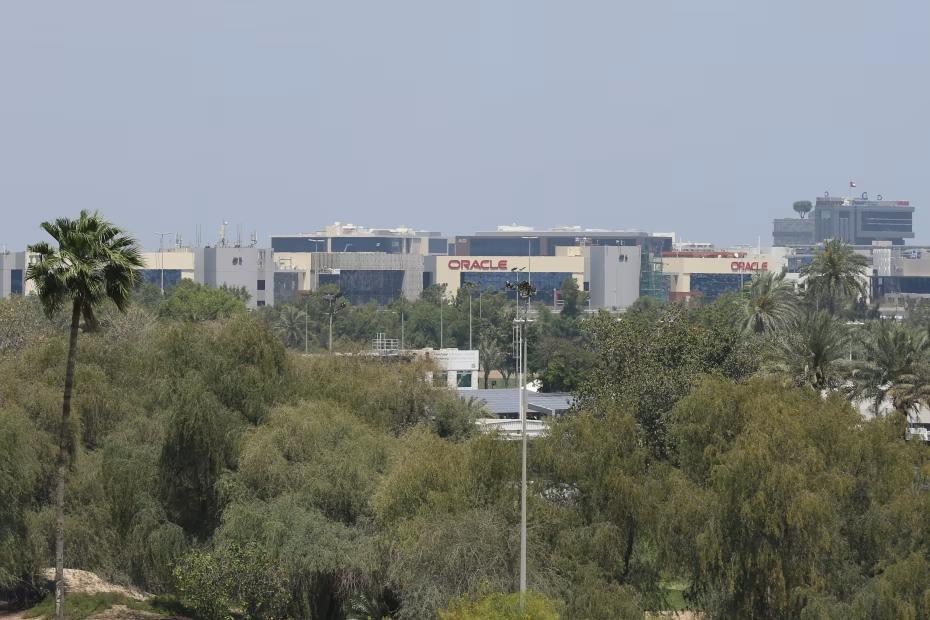

Debris from an aerial interception linked to an Iranian strike damaged part of an Oracle building in Dubai, drawing fresh global attention as a regional conflict edged closer to one of the Middle East’s most important commercial hubs.
Dubai authorities said the damage was minor and that no injuries were reported after debris struck the Oracle site in Dubai Internet City early on Saturday. The incident quickly gained attention because it involved a major American technology company in a city widely seen as a stable base for multinational business operations.
The episode comes as Iran continues launching projectiles across the region following U.S. and Israeli strikes, raising concern that the effects of the conflict are moving beyond military targets and into business districts, office towers, and critical digital infrastructure.
That wider significance is what makes the incident stand out. Oracle is not just another office tenant in Dubai. It is one of the world’s best-known technology companies, with operations tied to enterprise software, cloud computing, and corporate systems used across industries. Even limited physical damage at such a site can shift perceptions of risk for other global companies with a large Gulf presence.
Why the Dubai incident is drawing attention
For years, Dubai has presented itself as a relatively insulated commercial centre where international companies could manage Middle East business even during periods of regional instability. Damage involving a recognizable global technology brand challenges that assumption, even if the immediate impact was contained.
The incident is also being viewed through the broader lens of Iranian warnings aimed at American interests in the region. In recent days, rhetoric around retaliation has expanded beyond military and diplomatic targets, increasing concern that commercial and digital assets linked to U.S. firms could face growing exposure.
That matters because modern conflict does not only disrupt borders, military sites, or shipping lanes. It can also reach the office buildings, cloud systems, logistics networks, and communications infrastructure that global companies rely on every day. What once looked like secondary business risk is beginning to look far more central.
For multinational firms operating in the Gulf, the Oracle incident may not trigger an immediate pullback, but it is likely to sharpen internal discussions around staff safety, business continuity planning, and the resilience of regional operations. A projectile does not need to cause major destruction to alter executive thinking. It only needs to show that the boundary between geopolitical conflict and private-sector infrastructure is thinner than many assumed.
A warning sign for global technology firms
Markets and corporate decision-makers are also likely to read the event as part of a wider shift. Technology companies are already exposed to geopolitical stress through supply chains, regulation, and trade restrictions. Incidents like this raise a more direct question: whether offices, cloud facilities, and local partners could increasingly become pressure points in a conflict that is widening in both reach and consequence.
The debris that hit the Oracle building was small in military terms, but it carries a much larger business message. It suggests that the infrastructure supporting finance, communications, and enterprise technology can no longer be treated as comfortably separate from regional escalation.
For Dubai, the incident is an unwelcome test of its reputation for resilience. For global technology firms, it is another reminder that the geography of modern conflict is being redrawn around infrastructure as much as territory. Readers following the broader crisis can track ongoing developments through Reuters Middle East, as attention remains fixed not only on military escalation but on the growing vulnerability of the systems that support global business.
Author Bio
Chetan is a Swikblog writer with 5 years of experience covering global news and trending developments, focusing on clear reporting and real-world context for fast-moving stories.

Make Swikblog your go-to source on Google for reliable updates, smart insights, and daily trends.