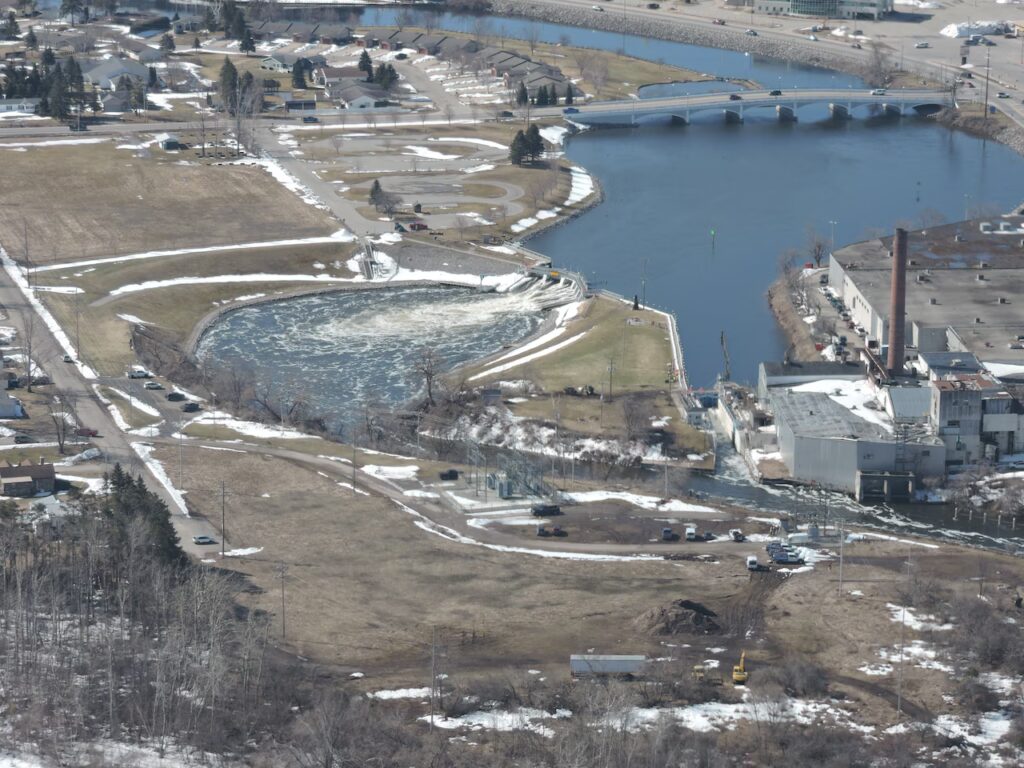

Water levels at the Cheboygan Dam in northern Michigan are rising rapidly, pushing the area into a critical phase of emergency planning and prompting authorities to warn residents to prepare for possible evacuation. The Cheboygan County Sheriff’s Office issued an early morning alert Monday, urging people living downstream toward Lake Huron to begin packing essential belongings as conditions continue to worsen.
The warning comes as the dam officially entered the “Ready” stage of Michigan’s emergency “Ready, Set, Go” framework — a threshold triggered when water levels approach within 12 inches of the top and continue rising by at least three inches per day. Officials said water levels were fluctuating just below that mark in the latest readings, highlighting how quickly the situation is evolving.
Residents in the potential impact zone have been advised to assemble go-bags with medications, identification and key documents, secure outdoor property and move valuables to higher ground. Authorities also stressed the importance of signing up for emergency alerts, noting that evacuation orders, if issued, would be communicated through official channels.
Escalation risk grows as water continues to rise
The concern is not only current water levels, but the pace at which they are increasing. Under the state’s emergency plan, the situation could escalate to the “Set” phase if water rises to within six inches of the dam’s top or is projected to overflow within 48 hours. At that stage, residents would be expected to prepare fully for departure, including arranging transport for family members and pets.
The final “Go” phase would be triggered if water reaches within one inch of the top, creating a high probability of overtopping and potential structural failure. Officials have warned that, in such a scenario, evacuation orders would be issued quickly and access routes could be restricted with roadblocks.
Despite the rising concern, local officials have attempted to provide measured reassurance. Current projections suggest minimal widespread residential flooding if water overtops the lock and dam system, though low-lying areas along the river — particularly parts of the west side north of the dam — could see impacts to businesses and nearby streets.
Emergency response intensifies across Cheboygan
Crews from the Michigan Department of Natural Resources are working to relieve pressure on the system. Five large pumps have been activated to divert water, while all gates on the DNR-managed portion of the dam are fully open to maximize flow. Officials are also coordinating with federal regulators to explore reopening a hydroelectric generation facility to increase water movement.
Additional mitigation efforts include the placement of roughly 2,000 sandbags to direct water flow and the removal of a timber debris screen near Gate 6 to improve capacity. These measures are designed to handle increased inflow driven by recent rainfall, snowmelt and additional rain forecast into the week.
The broader response has also escalated at the state level. Governor Gretchen Whitmer previously declared a state of emergency in Cheboygan County and activated the State Emergency Operations Center, underscoring the seriousness of the situation as conditions remain fluid.
Infrastructure precautions are already being taken. The US-23 bascule bridge in Cheboygan is being raised and closed to traffic due to concerns over debris impact, riverbed erosion and safety risks to motorists and pedestrians. Traffic is being rerouted via the Lincoln Avenue Bridge, with no clear timeline yet for reopening as inspections will be required before it can return to service.
Authorities have emphasized that while the situation remains under control for now, it could change quickly. Residents have been warned not to rely on rumors and to follow verified updates from emergency officials and the Michigan Emergency Management and Homeland Security Division.
With water continuing to rise and more rainfall expected, the focus in Cheboygan has shifted firmly toward preparedness — a signal that while evacuation has not yet been ordered, the window to act calmly and safely may be narrowing.
You may also like: Goldman Sachs (GS) stock falls 4% after Q1 earnings 2026
Make Swikblog your go-to source on Google for reliable updates, smart insights, and daily trends.