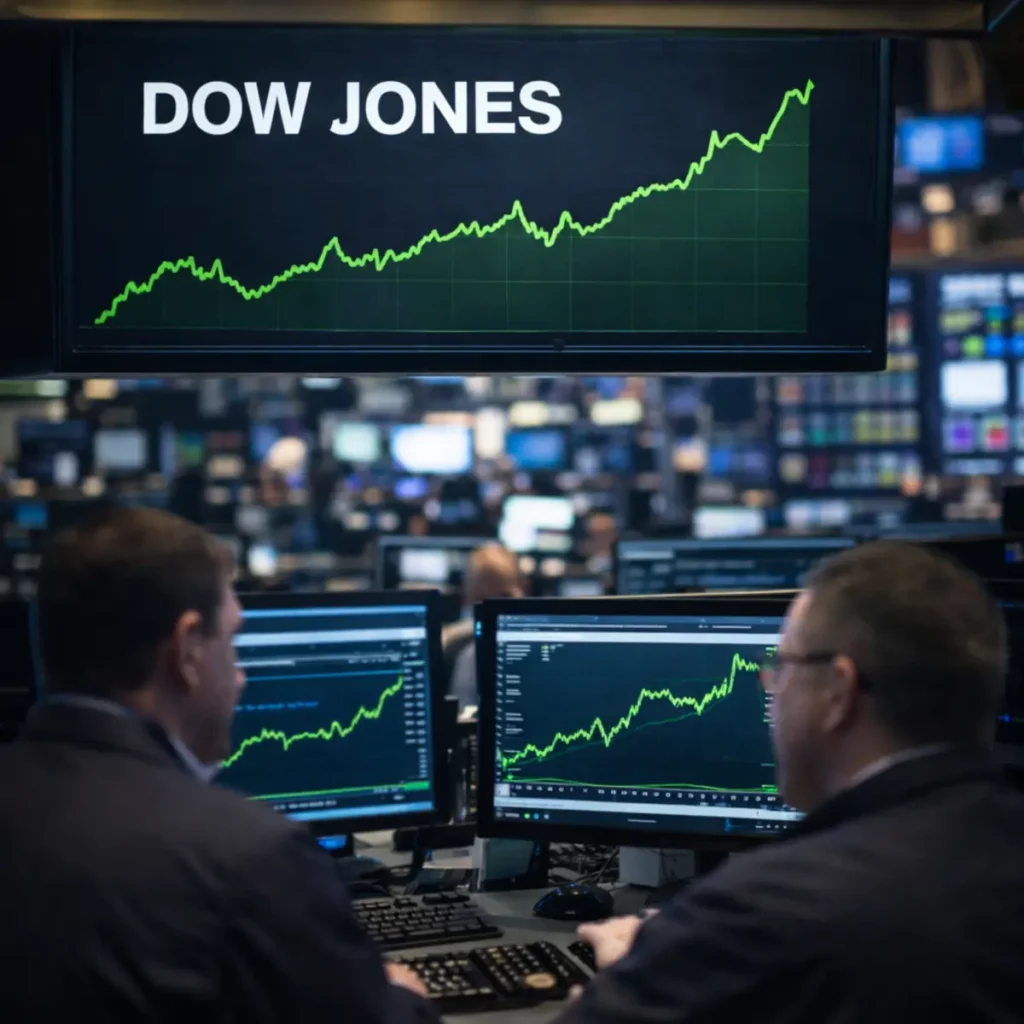

Wall Street is heading into Monday with a very different mood from the one that usually follows a weekend of geopolitical tension. Mini Dow Jones Industrial Average futures for June (YM=F) were quoted at 49,641.00, up 874.00 points or 1.79% in the market snapshot tied to this story. That is a meaningful jump heading into the first session of the week, and it suggests traders are starting Monday with a bias toward relief rather than panic.
Still, the number itself is only part of the story. The bigger force behind the move is the sharp shift in energy sentiment. U.S. crude oil futures (CL=F) were shown down 9.41%, a swing large enough to alter the entire tone of equity trading. When oil drops that quickly, investors begin to reprice a long list of assumptions at once: inflation pressure, freight costs, airline and transport margins, industrial input expenses, and even the broader outlook for consumer confidence. In other words, a steep fall in crude can act like an immediate pressure release valve for stocks.
That matters even more right now because the market is trying to process competing headlines around Iran and the Strait of Hormuz. Traders are clearly reacting to the possibility that renewed talks could reduce the immediate risk of a prolonged energy shock. At the same time, nobody on Wall Street is likely to treat the situation as fully resolved. Hormuz remains one of the most sensitive shipping routes in the world, and every development tied to it has the power to move oil, indexes and sector leadership within minutes.
From a market perspective, that is why this futures rally is worth watching closely. A gain of 874 points in the Dow contract is not a routine overnight move. It reflects a real attempt by investors to price in calmer conditions after a period of elevated anxiety. But futures do not lock in the cash session. What matters next is whether lower oil prices hold and whether buyers continue to support cyclical and risk-sensitive names after the opening bell.
Market leaders already show where attention is building
The stock list attached to the news snapshot offers a useful read on where the market’s focus is heading into the new week. Interactive Brokers (IBKR) was shown up 2.94%, Lam Research (LRCX) up 2.54%, Vertiv Holdings (VRT) up 4.49%, and Tesla (TSLA) up 3.01%. Those are not random names. Together, they reflect several of the market’s most active themes: trading activity and financial-market engagement, semiconductor equipment demand, data-center and AI infrastructure spending, and the continued magnetism of mega-cap growth stocks.
VRT stands out with the strongest move of the group at 4.49%. That is notable because Vertiv has become one of the key names tied to the infrastructure side of the AI boom, particularly around cooling, power systems and data-center expansion. LRCX, up 2.54%, points to continued strength in semiconductor equipment, a space that traders often treat as a confidence signal for tech spending and chip-cycle expectations. IBKR gaining 2.94% fits the idea of higher market participation and improving trading sentiment, while TSLA rising 3.01% puts fresh attention on one of the week’s biggest earnings names.
Those percentage moves also show something important about current investor behavior: buyers are not hiding only in defensive corners. They are also stepping back into areas linked to momentum, technology infrastructure and trading-driven optimism. That does not guarantee follow-through on Monday, but it does suggest the weekend setup is broader than a simple rebound in index futures.
Tesla’s week adds another layer to the market setup
Tesla is likely to remain one of the central stocks to watch as Monday trading begins. The company is due to report earnings this week, which gives the broader market a second major catalyst alongside the oil and geopolitical narrative. When Tesla is in focus, it often shapes more than just its own chart. It can influence sentiment toward growth stocks, momentum traders and retail participation across the wider market.
That is one reason the combination of TSLA +3.01% and YM=F +1.79% matters. It suggests investors are entering the week with a willingness to embrace risk, at least for now. If that tone survives into the regular session, stocks tied to market momentum and economic resilience could keep attracting attention. If oil suddenly reverses or tensions around Hormuz worsen again, that willingness could fade just as quickly.
The relationship between energy and equities is especially important here. The Dow is packed with companies that are sensitive to macro conditions, industrial demand and shifts in cost pressure. A major drop in oil can support expectations for less inflation stress and stronger margins across transportation, manufacturing and consumer-facing businesses. That helps explain why a sharp retreat in crude can lift not only the energy conversation but the mood across the entire market.
At the same time, seasoned investors know that early futures strength does not settle the bigger question. Monday’s first hour is likely to reveal whether this is a durable relief move or simply a reaction to the latest headline flow. If crude remains subdued and market breadth strengthens after the open, the rally has a stronger foundation. If oil begins climbing again and buyers pull back, the overnight gain in futures may start to look more fragile.
For now, the most important numbers are already on the table: YM=F at 49,641.00, up 874.00; CL=F down 9.41%; IBKR +2.94%; LRCX +2.54%; VRT +4.49%; and TSLA +3.01%. Together, they paint a clear picture of a market preparing for Monday with renewed risk appetite, but not with complete certainty. The optimism is real, yet it is resting on variables that can still move quickly.
For readers who want the broader geopolitical backdrop behind the market reaction, this Associated Press report on the latest U.S.-Iran talks and Strait of Hormuz tensions provides added context on why oil remains the key driver heading into the new week.
You May Also Like

Make Swikblog your go-to source on Google for reliable updates, smart insights, and daily trends.