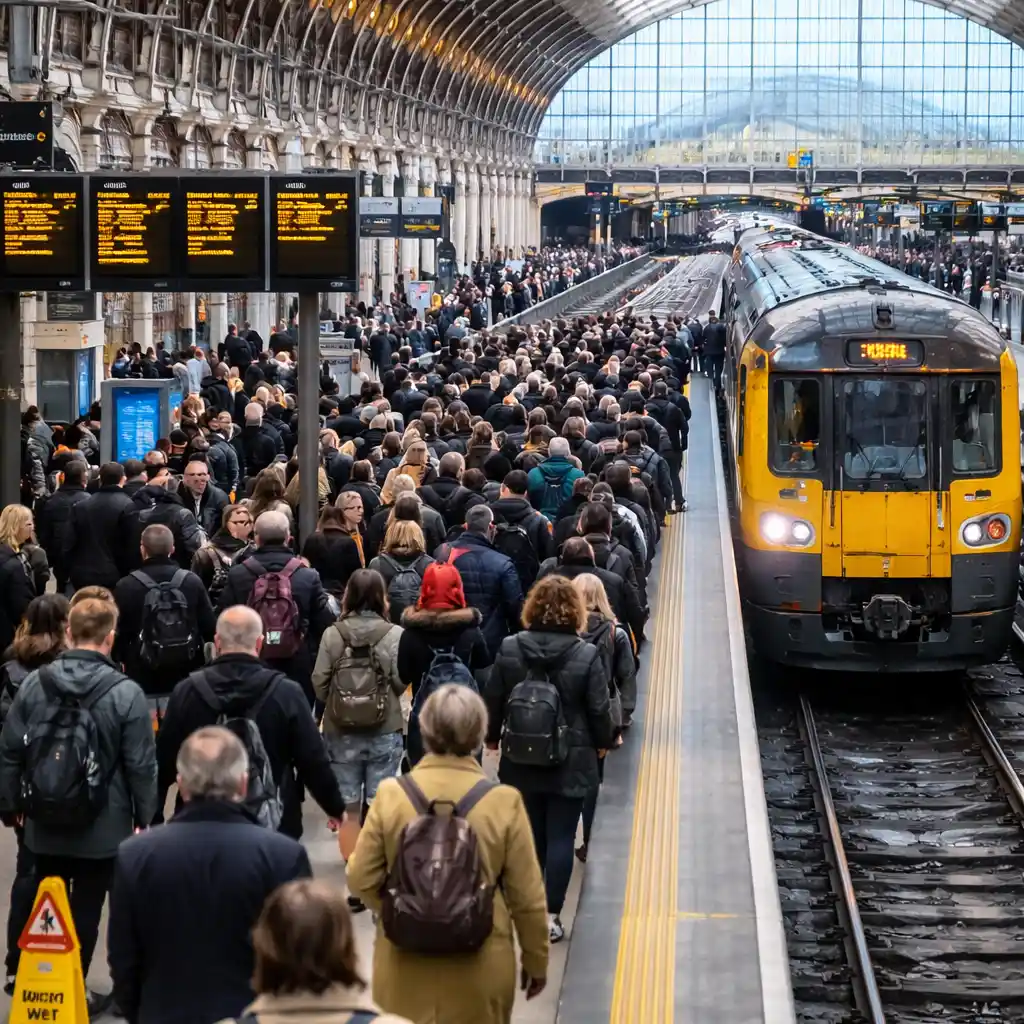

London commuters faced a difficult start on April 20 after rail disruption around Paddington triggered cancellations, delays and last-minute changes during the morning rush, with the impact spilling across some of the capital’s busiest travel corridors before services gradually moved back towards normal.
The disruption began after a trespass incident in the Paddington area forced an earlier halt to train movements. Although all lines later reopened, the network did not recover immediately. Passengers travelling to or from London Paddington were warned that trains could still be cancelled, delayed by up to 30 minutes or altered at short notice while operators worked through the backlog. Rail officials said services were expected to settle after 9am, but for many travellers the damage to the morning commute had already been done.
For London, Paddington is far more than a single station. It is a major gateway for west London, regional routes and Elizabeth line journeys, so disruption there tends to spread quickly across multiple operators and onward connections. A problem in the area can affect office workers heading into central London, passengers connecting to other rail services and people trying to reach appointments, airports or family destinations on time. That wider knock-on effect was clear again this morning as customers navigated uncertainty over whether their service would run as planned.
One of the most important points for passengers was that the disruption did not end when the lines reopened. Recovery on a busy railway is rarely immediate. Trains and crew can end up out of position, timetables need to be reset and platform allocations may change with little warning. That is why even after the initial incident was resolved, travellers were still being told to expect revised services and to keep checking live updates rather than rely on their original plans.
The Elizabeth line was among the services most closely affected. Travellers using the route were advised to allow extra time and be prepared for short-notice alterations and platform changes. National Rail also urged customers to listen carefully to station announcements or speak to staff before boarding. Later updates indicated that the Elizabeth line had returned to a good service, but only after a period of earlier disruption linked to the Paddington incident.
Ticket flexibility became a key part of the response. Elizabeth line customers were told they could use their tickets at no extra cost on London Buses, London Underground, South Western Railway and Great Western Railway via any reasonable route. For passengers trying to keep moving during a disrupted morning, that kind of ticket acceptance can make the difference between reaching their destination late and not reaching it at all.
Great Western Railway customers were also given a number of alternative options. Their tickets were accepted on South Western Railway services between Reading and London Waterloo, on London Underground between London Paddington and London Waterloo, on Elizabeth line services between Reading and London Paddington, and on Chiltern Railway services between London Marylebone and Oxford. Those measures reflected the scale of the disruption and the importance of keeping passengers moving through parallel corridors while the main service recovered.
Rail passengers whose trains were cancelled were given further guidance on rebooking their journeys informally. National Rail said customers could travel on the two scheduled trains before the cancelled service or the two scheduled after it. Importantly, the rail authority said that if those trains were peak services or otherwise less flexible, travellers could still use their original ticket without paying extra. That advice offered some practical clarity during a morning when not every commuter would have been able to delay travel until conditions improved.
Passengers were also reminded to monitor the National Rail journey planner for the latest service information and to check whether they may qualify for compensation if their journey was delayed. Under normal delay repay rules, compensation depends on the operator and the length of the delay, so travellers affected by the morning’s disruption may need to review their specific provider’s guidance once their journeys are complete.
The trouble at Paddington unfolded against a wider backdrop of transport disruption across London. During the same morning, the Jubilee line had no service between Waterloo and Finchley Road while emergency services dealt with a casualty on the track, with severe delays on the rest of the line. The Piccadilly line was also affected by delays after an earlier faulty train at Manor House, while the Central line had minor delays between Loughton and Epping because of a points fault at Epping. Elsewhere, the DLR resumed service between Shadwell and Bank after an earlier fire alert at Bank, though severe delays remained between Bank and Canning Town as services recovered.
Road conditions, by contrast, were relatively clearer, although there were delays linked to the refurbishment of Gallows Corner Flyover, with disruption reported westbound on the A12 and A127, eastbound on Ardleigh Green Road and northbound on Gubbins Lane. Even so, the larger story for many Londoners was the strain on public transport, with several incidents across the network turning an ordinary weekday morning into a challenging one for anyone travelling at peak time.
Trespass incidents are especially disruptive because of the immediate safety measures they trigger. Services may need to stop completely while the railway is secured, and the after-effects often last longer than the original event. At stations as busy as Paddington, even a short suspension can create a wave of delays that takes hours to unwind. That pattern is familiar to frequent rail users, who know that the phrase “all lines reopened” does not necessarily mean the railway has returned to normal.
For passengers travelling through west London this morning, the practical advice remained simple: check before leaving, allow extra time, stay alert for platform changes and listen for station announcements. By later in the morning the immediate disruption had eased, but the incident was another reminder of how quickly problems at a major London rail hub can ripple across the wider network.
For official service alerts, live journey updates and passenger advice, travellers can also consult Transport for London.

Make Swikblog your go-to source on Google for reliable updates, smart insights, and daily trends.