
The Chicago Bulls are not just changing coaches. They are starting over.
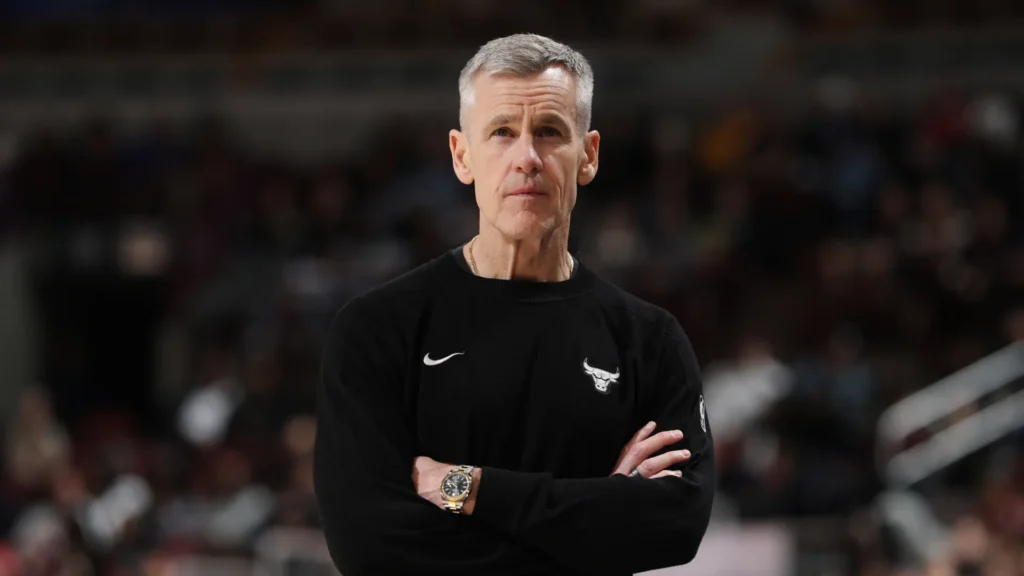
Billy Donovan’s decision to step down after six seasons as head coach lands at a moment when the franchise is already in the middle of a deeper transformation. Chicago had already removed executive vice president of basketball operations Artūras Karnišovas and general manager Marc Eversley on April 6, and Donovan’s exit now leaves the organization without its lead basketball executive and without its coach heading into one of the most important stretches of the offseason.
That is what makes this story bigger than a standard coaching change. Donovan was not pushed aside in a rushed move after a bad week or an ugly public split. The Bulls made clear they wanted him to remain. Ownership said so publicly. But after extensive discussions about the future of the franchise, both sides arrived at the same conclusion: if Chicago is bringing in a new head of basketball operations, that executive should have the freedom to hire a coach and shape the staff without inheriting a structure built by someone else.
In practical terms, it is a reset. In basketball terms, it is an admission that the Bulls need more than a minor tweak.
Donovan leaves Chicago with a 226-256 record, placing him fourth on the franchise’s all-time wins list behind Phil Jackson, Dick Motta and Tom Thibodeau. That number says something about his staying power, but it also highlights the central frustration of his tenure. He lasted long enough to become one of the winningest coaches in team history, yet the Bulls reached the playoffs only once during his six seasons. That appearance came in 2021-22 and ended in the first round. Since then, Chicago has missed the playoffs four straight times.
For a franchise that still carries the brand power of its championship years, that gap between relevance and results has become impossible to ignore. The Bulls are one of the NBA’s most visible teams, but visibility is not the same as momentum. Over Donovan’s run, Chicago often looked like a team caught between timelines — too experienced to commit fully to a rebuild, but not strong enough to threaten the top of the Eastern Conference.
That tension showed up on the floor and in the standings. The roster never fully stabilized, injuries repeatedly disrupted continuity, and the front office’s vision never translated into sustained progress. Donovan, to his credit, remained a respected presence through all of it. Around the league, he has long been viewed as a steady coach, a strong communicator and a developer of talent. He brought professionalism to a franchise that badly needed it. But professionalism alone does not solve structural problems, and in Chicago the structural issues ran deeper than one voice on the bench.
His statement reflected that reality. Donovan said he chose to step away to allow the search process to unfold and to let the next leader build the staff as they see fit. That wording matters. It frames the departure less as a personal break and more as a strategic decision shaped by the Bulls’ larger reorganization. Jerry Reinsdorf echoed the same thinking when he said the team wanted Donovan back but agreed that the incoming basketball operations leader should have the right to build out the organization.
That is also why this offseason now carries unusual weight in Chicago. The Bulls are not simply filling vacancies. They are trying to define what the next few years should look like. Team officials have already begun interviewing candidates for the top basketball job, with reported names including Minnesota Timberwolves GM Matt Lloyd, Detroit Pistons senior vice president Dennis Lindsey, Atlanta Hawks senior vice president Bryson Graham, Cleveland Cavaliers GM Mike Gansey and San Antonio Spurs assistant GM Dave Telep. Austin Brown, the co-head of CAA’s basketball division, has also been linked to the opening. The organization is believed to want its new decision-maker in place around the time of the mid-May draft combine.
That timeline is important because the draft is where the Bulls’ new direction could become visible. Chicago has already started leaning into younger talent and future flexibility. The team’s recent moves signaled that it is no longer pretending to be one move away from serious contention. Instead, the focus appears to be shifting toward player development, asset accumulation and a more patient competitive arc. Young pieces such as Matas Buzelis, Noa Essengue and Anfernee Simons now matter far more in the short term than attempts to cling to the middle of the standings.
Seen through that lens, Donovan’s exit becomes easier to understand. A rebuild is not only about who is on the roster. It is about alignment. Chicago’s next lead executive will need to decide what style the team should play, how aggressive it should be in the trade market, what kind of coach fits the roster, and how quickly the franchise expects to compete again. Handing that person a preselected coaching setup would have undercut the entire point of the reset.
Donovan, 60, should not be short on options. His résumé remains one of the stronger ones in the sport. He is a Hall of Fame coach, having entered the Naismith Memorial Basketball Hall of Fame in 2025, and before Chicago he posted a 243-157 record in five seasons with Oklahoma City while reaching the playoffs every year. He also drew interest from other organizations while still under contract with the Bulls, including the New York Knicks last offseason and the University of North Carolina during this season. That history matters because it shows his standing has not been diminished by the Bulls’ broader struggles.
For Chicago, though, the more pressing question is not where Donovan lands next. It is whether the franchise can finally build something coherent after years of drifting between ambition and uncertainty. The Bulls have the market, the visibility and the fan base. What they have lacked is sustained basketball clarity.
That is why this coaching exit should be read as the start of a larger franchise test. The next executive hire will shape the next coaching hire. The next coaching hire will shape the development of the young core. And the decisions made before the late-June draft could determine whether this reset becomes a credible rebuild or just another temporary rebrand.
For readers tracking league-wide coaching and front-office movement, the NBA’s official coverage remains a useful source for verified league updates and team developments.
Donovan’s Bulls tenure will not be remembered as a golden era. It will be remembered as a transitional one. Now Chicago has to prove that the transition was leading somewhere meaningful.
You may like: NBA Draft 2026 Order: Raptors at No. 19 as Jazz Protected Pick Comes Into Focus

Make Swikblog your go-to source on Google for reliable updates, smart insights, and daily trends.