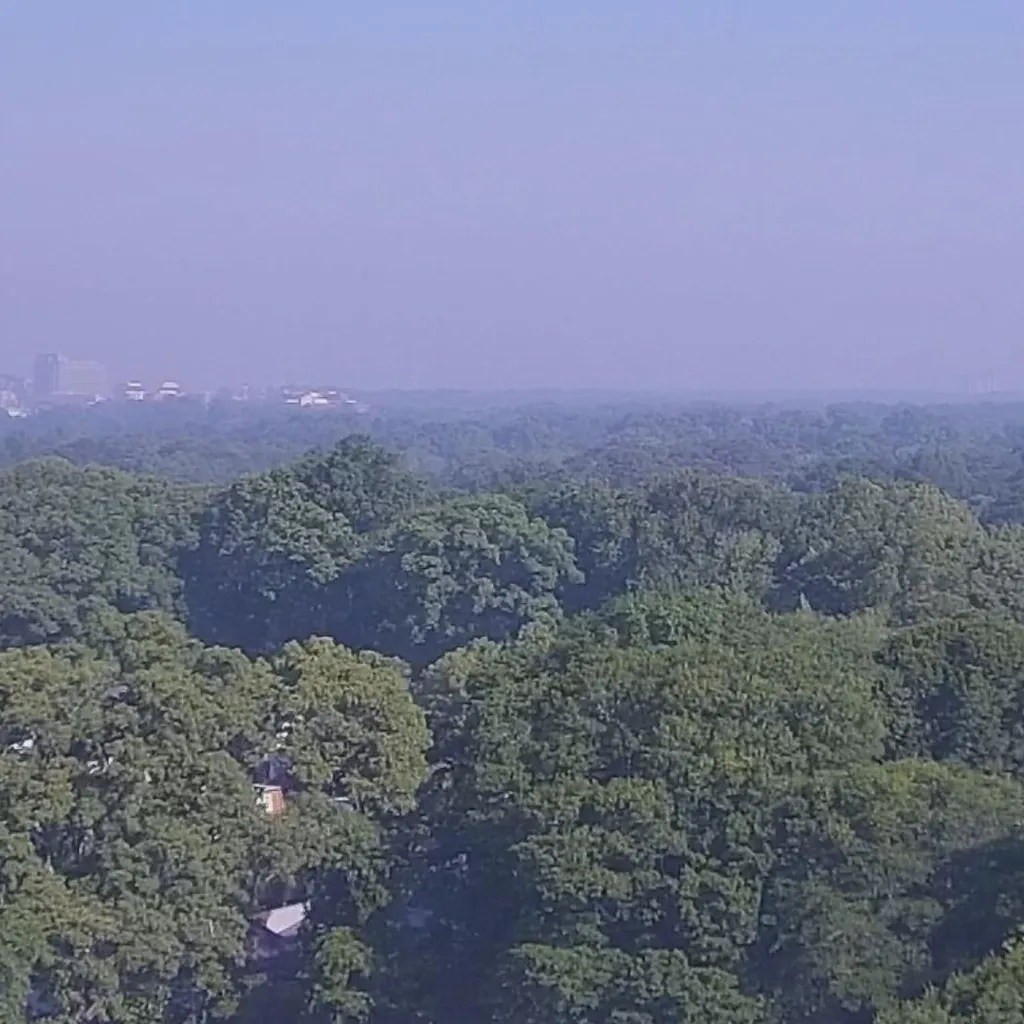

Metro Atlanta residents woke up on April 22 to a grayish haze and a lingering smell of smoke that felt unusual for a spring morning. In neighborhoods stretching from Decatur to Midtown, visibility looked slightly muted, and many people began asking the same question: where was it coming from? Local emergency officials said the answer lies far to the south, where a cluster of wildfires burning across Georgia has pushed smoke north into the Atlanta area.
What makes this story important is not only the smell in the air, but the size of the fire activity behind it. The Georgia Forestry Commission reported a sharp rise in wildfire response this week, including nearly 50 new fires in a single day on Tuesday. Over roughly the last week, the state has seen about 99 wildfires burn close to 22,000 acres. That is a serious stretch of fire activity for Georgia, and it reflects how quickly dry conditions can turn brush and timberland into a statewide problem.
The largest blaze drawing attention is the Pineland Road fire in Clinch County. That fire began on April 18 and has already burned more than 16,000 acres, making it one of the biggest active fires in the state. Another significant fire in Brantley County has spread to nearly 4,000 acres. Smaller fires have also continued to ignite from day to day, adding pressure to firefighters and forestry crews already working in difficult conditions.
While the fires are concentrated in South Georgia, their impact is not staying there. Smoke has traveled into metro Atlanta, creating the hazy skyline many residents noticed on Wednesday morning. Atlanta-Fulton County Emergency Management Agency said smoky conditions were expected to continue through the day and advised people who are sensitive to smoke to limit time outdoors, keep windows closed, and run air conditioning in recirculation mode. That guidance is especially relevant for children, older adults, and anyone dealing with asthma or other breathing issues.
The air in Atlanta was not in the worst category Wednesday morning, but it was not pristine either. AirNow showed Atlanta with an AQI of 77 around 10 a.m., which falls in the “moderate” range. That means most people can go about their day normally, but sensitive groups may still notice irritation or discomfort. Conditions were much worse in several other Georgia areas, showing how uneven smoke exposure can be during a wildfire outbreak. Columbus-Phenix City was reported at 151, Brunswick at 156, Macon at 193, Warner Robins at 167, and Savannah at 148. Those readings show that smoke from the fires is affecting large parts of the state, not just the counties nearest the flames.
Why Georgia’s wildfire situation is getting worse
The underlying driver is drought. State officials have said that more than 98% of Georgia is currently under moderate to exceptional drought conditions, which has left vegetation dry and easier to ignite. Once fires start in that environment, wind and low humidity can help them spread quickly. That is exactly what firefighters have been dealing with in South Georgia, where multiple fires have grown rapidly and some communities have already faced evacuations and school disruptions.
Officials have responded with broader restrictions as the risk has increased. A burn ban has been issued across 91 counties in the southern half of the state. The order blocks outdoor burning activities such as yard debris burns, agricultural burning, and prescribed fires for at least 30 days. State officials say the ban is necessary because even one spark can turn into a fast-moving fire under present conditions. That warning is not just aimed at rural landowners. It is a message for anyone in Georgia who might underestimate how quickly wildfire danger can build during a drought.
Weather has also played a role in what Atlanta is experiencing. Meteorologists noted that southwest winds have kept the thickest smoke from settling directly over metro Atlanta, which has helped prevent a more serious air-quality event in the city. At the same time, those same winds have still carried enough smoke north to produce visible haze and that distinct burning smell. In other words, Atlanta has avoided the worst of the smoke plume so far, but not the broader effects of the fires.
State leaders have also acknowledged the growing severity of the situation. Governor Brian Kemp said his office is working closely with the Georgia Forestry Commission as wildfire threats continue to rise in South Georgia. Other Georgia officials have also publicly urged residents in affected areas to follow local guidance and stay alert as crews work to contain the fires. The scale of official response reflects the fact that this is no longer a small, isolated fire story. It is a statewide weather, environmental, and public-safety issue.
For people in Atlanta, the practical next step is to pay attention to changing conditions rather than assume the haze will stay the same. Smoke levels can rise or fall depending on wind direction, fire growth, and atmospheric conditions. Someone planning to exercise outdoors, spend long hours outside for work, or care for a family member with respiratory concerns should keep a closer eye on official updates. The AirNow air quality tracker remains one of the best public tools for monitoring local air conditions, while the Georgia Forestry Commission continues to publish updates on wildfire response and fire danger across the state.
There is also a wider lesson in this moment. Georgia is not always at the center of the national wildfire conversation, but events like this show how vulnerable the state can become when drought deepens and fire activity accelerates. Smoke drifting into Atlanta is a reminder that wildfire impacts do not stop at county lines. A blaze burning near the Florida border can still shape the daily routine of someone heading to work in Fulton or DeKalb County.
The haze over Atlanta may eventually lift, but the conditions behind it remain serious. Nearly 100 fires in a matter of days, tens of thousands of acres burned, worsening drought, elevated fire danger ratings, and a burn ban across 91 counties all point to a broader emergency still unfolding. For now, Atlanta’s smoky skyline is not just an odd weather moment. It is the visible edge of a much larger wildfire crisis moving across Georgia.

Make Swikblog your go-to source on Google for reliable updates, smart insights, and daily trends.