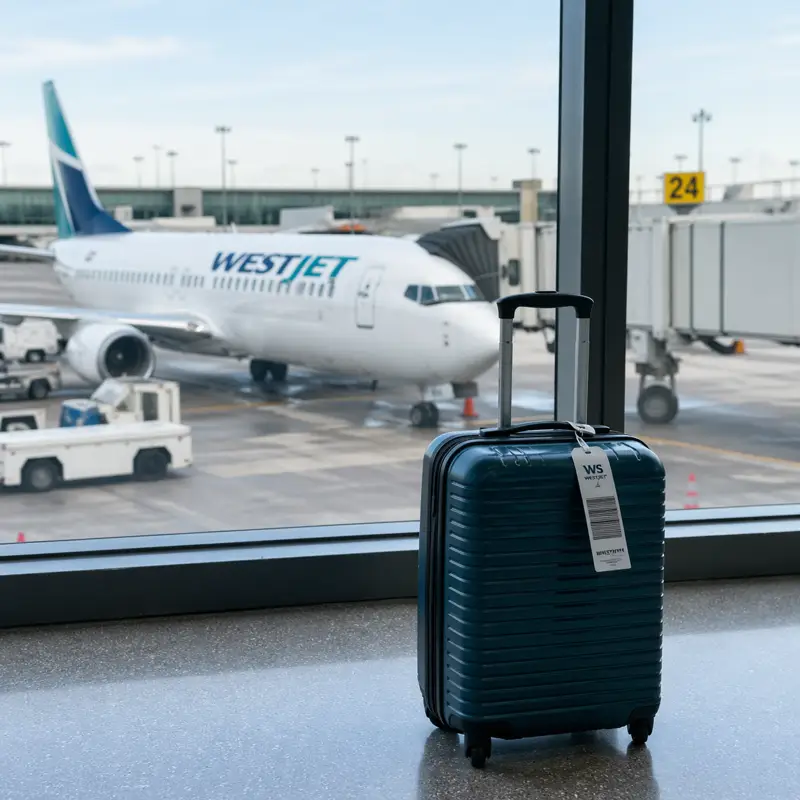

WestJet has made checked baggage more expensive again, adding fresh pressure on travellers already facing a tougher airfare environment heading into the busy summer season. The latest pricing change took effect for reservations made from April 23, and it pushes up costs across prepaid bags, airport-paid bags and heavier or oversized luggage. The increase comes at a time when Canadian airlines are also dealing with higher jet fuel expenses, route adjustments and a broader rise in operating costs.
The headline change is simple: passengers paying in advance will now pay $5 more for both their first and second checked bags, while those waiting until airport check-in will pay $10 more for each of those bags. The biggest jump is tied to excess, overweight and oversized baggage, where charges have climbed by $50. In some cases, that means an overweight bag can now cost as much as $168, a figure that turns an ordinary travel add-on into a serious budget concern for many flyers.
For people booking WestJet’s cheapest fares within Canada, the new structure will be especially noticeable. A first checked bag on ultra-basic can now range from $60 to $93, while a second bag can run from $75 to $111, depending on when the passenger chooses to pay and where the transaction happens. Travellers flying on standard economy fares are also seeing higher totals, with a first checked bag ranging between $45 and $81 and a second between $60 and $99. On long-haul routes to Asia or Europe, a single checked bag on ultra-basic can cost between $85 and $123, showing how quickly baggage charges can stack up on international trips.
WestJet has said the new fee structure reflects industry revenue trends and the effect of current global conditions. That wording may sound vague, but the pressure behind it is clear. Airlines are working through a period of rising fuel bills, and many carriers have been looking for ways to protect margins without relying entirely on base fare increases. Ancillary charges such as checked baggage fees have become one of the easiest places to do that. More details on airline fee structures can be found on the WestJet official fees page.
Why the latest increase matters
This is not a one-time or isolated shift. WestJet’s latest move represents the third increase to baggage fees in three years, following another hike in September 2025. That pattern matters because it shows how baggage has become a steadily growing revenue line rather than a secondary travel charge. For passengers, the result is a booking experience where the advertised fare often tells only part of the story.
The trend is even more important because it does not end with luggage. WestJet has already introduced temporary fuel surcharges for certain companion voucher bookings, and the company has also cut some flight capacity as operating costs rise. Other carriers are making similar adjustments. Air Canada recently raised baggage fees on basic economy tickets, increasing the first checked bag from $35 to $45 and the second from $50 to $60 on domestic, U.S., Mexico, Caribbean and Central America routes. Air Transat has also signalled fare and surcharge changes in recent weeks.
Together, those moves point to a larger shift in Canadian air travel. Airlines are trying to recover higher costs through a mix of baggage pricing, surcharges and schedule changes rather than leaning on one dramatic fare increase. For travellers, that means fewer truly cheap trips once all the extras are added in.
Fuel prices are driving the pressure
A major reason for the tougher pricing environment is the sharp rise in jet fuel costs. Airlines have been hit by higher energy prices tied to instability in the Middle East and disruption around the Strait of Hormuz, one of the world’s most important oil shipping corridors. Because a large share of global crude normally passes through that route, any prolonged disruption can ripple quickly through fuel markets and then through airline balance sheets.
Jet fuel tends to rise faster than crude oil when supply fears intensify, and that puts carriers in a difficult position. They can cut weaker routes, reduce flying on less profitable services, retire older aircraft or try to push more customers into higher-yield products, but they still need immediate ways to manage the cash impact. According to the International Air Transport Association (IATA), fuel can account for a significant share of airline operating costs, which explains why pricing adjustments are becoming more common.
WestJet is not alone in making those choices. Air Canada and Air Transat have also trimmed capacity, while international carriers have cut lower-margin routes and parked older, less fuel-efficient aircraft. The response is global, but Canadian travellers are now seeing it directly in what they pay at the bag drop counter.
What travellers should watch before booking
The main lesson for passengers is that the lowest fare on the search page may no longer be the lowest final trip cost. A basic or ultra-basic ticket can still look attractive at first glance, but once baggage, seat selection and timing of payment are factored in, the savings can narrow quickly. In some cases, a more expensive fare family that includes baggage may offer better value than a stripped-down ticket with multiple add-on charges.
Paying for bags in advance is now even more important because the airport penalty has grown larger. The new gap between prepaid pricing and airport pricing effectively rewards passengers who decide early and punishes those who leave baggage choices until the day of departure. That may help airlines manage check-in operations, but for customers it means less flexibility and more pressure to finalize costs before travel day.
WestJet Teal Rewards members will still receive a $5 discount on their first prepaid checked bag, so some loyal customers will see limited relief. Still, for most passengers, the broader direction is unmistakable. The cost of flying is moving higher not only through ticket prices, but through all the smaller charges attached to the journey.
With summer demand building and airlines still trying to offset volatile fuel costs, WestJet’s latest baggage hike looks less like a temporary change and more like part of a new pricing reality. Travellers can still reduce the damage by booking early, paying for bags in advance and comparing the full trip cost rather than the base fare alone. But the era of treating checked baggage as a minor extra fee is fading fast. On many routes, it is now a central part of the price of flying.

Make Swikblog your go-to source on Google for reliable updates, smart insights, and daily trends.