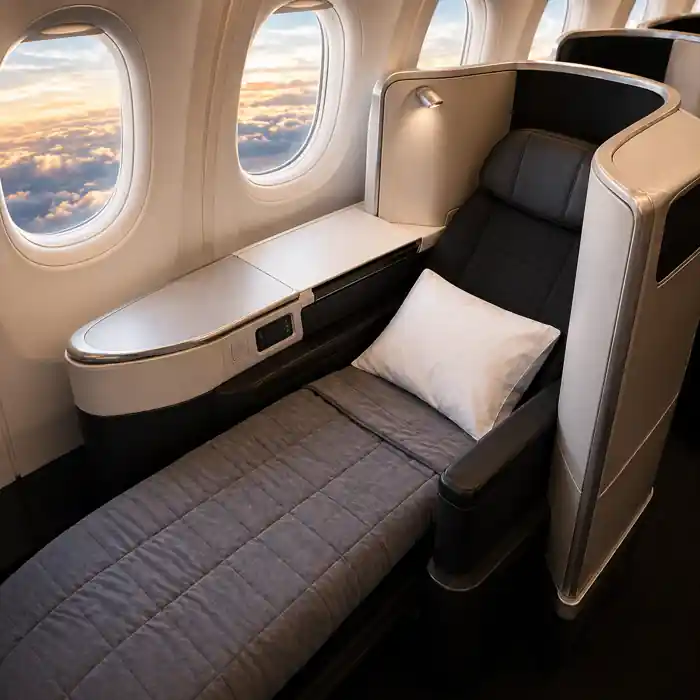

Air Canada is preparing to change the way many passengers think about long-distance flights on smaller aircraft. The airline’s first Airbus A321XLR has arrived with a premium cabin that includes 14 lie-flat Signature Class seats, giving travellers a business-class bed experience on a single-aisle jet.
The development is important because lie-flat seating has usually been linked with larger widebody aircraft on major international routes. By adding fully flat seats to the A321XLR, Air Canada is bringing a long-haul premium product to a smaller aircraft type that can serve thinner transatlantic and high-demand North American routes more efficiently.
Air Canada plans to add 30 Airbus A321XLR aircraft to its fleet in the coming years. The first aircraft was delivered from Hamburg, Germany, and is leased from SMBC Aviation Capital. Of the 30 aircraft, 15 are expected to be leased, while the remaining 15 will come directly from Airbus.
The aircraft will enter Air Canada’s schedule progressively after required certification and entry-into-service work is completed. That means passengers may not see the new cabin on every route immediately, but the aircraft is expected to become an important part of the airline’s future network.
Air Canada’s A321XLR Cabin Brings Widebody Comfort to a Smaller Jet
The standout feature is the new Signature Class cabin. Air Canada’s A321XLR will include 14 full-flat seats arranged in a 1-1 layout, giving every premium passenger direct aisle access. Each seat can recline 180 degrees into a fully horizontal bed, making the cabin suitable for overnight flights and longer journeys where rest matters.
Behind the premium cabin, the aircraft will include 168 Economy seats. This two-cabin configuration allows Air Canada to offer a premium long-haul product while keeping the aircraft smaller and more flexible than a widebody jet.
The cabin will also introduce Air Canada’s updated “Glowing Hearted” design, including a maple leaf-inspired backlit canopy at boarding. The aircraft will feature Airbus’ Airspace interior, larger overhead bins, ambient lighting, updated in-flight entertainment, Bluetooth audio and full in-seat connectivity.
For passengers, these details matter because comfort expectations have changed. Travellers now look closely at seat design, charging access, entertainment options, cabin storage and privacy before booking long flights. A lie-flat seat on a narrowbody aircraft gives Air Canada a stronger premium product on routes where passengers may previously have expected a standard recliner-style seat.
Why the A321XLR Matters for Routes and Efficiency
The Airbus A321XLR is not just a cabin upgrade. It is also a network tool. The aircraft is designed to fly up to 4,700 nautical miles, allowing airlines to connect cities that may not have enough daily demand for a larger widebody aircraft.
For Air Canada, that range could support non-stop transatlantic flights from Toronto and Montreal to cities such as Berlin, Toulouse and Edinburgh. It also gives the airline more options on key North American transcontinental markets, where premium demand can be strong but route economics still matter.
The aircraft is powered by Pratt & Whitney GTF engines and is designed for lower fuel consumption compared with older-generation aircraft. Airbus says the A321XLR offers up to 30% lower fuel burn per seat compared with previous-generation competitor aircraft, along with lower noise and reduced NOx emissions.
The aircraft can also operate with up to 50% Sustainable Aviation Fuel, while Airbus is targeting 100% SAF capability across its aircraft by 2030. More details about the aircraft’s delivery and technical features are available in the official Airbus announcement.
This combination of range, cabin comfort and efficiency is why the A321XLR is attracting attention across the aviation industry. It gives airlines a way to open or maintain long-distance routes without using larger jets that may be harder to fill outside peak travel periods.
How This Fits Into the Bigger Airline Cabin Shift
Air Canada’s move comes as airlines are making very different choices about cabin design. Some carriers are investing in premium comfort, while others are focused on adding seats or reshaping economy cabins to create more fare options.
WestJet previously announced plans to reconfigure parts of its Boeing 737 fleet with more seats and a tiered economy layout, including fixed-recline seats on some aircraft. After passenger criticism, the airline paused parts of that plan and later adjusted its approach.
Air New Zealand has taken another route with its Economy Skynest concept, a bunk-style sleeping option for economy passengers on select long-haul flights. That product is expected to appear on some New York-Auckland services, showing how airlines are experimenting with comfort beyond traditional seat categories.
Against that backdrop, Air Canada’s A321XLR strategy looks focused on premium consistency and route flexibility. Instead of using the aircraft only as a standard narrowbody, the airline is giving it a cabin that can compete on longer journeys.
That may matter most on overnight flights, where passengers are more likely to pay for better sleep, privacy and direct aisle access. It may also help Air Canada compete for business travellers on routes where schedule, comfort and nonstop service can influence booking decisions.
For the airline, the aircraft supports fleet modernization as well. Air Canada already operates a large Airbus fleet and has additional aircraft on order, including future widebody deliveries. The A321XLR adds a middle option between short-haul narrowbody flying and larger long-haul aircraft.
For travellers, the practical impact will depend on where Air Canada places the aircraft and how quickly more deliveries arrive. The first aircraft is only the beginning of a multi-year rollout, so availability of the new lie-flat cabin will likely expand gradually.
Still, the direction is clear. Air Canada is using the A321XLR to bring a more premium long-haul experience to smaller aircraft, while also giving itself more flexibility to serve routes that may not need a widebody jet. For more coverage of airline cabin changes and travel updates, visit our latest travel news section.
The A321XLR may be a single-aisle aircraft, but Air Canada is positioning it as much more than a short-haul jet. With lie-flat seats, direct aisle access, long-range capability and a redesigned cabin, it could become one of the airline’s most important aircraft for premium travel in the years ahead.
You may like: Housing Crisis Australia: 13 Million Empty Bedrooms Raise Big Questions on Supply

Make Swikblog your go-to source on Google for reliable updates, smart insights, and daily trends.