
A woman has been taken to hospital with life-threatening injuries after a serious rock climbing fall near Mount Arapiles in western Victoria, prompting a major emergency response across air and ground crews.
The incident happened late on Monday morning, with emergency services called at about 11:30am after reports that a climber had fallen in the Mount Arapiles area. The woman sustained serious upper-body injuries and was later transported to The Alfred hospital, one of Victoria’s major trauma centres.
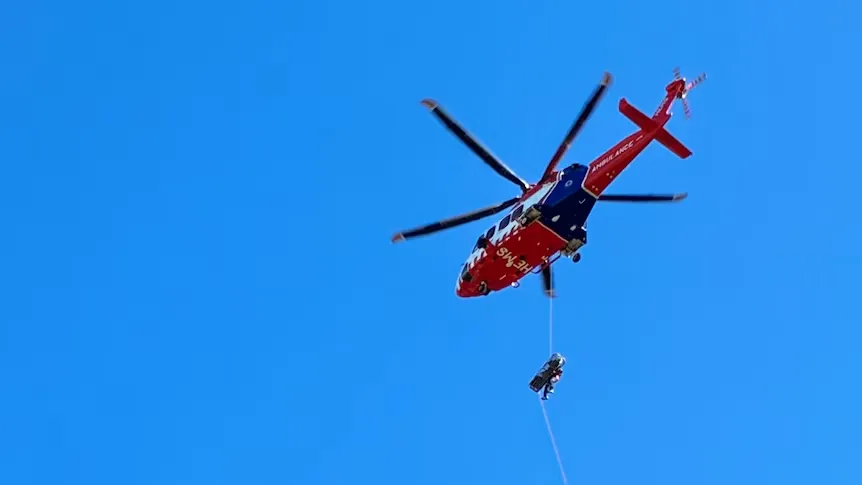
The rescue required a coordinated effort involving Victoria Police, the police Air Wing, search and rescue specialists, State Emergency Service volunteers, Country Fire Authority crews and Ambulance Victoria paramedics. Air Ambulance, advanced life support and mobile intensive care teams were also involved in the response.
Mount Arapiles, near Natimuk in the Wimmera region, is one of Australia’s best-known climbing destinations. Its steep sandstone walls and wide range of routes attract experienced climbers, weekend adventurers and visitors from overseas. But the same terrain that makes the area popular can also make emergency access difficult when accidents occur.
In this case, rescuers had to work through challenging conditions to reach the injured climber safely. SES volunteers assisted with planning the recovery operation, while paramedics and specialist responders made their way to the woman before she could be removed from the scene. The use of air support reflected the seriousness of the incident and the complexity of the location.
Ambulance Victoria teams including advanced life support and mobile intensive care paramedics were part of the rescue effort, indicating the woman required urgent medical assessment and stabilisation before being moved. She was then transferred to The Alfred hospital for further treatment.
Why Mount Arapiles rescues can be complex
Mount Arapiles is widely respected in the climbing world, but rescues in the area can involve far more than simply reaching a patient. Emergency crews may need to deal with cliff faces, loose ground, limited vehicle access, shifting weather and the challenge of moving an injured person from height or difficult terrain.
Specialist rope rescue skills are often required in climbing incidents. Depending on the location of the fall, rescuers may need to climb, abseil, secure anchor points or coordinate with aircraft crews before a patient can be safely extracted. Even when the injured person is located quickly, the recovery process can take time because responders must avoid creating further risk for the patient or the rescue team.
The multi-agency response on Monday shows how outdoor emergencies are handled when terrain, injury severity and access issues overlap. Police may coordinate the broader operation, paramedics provide urgent medical care, SES volunteers assist with technical access and recovery planning, while air crews can support evacuation when ground transport is too slow or unsafe.
For official emergency updates and safety information in Victoria, readers can refer to Emergency Victoria. Climbers and visitors can also check visitor guidance for the area through Parks Victoria’s Mount Arapiles-Tooan State Park information.
Climbing safety back in focus after serious fall
The accident is likely to renew discussion about climbing safety at one of Victoria’s most recognisable outdoor locations. Rock climbing is a sport built around risk management. Experienced climbers often stress that preparation, communication and equipment checks are just as important as physical ability.
Before starting a climb, participants are generally advised to inspect ropes, harnesses, helmets, protection devices, knots and anchor systems. Climbing partners should also agree on commands, understand the route, check weather conditions and avoid attempting climbs beyond their current skill level. A small mistake in communication or gear setup can have serious consequences in exposed terrain.
Mount Arapiles has a strong climbing culture, and many people visit the area because of its reputation for world-class routes. However, popularity does not remove danger. Outdoor climbing differs from indoor climbing because conditions can change quickly, rock quality can vary and help may not be immediately available.
Incidents like Monday’s are also a reminder that emergency crews often put themselves in difficult environments to help injured climbers. The work can involve technical rope systems, helicopter coordination and patient care in places where ordinary ambulance access is not possible.
Authorities have not publicly detailed the exact circumstances that led to the woman’s fall. Until further information is released, the focus remains on her recovery and the emergency response that brought her from the climbing area to hospital care.
For visitors planning to climb at Mount Arapiles or similar outdoor sites, the incident underlines a simple but important message: respect the terrain, prepare carefully and make conservative decisions when conditions or confidence levels change.
Mount Arapiles will remain a major drawcard for climbers, but Monday’s rescue shows how quickly an outdoor adventure can become a medical emergency. The woman’s fall brought together police, SES, CFA, ambulance crews and air rescue teams in a complex operation aimed at giving her the fastest possible path to specialist treatment.
You may like: Alice Springs Mystery: Police Search for Key Man in Missing 5-Year-Old Case

Make Swikblog your go-to source on Google for reliable updates, smart insights, and daily trends.