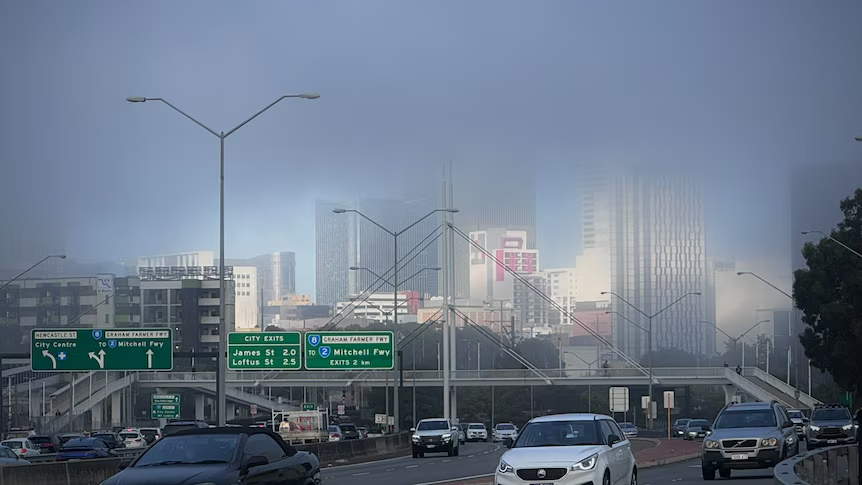

Perth’s Thursday morning commute turned unusually hazardous after a thick layer of fog settled across the city before sunrise, cutting visibility on several major roads and prompting Main Roads WA to warn drivers to take extra care.
The fog began developing in the early hours and was already noticeable across parts of the metropolitan area by about 4am. By peak-hour traffic, the low cloud and mist had spread widely enough to affect key routes, including Tonkin Highway, Mitchell Freeway, Graham Farmer Freeway and the Narrows Bridge.
For many residents, the morning looked dramatically different from a typical clear Perth start. The Swan River was hidden under a pale blanket of fog, while views of the city skyline from South Perth and Elizabeth Quay were heavily obscured. Reports also came from suburbs including City Beach, Mt Helena, Malaga and Banksia Grove, showing the fog was not confined to the CBD or riverside areas.
The main trigger was a sharp build-up of moisture overnight. Humidity climbed to 99 percent around 1am and remained high at 93 percent by 8am, creating the kind of saturated air that allows fog to form close to the ground. When the surface cools overnight and the air can no longer hold all its moisture, water vapour condenses into tiny droplets. Those droplets hang in the air and reduce visibility, sometimes very suddenly.
The Bureau of Meteorology notes that fog is most likely when skies are clear, winds are light and humidity is high. Those conditions were present across Perth and extended into parts of Western Australia’s South West Land Division, with moisture also stretching from the northern Wheatbelt toward the edge of the Goldfields.
Main Roads WA urged motorists to drive to the conditions, particularly on freeways, bridges and high-speed roads where a sudden drop in visibility can leave drivers with little time to react. Fog can be especially dangerous during the morning rush because traffic volumes are high and drivers often move between clear patches and dense pockets within minutes.
Drivers caught in fog should reduce speed, leave extra distance from the vehicle in front and use low-beam headlights or fog lights. High beams should be avoided because they can reflect off moisture droplets and make visibility worse. Motorists should also avoid sudden braking, keep lane changes to a minimum and allow extra travel time.
The poor visibility coincided with a serious crash north of Perth near the Chittering Roadhouse on Great Northern Highway. Authorities said a car and a truck collided around 7.15am, leaving a man believed to be in his 60s trapped in the wreckage. Rescue crews used hydraulic equipment to free him before he was taken to Royal Perth Hospital.
Main Roads reported reduced visibility in the area of the crash. Officials had not confirmed fog as the cause, but the incident underlined the extra risks drivers face when weather conditions change quickly on regional and outer-metro roads.
Unlike rain or storms, fog can feel less dramatic at first but still creates serious road safety issues. A driver may see clearly for several hundred metres, then suddenly enter a thick patch where brake lights, pedestrians, cyclists or merging vehicles are much harder to spot. That is why even familiar roads can become risky during heavy morning fog.
Commuters were encouraged to check live traffic conditions through Main Roads WA before travelling, especially if using major highways or heading through semi-rural areas around Perth. Conditions were expected to improve as the morning warmed and sunlight helped lift the low cloud, although similar fog can return when calm nights and high humidity combine again.
For readers following major local updates across the country, more Australia-focused coverage is available in our Australia news section.
Thursday’s foggy start was a reminder that Perth weather can shift quickly even without rain or storms. For drivers, the safest response is simple: slow down, stay visible and treat low-visibility roads with the same caution as any other severe weather hazard.
You may like: More Australia news and updates

Make Swikblog your go-to source on Google for reliable updates, smart insights, and daily trends.