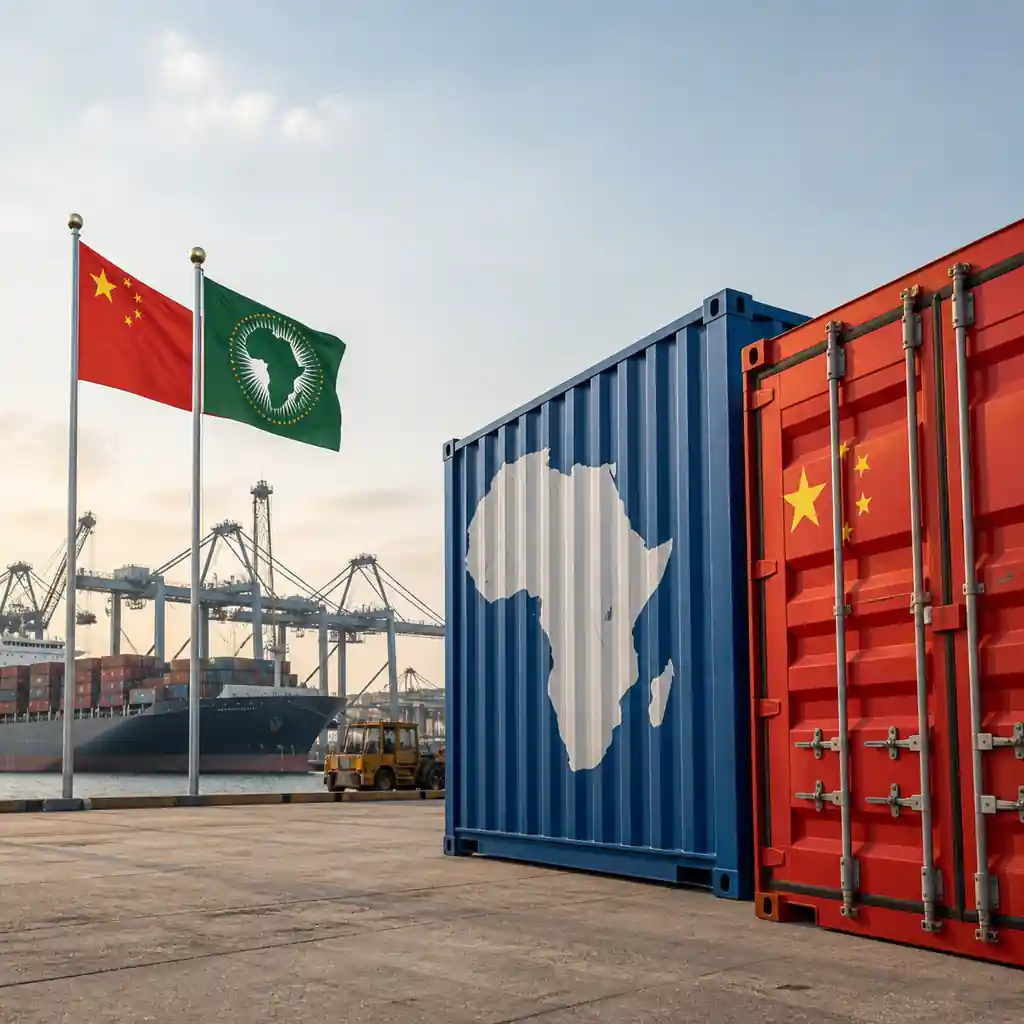

China’s decision to grant zero-tariff access to imports from 53 African nations is being seen as a pivotal moment in the evolution of global trade ties. The policy, which significantly widens earlier duty-free arrangements, opens the Chinese market more deeply to African exporters at a time when trade alliances are shifting and emerging economies are looking for stronger footholds in global supply chains.
The expansion goes beyond the previous framework that focused mainly on least-developed countries. Now, key African economies such as South Africa, Kenya, Nigeria and Egypt are included, bringing larger and more export-ready markets into the fold. This broader inclusion could accelerate trade flows more quickly, given that these countries already possess relatively stronger infrastructure and established export industries.
The first shipment under the updated policy—a batch of fresh apples from South Africa—has already cleared customs in Shenzhen, offering an early signal of how trade could evolve under the new rules. While modest in scale, it reflects a larger shift: African goods that once faced tariffs as high as 30% can now enter China without those added costs, potentially improving pricing power and competitiveness.
For Africa’s agricultural sector, the implications are significant. Products such as cocoa, coffee, citrus fruits, avocados, tea and wine are expected to benefit the most. China’s changing consumer preferences—marked by rising demand for imported food and premium agricultural goods—could create new growth channels for African producers. As discussed in broader global trade trends on Swikblog, emerging markets are increasingly shaping demand patterns, and this policy fits into that larger shift.
At the same time, the numbers highlight both opportunity and challenge. Trade between China and Africa reached $348 billion in 2025, with Chinese imports from Africa rising to $123 billion. Despite this growth, the trade relationship remains uneven. Africa continues to export largely raw materials such as oil, minerals and metals, while importing higher-value manufactured goods from China. This imbalance has contributed to a widening trade deficit, estimated at over $100 billion. A broader look at regional trade trends and economic outlook can be explored through World Bank Africa insights, which track long-term structural challenges across the continent.
Removing tariffs may improve access, but it does not automatically resolve deeper structural constraints. Many African economies still face hurdles including limited industrial capacity, high transport costs, and inefficient logistics systems. For exporters, especially in agriculture, issues like storage, quality standards and supply chain delays can be just as critical as tariffs in determining competitiveness.
Read More
This means that the benefits of the policy are unlikely to be evenly distributed. Countries with stronger export infrastructure—such as South Africa and Morocco—are better positioned to capitalise quickly. Others may require time and investment to scale up production and meet the standards demanded by Chinese markets.
Still, the long-term potential remains notable. By offering duty-free access, China is effectively creating an incentive for African countries to move up the value chain. Instead of exporting raw commodities, there is growing pressure and opportunity to invest in local processing industries. Turning cocoa into finished chocolate or exporting processed agricultural goods could significantly increase value retention within African economies.
China’s broader strategy also plays a role here. The policy aligns with its long-term plans to expand trade openness and strengthen economic ties with developing regions. By deepening its engagement with Africa, Beijing is not only securing supply chains but also reinforcing its position as a leading economic partner in the Global South.
There is a geopolitical layer as well. As other major economies adopt more cautious or protectionist trade policies, China’s move stands out as a signal of openness. It positions Beijing as a stable and accessible market, potentially increasing its influence across the continent. However, the exclusion of Eswatini—due to its diplomatic ties with Taiwan—highlights how trade decisions remain closely linked to political considerations.
For African governments, the challenge now is to convert improved market access into sustainable economic growth. Simply increasing exports of raw materials will not address long-standing structural issues. Instead, there is a need for targeted investment in infrastructure, manufacturing, and skill development to build competitive industries.
Businesses will also play a key role. Exporters that can adapt to Chinese consumer preferences, meet quality requirements and build efficient supply chains are likely to benefit the most. Strategic partnerships, investment flows and technology transfers could further strengthen these capabilities over time.
In the short term, the impact of the zero-tariff policy may be gradual, concentrated in sectors and countries already prepared to export at scale. But over the longer term, it could help reshape trade patterns—provided African economies use this window to diversify production and strengthen domestic industries.
China has removed a major barrier to entry. What happens next will depend on how effectively African nations turn access into advantage.

Make Swikblog your go-to source on Google for reliable updates, smart insights, and daily trends.