
The sinking of the Bayesian superyacht off Sicily is now raising deeper questions than ever before, as investigators move away from early claims of extreme weather and focus instead on human decisions and onboard systems. What initially appeared to be a tragic encounter with a violent storm is now being reassessed as a potentially preventable disaster.
The luxury vessel went down near Palermo in the early hours of August 19, 2024, carrying 22 people — 12 guests and 10 crew members. While 15 survived, seven lives were lost, including British tech billionaire Mike Lynch and his daughter Hannah. The tragedy also claimed the lives of Morgan Stanley International chairman Jonathan Bloomer and his wife Judy, lawyer Chris Morvillo and his wife Neda, and the yacht’s chef, Recaldo Thomas.
Recent findings from experts appointed by Italian prosecutors suggest the weather conditions that night were far less severe than initially believed. Instead of a powerful storm, the event has been described as a “squall” — a sudden surge in wind speed that typically precedes thunderstorms but is not considered extraordinary for modern superyachts.
This distinction has changed the direction of the investigation. If the conditions were manageable, the focus inevitably shifts to how the vessel was handled in those crucial moments.
Critical Minutes That Changed Everything
Investigators have pieced together a timeline that shows just how quickly the situation escalated. Crew members were reportedly woken by increasing wind and waves, prompting preparations to manoeuvre the yacht. However, at approximately 4:06am, a sudden spike in wind speed hit the Bayesian.
Within about 15 seconds, the yacht tilted sharply — reaching an angle close to 90 degrees. At that point, recovery would have been almost impossible. What should have been a controlled response to changing weather rapidly turned into a catastrophic loss of stability.
An earlier report by the UK’s Marine Accident Investigation Branch revealed that some passengers attempted to escape using improvised methods, including makeshift ladders. These details highlight the chaotic and unprepared environment onboard once the situation spiralled out of control.
For readers tracking similar global incidents and maritime risks, platforms like Swikblog have been documenting how rapidly changing conditions and decision-making failures can intersect in high-stakes environments.
Read More
Human Error Under the Spotlight
With the storm explanation now weakened, investigators are closely examining whether the crew underestimated the weather or failed to act decisively. Preliminary findings suggest that key safety systems may not have been activated properly, or were deployed too late to prevent the vessel from capsizing.
Superyachts like the Bayesian are equipped with advanced stabilisation technology designed to counterbalance sudden movements. When used correctly, these systems can absorb shocks from waves or wind shifts. But if they are not engaged in time, the margin for error becomes dangerously thin.
Italian prosecutors are now considering whether criminal charges should be brought against the captain and two crew members. Allegations under review include negligent shipwreck and multiple counts of manslaughter — serious accusations that could redefine accountability standards within the luxury maritime industry.
At the same time, the investigation has not ruled out the possibility of technical or design-related issues. Authorities have raised the question of whether the yacht’s builder could share responsibility, particularly if structural or system vulnerabilities are identified.
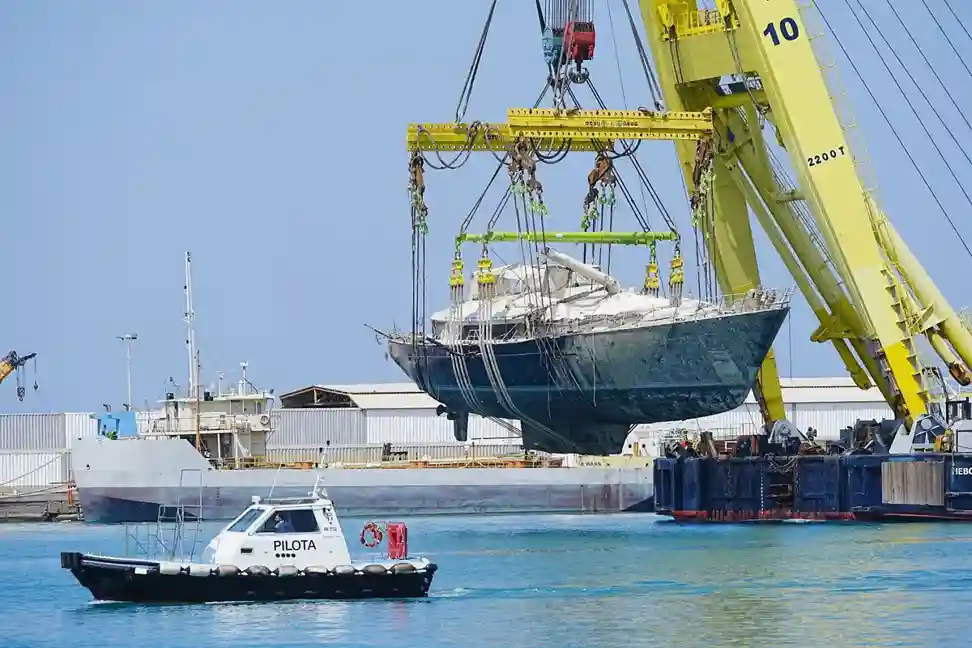
The Bayesian remained submerged at a depth of around 150 feet for nearly nine months before being recovered. By the time it resurfaced, marine life had already begun to occupy parts of the vessel, turning it into an eerie underwater scene. The recovery process itself brought further tragedy when a Dutch diver died during operations, leading to a temporary halt in manned dives and a shift toward robotic exploration.
For families of the victims, the evolving findings add another layer of complexity to an already devastating loss. What once seemed like an unavoidable act of nature is now being examined as a chain of decisions and possible failures.
The broader implications are already being felt. The luxury yacht industry, known for its precision and high safety standards, may face increased scrutiny over crew training, emergency preparedness and adherence to protocols. Even experienced crews are being reminded that seemingly manageable conditions can escalate within seconds.
The story of the Bayesian is no longer just about a yacht caught in bad weather. It is becoming a case study in how judgment, timing and system readiness can determine the outcome of critical moments at sea.
As the investigation continues, one question remains at the centre of it all: if the weather alone was not enough to sink the yacht, what exactly went wrong in those final moments?

Make Swikblog your go-to source on Google for reliable updates, smart insights, and daily trends.