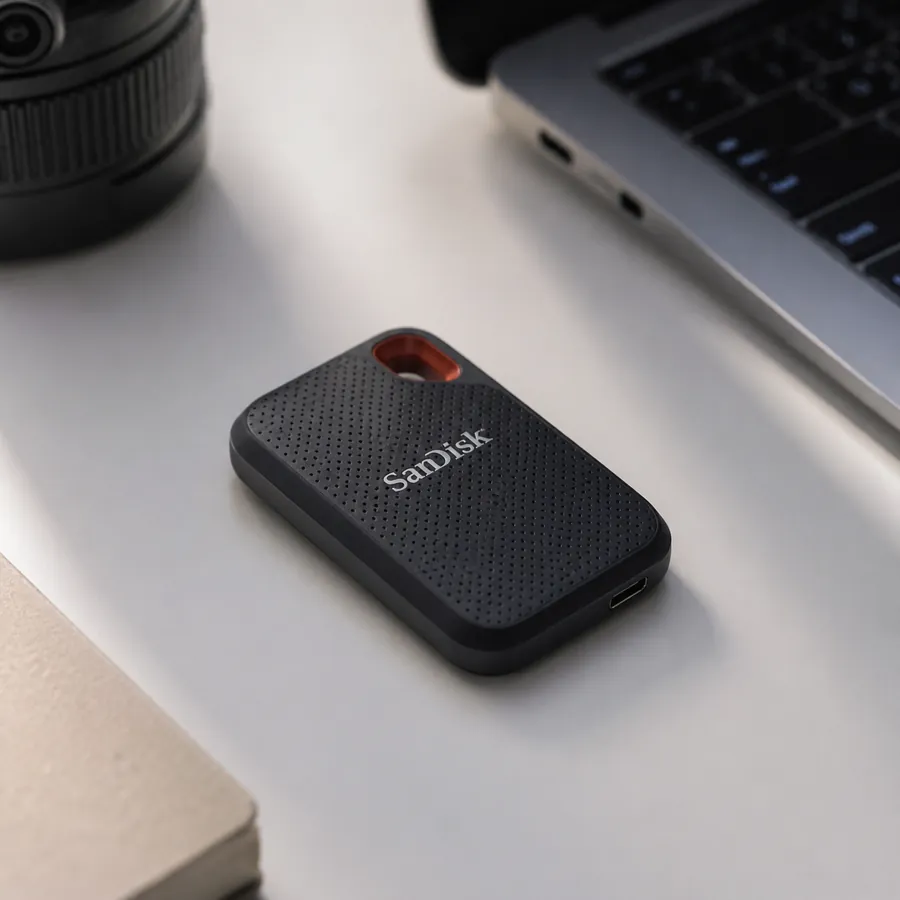

SanDisk has added another compact drive to its portable storage range with the launch of a new 1TB ELE portable SSD, a pocket-sized device aimed at users who want fast everyday storage without moving into premium professional pricing.
The new drive has launched in China at 869 yuan, which is roughly A$200, and is designed for consumers, students, mobile workers and creators who regularly move photos, videos, documents and backup files between different devices. Australian availability has not yet been confirmed, but the launch comes at a time when portable SSD makers are fighting harder on size, speed, durability and price.
At the centre of the new SanDisk ELE SSD is a simple pitch: compact storage with enough speed for regular daily use. The 1TB model offers read speeds of up to 600MB/s through USB 3.2 Gen 2 over USB-C. SanDisk has not listed an official write-speed figure, only saying that write performance is slightly lower than read performance.
That means the drive is not being positioned as a top-end production SSD for heavy 8K video editing or large studio workflows. Instead, it fits the more practical part of the market: people who want a small external SSD for file transfers, media backups, mobile content storage, school projects, office files and travel use.
The design is one of its strongest selling points. SanDisk says the ELE portable SSD weighs just 31.7 grams and measures 75mm by 45mm. That makes it smaller and lighter than many older portable hard drives and compact enough to carry in a pocket, laptop sleeve or camera bag.
Durability is also part of the appeal. The drive includes drop protection from heights of up to two metres, which is useful for users who carry storage between home, office, college, shoots or travel locations. Portable SSDs already have an advantage over traditional external hard drives because they do not use spinning disks, but added drop protection gives the ELE model a stronger everyday-use angle.
The drive supports Windows PCs, Macs, Android smartphones and tablets without requiring extra software. That cross-device compatibility matters because many users now work across several platforms. A creator may record footage on a phone, move files to a tablet for review, then transfer the same content to a laptop for editing or backup.
SanDisk’s timing is important. The portable SSD market has become more crowded, with companies such as Adata and Lexar pushing faster models and adding features such as NFC unlocking, rugged designs and dual-interface connectivity. These features are turning external storage from a basic accessory into a more competitive tech category.
SanDisk is also competing within its own broader product family. The company already sells higher-end Extreme, Extreme Pro and Creator series portable SSDs in several markets, including through major retailers such as JB Hi-Fi. Those models are aimed more directly at professional photographers, videographers and creators who need faster sustained speeds and tougher specifications.
The ELE SSD appears to sit below those premium drives. Its job is not to beat flagship portable SSDs on raw speed, but to give everyday users a more affordable and highly portable 1TB option. That positioning could help SanDisk attract buyers who want SSD reliability but do not need the highest transfer speeds available.
The launch also reflects a wider shift in consumer storage habits. Photos, videos, games, AI-generated files and work documents are all becoming larger. Cloud storage is useful, but many users still want physical backup options, especially when internet speeds are slow, files are sensitive, or large media libraries need to be moved quickly.
For more technology coverage and consumer electronics updates, readers can also visit Swikblog, where storage, gadgets and digital trends are regularly covered for everyday users and tech-focused readers.
Read More
SanDisk has also been refreshing its wider portable SSD strategy. In an official company update, SanDisk said its next-generation portable SSD portfolio is being developed for larger file sizes, AI-created content and more demanding digital workflows. That broader message helps explain why even entry and mid-range portable SSDs are receiving more attention.
The storage battle is not limited to consumer devices either. Enterprise storage companies are moving aggressively into ultra-high-capacity SSDs for artificial intelligence and cloud infrastructure. Micron recently unveiled a massive 245TB PCIe Gen5 SSD aimed at AI data centres, showing how quickly demand for solid-state storage is expanding at both consumer and enterprise levels.
That contrast is important. On one side, companies are building giant SSDs for AI servers and hyperscale data centres. On the other, brands such as SanDisk are making smaller drives for people who simply need faster, safer and more convenient portable storage. Both markets are being pushed by the same trend: more data is being created, moved and stored every day.
For Australian buyers, the main question is availability. SanDisk has not confirmed whether the ELE portable SSD will launch locally or when it could arrive. However, because JB Hi-Fi already stocks several SanDisk portable SSD products, including Extreme, Extreme Pro and Creator series models, there is a clear retail pathway if the company decides to expand the ELE model beyond China.
The new SanDisk ELE portable SSD may not be the fastest drive in the market, but it adds another option for users who want compact 1TB storage from a well-known brand. With a lightweight body, USB-C support, 600MB/s read speeds, two-metre drop protection and broad device compatibility, it targets a practical space in the market where price and portability matter as much as performance.
As competition from Lexar, Adata and other SSD makers grows, SanDisk’s latest launch shows that the portable storage battle is no longer just about maximum speed. It is also about who can deliver the best mix of capacity, convenience, durability and value for everyday users.

Make Swikblog your go-to source on Google for reliable updates, smart insights, and daily trends.