
World Migratory Bird Day 2026 will be observed on May 9 and again on October 10, with the official theme “Every Bird Counts – Your Observations Matter.” The theme puts public participation at the centre of bird conservation, reminding people that even a single sighting from a balcony, schoolyard, wetland, farm or city park can become useful scientific information when recorded properly.
Migratory birds are among the world’s most remarkable travellers. Every year, they move across countries, continents and oceans in search of food, breeding grounds and safer weather conditions. Some species fly a few hundred kilometres, while others cross entire hemispheres. Their journeys connect wetlands, forests, grasslands, coastlines and cities, showing how closely linked the natural world really is.
World Migratory Bird Day is celebrated twice a year because migration does not happen at the same time everywhere. The May observance reflects spring migration in many parts of the Northern Hemisphere, while the October observance highlights migration periods in other regions, including the Southern Hemisphere. This makes the campaign truly global, not limited to one country or one season.
The 2026 theme is especially important because bird populations are under pressure from several directions at once. Habitat loss, climate change, plastic pollution, pesticides, light pollution, glass collisions and the destruction of wetlands are making migration harder and more dangerous. Conservation groups have warned that a large share of bird species worldwide are now declining, which is a serious signal for the health of ecosystems.
Why “Every Bird Counts” is more than a slogan
The phrase “Every Bird Counts” carries both emotional and scientific meaning. Emotionally, it reminds us that every bird is part of a larger living system. Scientifically, it points to the value of long-term data. When thousands of people record bird sightings over many years, scientists can see patterns that would otherwise remain hidden.
These observations help experts understand whether birds are arriving earlier than before, whether populations are shrinking, where stopover habitats are being lost, and which species need urgent protection. This kind of public participation is often called community science or citizen science.
Community science can include backyard bird counts, school surveys, wetland monitoring, nest watching, reporting banded birds, or submitting observations through digital platforms such as eBird, iNaturalist, BirdTrack and regional bird monitoring projects. The official World Migratory Bird Day campaign highlights how public observations support conservation planning and help protect migratory birds across global flyways.
Flyways are the natural routes birds follow during migration. These routes are often described as “highways in the sky.” Major land flyways include the African–Eurasian, East Asian–Australasian, Americas and Central Asian flyways. Birds also depend on marine flyways across oceans. These routes connect breeding areas, feeding grounds and seasonal refuges that may be thousands of kilometres apart.
The challenge is that a migratory bird’s survival depends on every part of its journey. If a wetland is drained, a coastline is degraded or a forest is cleared, birds may lose a critical resting or feeding site. One broken link in a flyway can affect an entire population. That is why conservation cannot be local only; it requires cooperation across borders, communities and governments.
Migratory birds also support human life in ways many people do not notice. They help control insects, pollinate plants, spread seeds and move nutrients between ecosystems. Healthy bird populations can indicate healthy wetlands, forests and grasslands. When birds decline, it may point to deeper problems such as falling insect numbers, polluted habitats or changing climate conditions.
Featured birds, threats and how people can help
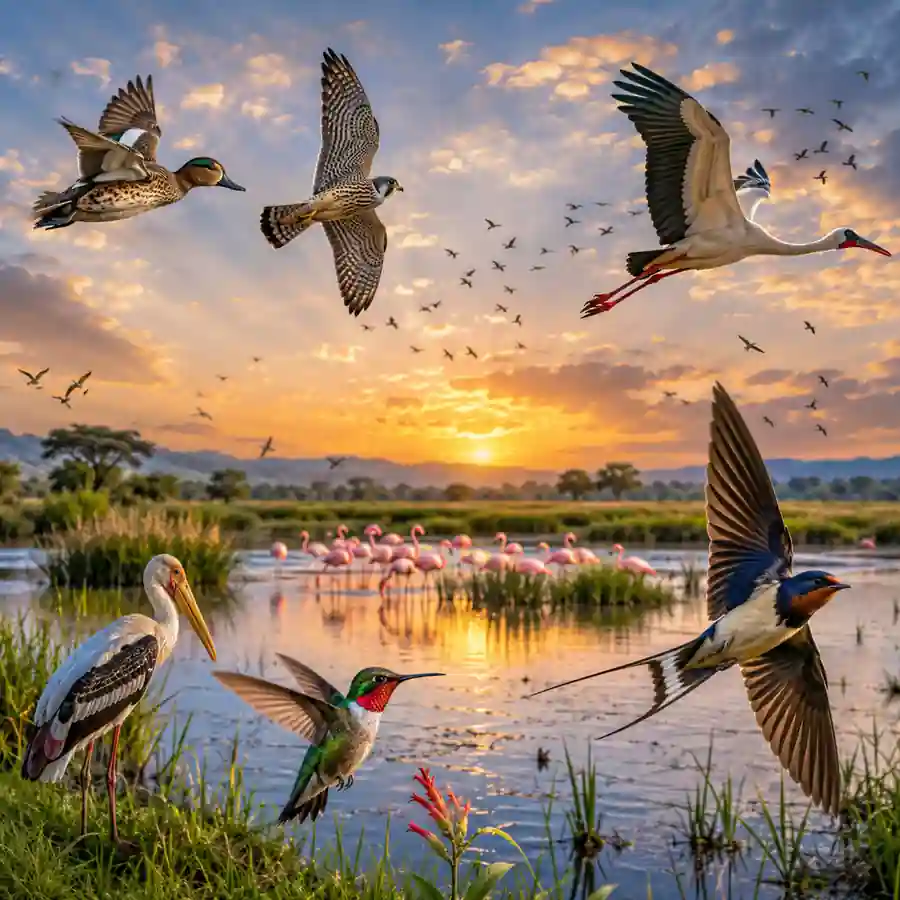
For 2026, seven ambassador species have been selected to represent the campaign: cinnamon teal, merlin, ruby-throated hummingbird, barn swallow, American oystercatcher, spoon-billed sandpiper and Abdim’s stork. Each bird tells a different conservation story and shows why public observations matter.
The ruby-throated hummingbird, for example, is tiny but capable of impressive long-distance travel, including crossing the Gulf of Mexico. Barn swallows are familiar to many people because they often nest around farms, bridges and buildings, making them easier for communities to monitor. American oystercatchers show why beach nesting birds need protection from vehicles, loose dogs and coastal disturbance.
The cinnamon teal highlights the importance of wetlands, while the merlin represents migratory raptors that depend on safe breeding and hunting areas. The spoon-billed sandpiper is one of the world’s most threatened migratory shorebirds, showing how fragile some flyway populations have become. Abdim’s stork reflects the importance of African landscapes and international cooperation in bird conservation.
The threats facing these birds are not distant or abstract. Bright lights can confuse night-migrating birds. Glass windows can cause fatal collisions. Pesticides can reduce insect food sources. Plastic waste can pollute wetlands and coastlines. Climate change can shift the timing of flowers, insects and migration, leaving birds out of sync with the food they need.
The good news is that people can take practical steps. Turning off unnecessary outdoor lights during migration seasons can help birds navigate safely. Planting native trees, shrubs and wildflowers provides food and shelter. Avoiding pesticides protects insects that many birds rely on. Making windows bird-safe reduces collisions. Supporting wetland restoration protects some of the most important stopover sites for migratory species.
People can also join local bird walks, submit sightings to monitoring platforms, take part in bird counts, report marked or banded birds, volunteer at conservation events and teach children about migration. Schools, nature clubs and community groups can use World Migratory Bird Day 2026 to organize awareness programs, photography activities, clean-up drives and habitat restoration projects.
World Migratory Bird Day 2026 is not only about watching birds. It is about understanding that their journeys reflect the condition of the planet. When birds have safe skies, healthy wetlands, clean coastlines and protected forests, people benefit too. The theme “Every Bird Counts – Your Observations Matter” reminds us that conservation can begin with something as simple as looking up, paying attention and sharing what we see.
You may like: GMA Digital Deals & Steals: Tory Johnson’s Top Savings Picks for March 9, 2026

Make Swikblog your go-to source on Google for reliable updates, smart insights, and daily trends.