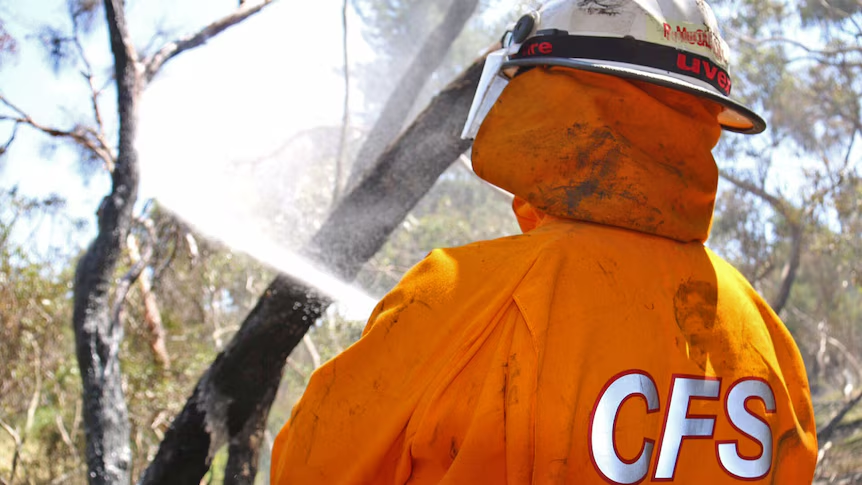

Australia’s rural fire brigades are facing a growing recruitment problem at the worst possible time, with volunteer numbers falling as bushfire seasons become longer, hotter and more unpredictable.
For many country towns, volunteer firefighters are not a backup service. They are the first line of defence when dry grass ignites, when lightning strikes remote bushland or when a burn-off escapes control during dangerous summer conditions.
But that system is under pressure. Across several states, fire agencies are dealing with fewer available volunteers, older brigade memberships and heavier emergency workloads than they faced a decade ago.
The concern is becoming harder to ignore: if fewer people are available to respond, rural communities may be left increasingly vulnerable when extreme fire weather hits.
Australia has long relied on volunteers to protect regional areas. In New South Wales, the Rural Fire Service remains one of the world’s largest volunteer-based emergency organisations. Yet its membership has fallen by more than 4,500 volunteers since 2014-15. South Australia’s Country Fire Service has also lost close to 1,000 volunteers over the past decade.
Those numbers matter because the role itself is expanding. Brigades are no longer responding only to bushfires. Volunteers are increasingly called to floods, severe storms, road accidents, structure fires and post-disaster recovery work.
Climate Pressure Is Making Fire Seasons More Demanding
Firefighters across regional Australia say modern fire seasons look very different from those of previous decades. Bushfires are burning faster, spreading further and becoming harder to contain under extreme heat and dry conditions.
The CSIRO has repeatedly warned that climate change is increasing dangerous fire weather conditions across large parts of the country, particularly in fire-prone rural regions.
Communities are also dealing with overlapping disasters. Many volunteers who spent summers fighting fires are now moving directly into flood clean-ups, storm emergencies and heatwave response with little recovery time in between.
That growing pressure is leading to burnout.
Unlike paid emergency crews who may rotate between locations, local volunteers are often defending their own communities while worrying about family homes, farms and neighbours at the same time.
After the Black Summer bushfires, many volunteers described feeling physically and emotionally exhausted after months of continuous emergencies. Some questioned whether they could continue volunteering under increasingly relentless conditions.
The challenge is being intensified by wider social changes in rural Australia.
Many regional areas now have fewer small family farms and more large agricultural operations, reducing the traditional pool of local volunteers. Changing work schedules, rising living costs and long commuting hours have also made emergency volunteering harder for younger generations.
At the same time, some regional towns are seeing population growth from city residents relocating for lifestyle reasons. Experts say many newcomers are unfamiliar with how heavily rural communities depend on volunteers during disasters.
Australia’s changing climate is already reshaping emergency response demands, much like other environmental shifts affecting the country’s future. Recent research into Australia’s changing weather patterns has highlighted how extreme weather events are becoming more frequent and severe nationwide.
Teen Cadet Programs Are Emerging as a Rare Success Story
While adult volunteer numbers continue to decline, youth cadet programs are becoming one of the few bright spots for rural fire services.
Across South Australia and regional New South Wales, cadet brigades are introducing teenagers aged 11 to 18 to emergency response training, bushfire awareness and community volunteering.
These programs are not designed to place children on dangerous firegrounds. Instead, they focus on building practical skills, teamwork, confidence and long-term pathways into operational firefighting roles.
The Compton CFS cadet brigade near Mount Gambier offers a strong example of how these programs are helping rebuild local participation.
Although the brigade only launched a few years ago, several cadets have already transitioned into senior firefighting roles or continued volunteering with nearby brigades.
For many younger recruits, the appeal goes beyond firefighting itself.
One South Australian cadet, Hanalie, joined after financial pressures forced her to stop playing basketball. After seeing major fires near Mount Gambier in 2022, she became more aware of how quickly bushfires could threaten local communities.
A school recruitment notice later encouraged her to try the cadet program.
Initially uncertain whether she would fit in, she instead found strong friendships and a welcoming community environment inside the brigade.
That sense of connection may explain why cadet programs are performing better than traditional recruitment efforts.
Volunteering experts consistently find that people are more likely to remain active volunteers when they feel socially connected and appreciated within their communities.
For many teenagers in regional areas, local fire brigades are becoming more than emergency organisations. They are evolving into support networks, mentoring spaces and social communities.
Cadets regularly participate in weekly training sessions, emergency simulations and community events. Some exercises teach young volunteers how to react if a fire suddenly changes direction or intensifies during dangerous conditions.
Disaster resilience researchers say these programs can also reduce climate anxiety among younger Australians by helping them understand local risks and practical emergency responses.
Fire agencies believe cadet programs could become one of the most important long-term recruitment pathways for future brigades.
Read More
Australia May Need to Redesign Volunteer Firefighting
Experts increasingly argue that the traditional volunteering model may no longer suit modern lifestyles.
Younger Australians often want greater flexibility around how they contribute to communities rather than the older expectation of near-constant availability.
That is forcing emergency agencies to think differently about what volunteering could look like in the future.
Some overseas services are already experimenting with broader support systems.
Fire and Emergency New Zealand now provides allowances to help volunteer families cover costs such as childcare during emergency call-outs, recognising the financial burden that unpaid response work can create.
Australian emergency leaders are also exploring how communities can contribute beyond frontline firefighting alone.
Volunteers with skills in communications, logistics, mental health support, translation services and technology are becoming increasingly valuable during large-scale disasters.
Innovation is now playing a larger role in emergency planning as well. At the annual Australian and New Zealand Council for Fire and Emergency Services hackathon, engineers, developers and emergency experts collaborate on new disaster management tools aimed at improving public safety and emergency coordination.
Still, researchers warn technology alone cannot replace local volunteers.
Without strong community participation, rural emergency services may struggle to maintain operational strength as climate risks continue rising.
The future of volunteer firefighting in Australia may ultimately depend on whether agencies can modernise the system while preserving the strong community culture that has always defined regional brigades.
For younger volunteers entering cadet programs today, however, the motivation often remains simple.
Many say it no longer feels like traditional volunteering. It feels like joining a community built on trust, friendship and shared responsibility.
As Australia faces increasingly dangerous fire seasons, that sense of belonging may become one of the country’s most valuable emergency resources.

Make Swikblog your go-to source on Google for reliable updates, smart insights, and daily trends.