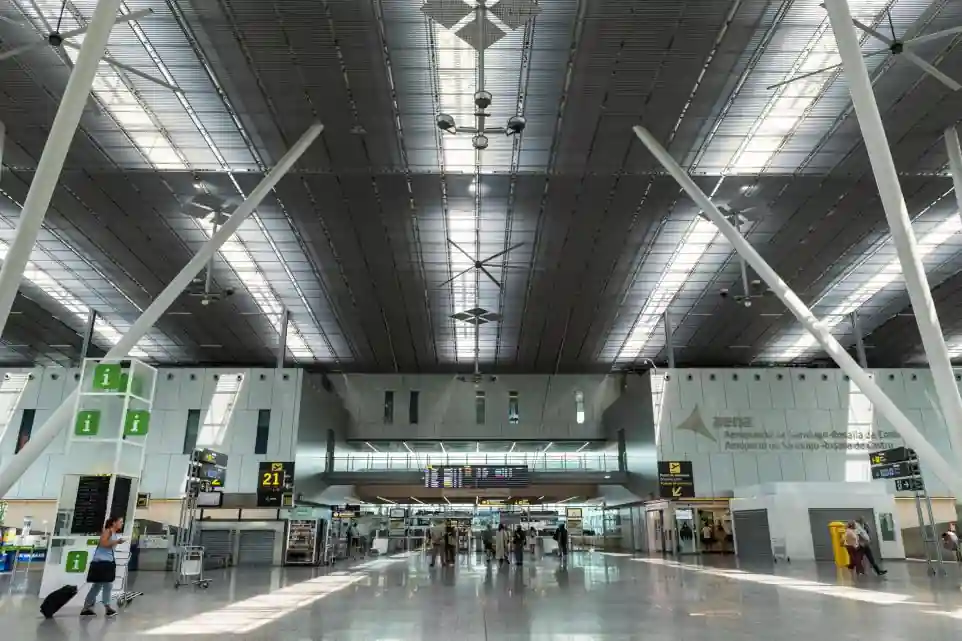

Passengers flying between the UK and northern Spain are facing a rare full-airport shutdown after Santiago-Rosalía de Castro Airport suspended all flights until May 27. The closure has forced airlines including Ryanair, British Airways, Vueling, Iberia and other European carriers to cancel or rearrange services while essential runway work is carried out.
The airport, which serves Santiago de Compostela in Galicia, closed to air traffic on April 23. Unlike a normal delay or a reduced timetable, this is a complete operational stop. No aircraft are taking off, no flights are landing, and passengers with tickets during the closure window are being told to deal directly with their airlines for refunds, rerouting or new travel dates.
Spanish airport operator Aena says Santiago-Rosalía de Castro Airport will remain closed from April 23 to May 27, 2026, because of runway renovation works. The airport’s own notice states that there are no upcoming flights planned during the closure period.
The disruption is likely to be felt most by travellers who had booked direct access to Galicia for spring breaks, Camino de Santiago trips, city holidays and family visits. Santiago is not just a regional airport. It is Galicia’s busiest airport and one of the most important aviation gateways in northern Spain, handling around 3.6 million passengers a year.
Why all flights have been cancelled
The shutdown is linked to runway resurfacing work. Airports can sometimes carry out smaller repairs overnight, but major runway projects often require the airfield to be taken out of service because the main landing and take-off strip must remain clear of aircraft, vehicles and passengers during construction.
For Santiago, that means every scheduled flight using the airport during the 35-day closure has to be cancelled, moved or rerouted. The closure affects both departures and arrivals, so passengers cannot simply wait for a delayed service later in the day.
The timing has created a problem for UK travellers because the closure runs through most of May and reaches into the May half-term period, when demand for short European trips usually rises. Around 30 flights normally operate each week between the UK and Santiago-Rosalía de Castro Airport, with services connected to London Heathrow, Gatwick and Stansted. Travellers from Manchester and other UK cities also reach Santiago through indirect routes.
Airlines affected include Ryanair, British Airways, Vueling, Aer Lingus, KLM and Iberia. Passengers should check airline apps and email notifications rather than relying on the original itinerary shown at the time of booking.
Anyone who has not yet been contacted by their airline should still check the booking manually. In a full airport closure, flights can disappear from schedules quickly as airlines adjust aircraft, crew and passenger routings across nearby airports.
Best alternative airports for Galicia travel
Travellers who still need to reach Santiago de Compostela have several options, but none is as convenient as landing directly at Santiago Airport. The closest alternative is A Coruña Airport, around 75km away. Vigo Airport is roughly 100km from Santiago and may also be suitable depending on the final destination in Galicia.
Some travellers may find Porto Airport in Portugal useful, particularly those who can continue north by train, coach or rental car. However, Porto is much farther away than A Coruña or Vigo, so passengers should compare the total journey time before accepting a replacement route.
The real cost of rerouting can be higher than the replacement flight itself. Travellers may need to pay for trains, taxis, car hire, extra hotel nights or changes to onward transport. Families travelling with luggage should also check whether baggage allowances are the same on replacement flights.
Passengers whose flights are cancelled should keep all airline messages, receipts and booking references. Refunds, rebooking rights and compensation can depend on the airline, route and reason for disruption. Because the shutdown is linked to airport infrastructure work, passengers should not assume that every cancelled flight will qualify for the same compensation as an airline-controlled cancellation.
The safest approach is to request written confirmation of any cancellation or rerouting offer from the airline and check travel insurance terms before paying for new transport. Travellers who booked a package holiday should contact the tour operator as well as the airline, because package providers may have separate responsibilities for rearranging travel.
Read More
Spain airport disruption is not limited to Santiago
The Santiago closure comes during a wider period of uncertainty for Spanish aviation. Ground handling staff linked to Groundforce and Menzies have also been involved in indefinite strike action at several major airports across Spain since March 30.
The strike action has affected airports including Madrid, Barcelona, Alicante, Palma, Ibiza, Malaga and airports in the Canary Islands. Partial work stoppages have been scheduled on Mondays, Wednesdays and Fridays across three time windows: 5am to 7am, 11am to 5pm and 10pm to midnight.
That does not mean every flight in Spain will be cancelled, but it does increase the risk of delays, baggage disruption and longer airport queues. For passengers already being rerouted away from Santiago, the strikes may make alternative routes more stressful if they involve a connection through one of the affected airports.
Ryanair and British Airways passengers should check both the departing airport and the replacement arrival airport before travelling. A rerouted flight through Madrid or Barcelona, for example, could still face ground handling delays even if the Santiago closure itself has already been dealt with.
Swikblog has also covered wider European airport disruption affecting travellers, including delays linked to Europe’s new entry-exit system, as airports across the region face heavier checks, staffing pressure and schedule changes ahead of the summer season.
For now, the key date for passengers is May 27. Santiago-Rosalía de Castro Airport is expected to reopen after the runway works are completed, but travellers with bookings close to the reopening date should continue checking airline updates in case schedules are phased back gradually.
Until the airport confirms normal operations have resumed, passengers should avoid travelling to Santiago Airport expecting to board a flight. The practical advice is simple: check the airline directly, confirm any replacement route in writing, and leave extra time if travelling through another Spanish airport during the strike period.

Make Swikblog your go-to source on Google for reliable updates, smart insights, and daily trends.