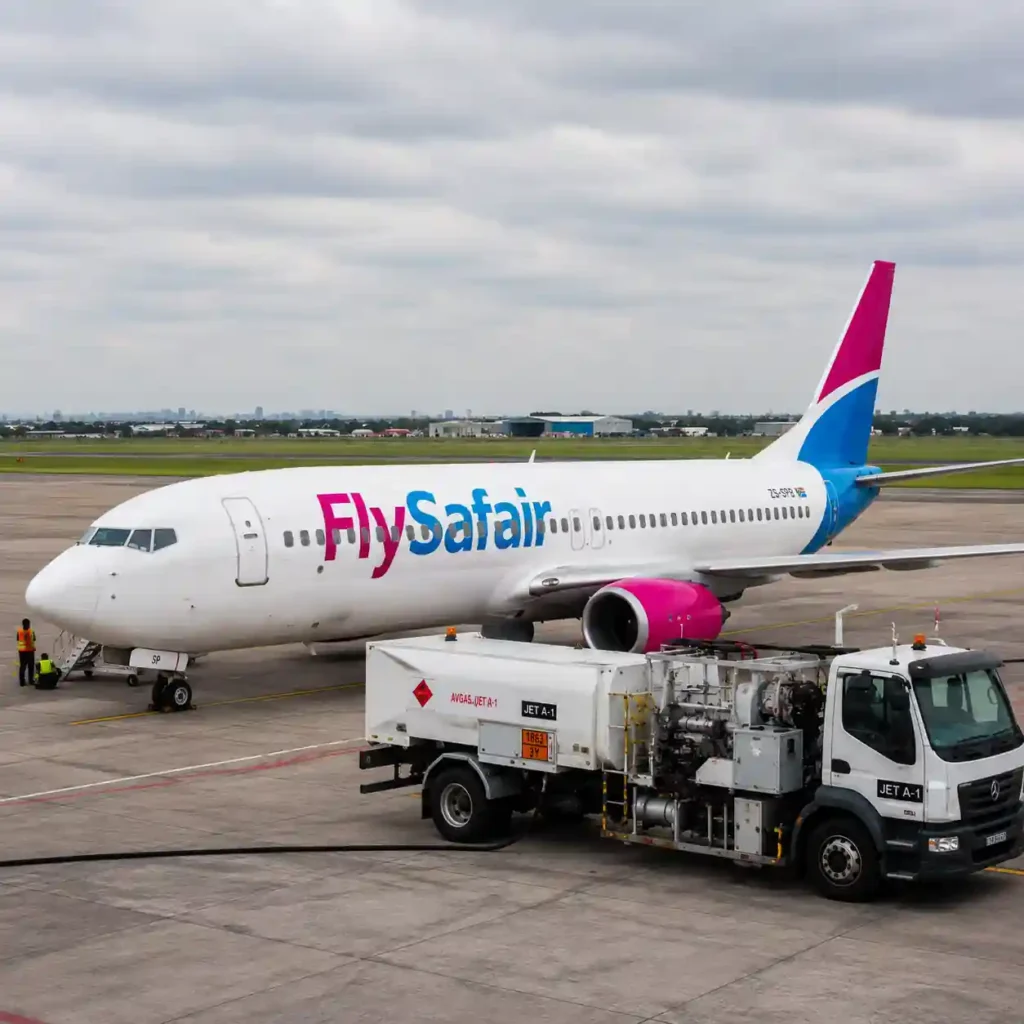

FlySafair passengers may need to budget for higher ticket prices for longer than expected, as the airline extends its temporary fuel surcharge while global jet fuel markets remain under heavy pressure.
The South African low-cost carrier has now pushed the surcharge out by another three months, keeping it in place until at least August 2026. The airline has also warned that the charge may remain for longer if fuel markets fail to stabilise, with its current surcharge policy pointing to the possibility of pressure extending into 2027.
The move comes after a sharp rise in aviation fuel costs linked to conflict in the Middle East and disruption around the Strait of Hormuz, one of the world’s most important oil shipping routes. Around a fifth of global oil supply moves through the narrow waterway, which means any disruption there can quickly feed into crude oil, refined fuel and airline operating costs.
FlySafair introduced the surcharge in March after jet fuel prices climbed sharply. Since then, market conditions have remained unpredictable. Brent crude reportedly surged above $115 per barrel before easing into a volatile range, while Jet A1 fuel prices at South African coastal airports were said to have jumped by around 70% during the first week of the crisis.
For airlines, that kind of fuel shock is difficult to absorb. FlySafair says fuel typically accounts for around 50% to 55% of its direct operating costs, making sudden price increases especially painful for a low-cost airline built around affordable fares and high aircraft utilisation.
FlySafair chief marketing officer Kirby Gordon told Moneyweb that the airline initially believed the disruption could be short-lived. The original view was that a temporary surcharge on bookings a few months ahead might be enough to manage the price spike. That outlook has since changed as the conflict, supply concerns and fuel volatility continued for longer than expected.
The airline says the surcharge is reviewed every week and is not fixed permanently. In periods where fuel prices eased slightly, FlySafair says it has already been able to reduce the charge marginally. However, the broader pricing environment remains uncertain, leaving passengers exposed to higher total booking costs.
The surcharge is applied separately during the booking process rather than being hidden inside the base fare. FlySafair says this gives customers a clearer view of what they are paying for and why ticket prices have changed. The charge also varies by route, with longer flights generally carrying higher fees because they burn more fuel.
Existing bookings made before 12 March 2026 are protected from the surcharge, although passengers who change older bookings to new travel dates during the surcharge period may still face the additional cost.
The pressure is not limited to FlySafair. Airlines around the world are dealing with a difficult combination of expensive fuel, uncertain demand and shifting schedules. The International Air Transport Association tracks jet fuel as one of the aviation sector’s most important cost indicators, and sustained increases can quickly affect airline margins, ticket prices and network planning.
For South African travellers, the timing is particularly uncomfortable. Domestic airfares were already under pressure from limited competition, high operating costs and broader inflation. A prolonged fuel surcharge adds another layer of cost for households planning business trips, family travel or holidays.
The airline has also signalled that the fuel environment is affecting its expansion strategy. Gordon said current conditions are not ideal for aggressive growth or launching new routes. Instead, FlySafair is focusing on maintaining core connectivity across its network while adjusting schedules and operations to improve efficiency.
Read More
That shift matters because route expansion usually helps improve competition and gives passengers more choice. When airlines become cautious, capacity growth slows, and that can keep fares firmer for longer, especially on popular domestic routes.
The northern hemisphere summer travel season could add further pressure. Airlines in Europe and North America typically increase flying during the summer months, lifting global demand for jet fuel. If supply remains constrained, higher seasonal demand could keep fuel prices elevated and make it harder for airlines elsewhere, including South Africa, to reduce surcharges quickly.
FlySafair says it has modelled several possible outcomes, ranging from a relatively quick stabilisation in fuel markets to a longer period of high prices and geopolitical uncertainty. At this stage, the airline appears to be preparing for both scenarios rather than assuming relief is imminent.
The situation also highlights South Africa’s exposure to imported fuel and international shipping routes. Local airlines do not control global oil supply, refinery output or geopolitical risk, yet they must respond quickly when those forces push up their operating costs.
For readers following wider travel disruption and airline cost pressures, Swikblog has also covered related aviation updates, including FlySafair’s R12 ticket sale and booking rules, where extra charges and rising operating costs remain important for passengers checking the final price before payment.
The key concern now is how long passengers will continue paying more. If oil markets calm and jet fuel prices fall sustainably, FlySafair may be able to reduce or remove the surcharge sooner. But if Middle East tensions continue, shipping routes remain unstable, or summer demand tightens supply further, higher airfares could remain part of South Africa’s travel reality well into 2027.

Make Swikblog your go-to source on Google for reliable updates, smart insights, and daily trends.