CREDIT-ABC NEWS
A rare 11,000-carat ruby found in Myanmar has placed the country’s historic gemstone industry back in the global spotlight, not only because of its extraordinary size but also because of what it says about the value, politics and mystery surrounding Mogok’s ruby mines.
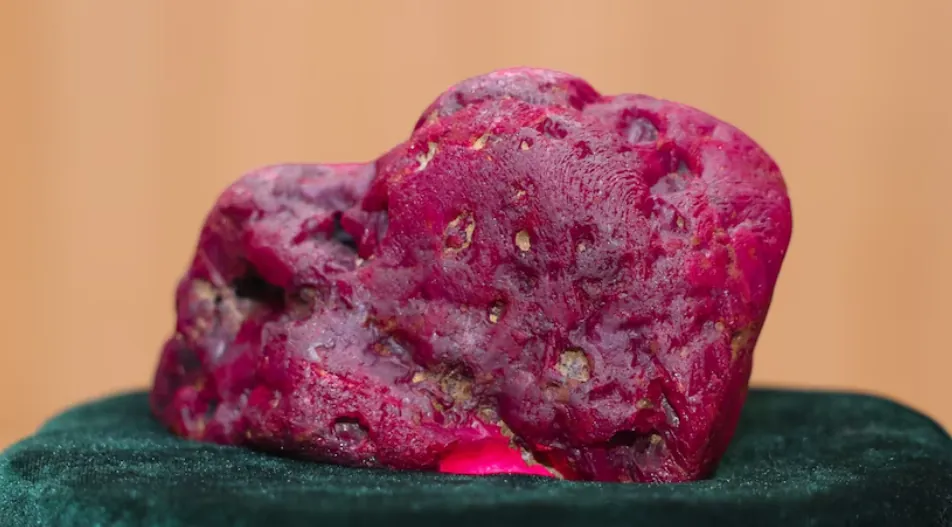
The rough ruby, weighing around 2.2 kilograms, was discovered near Mogok in Myanmar’s Mandalay region, a mining area long associated with some of the world’s most prized red gemstones. Officials have described the stone as unusually large, rare and difficult to find, with a purplish-red tone, yellowish undertones, moderate transparency and a reflective surface.
Although Myanmar has not announced an official valuation, the discovery has already attracted international attention from gem collectors, jewelry traders and luxury market watchers. A ruby of this size is uncommon on its own, but its reported color and clarity are what could make it especially important.
Why this Myanmar ruby is attracting global attention
Mogok rubies have a reputation that few gemstone regions can match. For generations, the valley has produced stones known for deep red color, strong fluorescence and rarity. The most valuable examples are often described as “pigeon-blood” rubies, a term used in the gem trade for vivid red stones with exceptional saturation.
The newly discovered stone is smaller than the 21,450-carat ruby reportedly found in the same region in 1996, but Myanmar officials say the latest find may be more valuable because of its superior color, clarity and overall quality. That claim has not yet been independently verified, but it explains why the ruby is being treated as more than just another large mineral discovery.
For buyers, color is often more important than size. A giant ruby with dull tone, heavy fractures or poor transparency may not command the kind of price people expect. But a large ruby with strong color and usable gem-quality material can become a landmark discovery.
The final value will depend on expert testing, origin certification, treatment status and how much of the rough stone can be cut into high-quality gems. Many large stones lose significant weight during cutting, especially if internal cracks or inclusions are present.
Read More
The Mogok factor behind the ruby’s potential value
Mogok is not just another mining location. The region has been linked to royal courts, colonial trade routes and modern luxury jewelry houses. Its name alone can add weight to a ruby’s reputation, especially when the stone is untreated and naturally rich in color.
Top-quality Burmese rubies have historically sold for millions of dollars at auction because supply is limited and demand remains strong among collectors. Unlike diamonds, where global supply chains are broader and more standardized, exceptional rubies from Myanmar remain rare and difficult to replace.
That scarcity is one reason the 11,000-carat ruby has become such a powerful headline. It combines three elements readers immediately understand: extreme size, famous origin and possible multi-million-dollar value.
Myanmar’s state media published images of President Min Aung Hlaing examining the gemstone in Naypyidaw, underlining its political and symbolic importance. The public display also signals how valuable the country considers its gemstone heritage, even as the industry faces deep international scrutiny.
Myanmar is widely associated with ruby production, especially from Mogok and Mong Hsu. Gemstones have long been a major source of revenue in the country, but the sector has also been criticized because of links to military-linked businesses, armed groups and conflict financing.
Human-rights organizations have urged jewelers and buyers to carry out strict due diligence before purchasing gems connected to Myanmar. This means the ruby’s commercial future may depend not only on gem quality, but also on questions around ownership, export rules, sanctions and ethical sourcing.
That tension makes the discovery more complex than a simple luxury story. On one side, it is a geological marvel from one of the world’s most famous ruby regions. On the other, it comes from a country where mining wealth is closely tied to political instability and civil conflict.
Mogok itself has seen volatility during Myanmar’s ongoing conflict, with control of mining areas shifting between armed groups and the military. That instability can affect production, trade routes and international confidence in the gemstone supply chain.
For the luxury market, the ruby raises a bigger question: can a stone of such beauty overcome the concerns surrounding its origin? Collectors may admire its rarity, but major brands are likely to be cautious unless the gem’s ownership and sourcing history are clearly documented.
The discovery also comes at a time when rare colored stones are gaining more attention from investors. High-quality rubies, sapphires and emeralds have become attractive to wealthy buyers looking for portable, scarce assets. Unlike mass-market jewelry, exceptional natural gemstones often appeal to collectors because no two stones are exactly alike.
If independent gemological testing confirms the ruby’s reported quality, it could become one of the most important colored gemstone discoveries of the decade. Whether it is eventually cut, auctioned, displayed or kept under state control, the 11,000-carat Mogok ruby has already secured a place in the global conversation around rare gems.
For now, the world is waiting for the next step: expert certification, clearer valuation and confirmation of what this enormous ruby can actually yield. Until then, Myanmar’s latest find remains a rare mix of beauty, mystery and controversy from a valley that has shaped the ruby trade for centuries.

Make Swikblog your go-to source on Google for reliable updates, smart insights, and daily trends.
Get the Swikblog App
Stay updated with breaking news, trending stories and the latest updates—all in one place.

Free download for Android devices