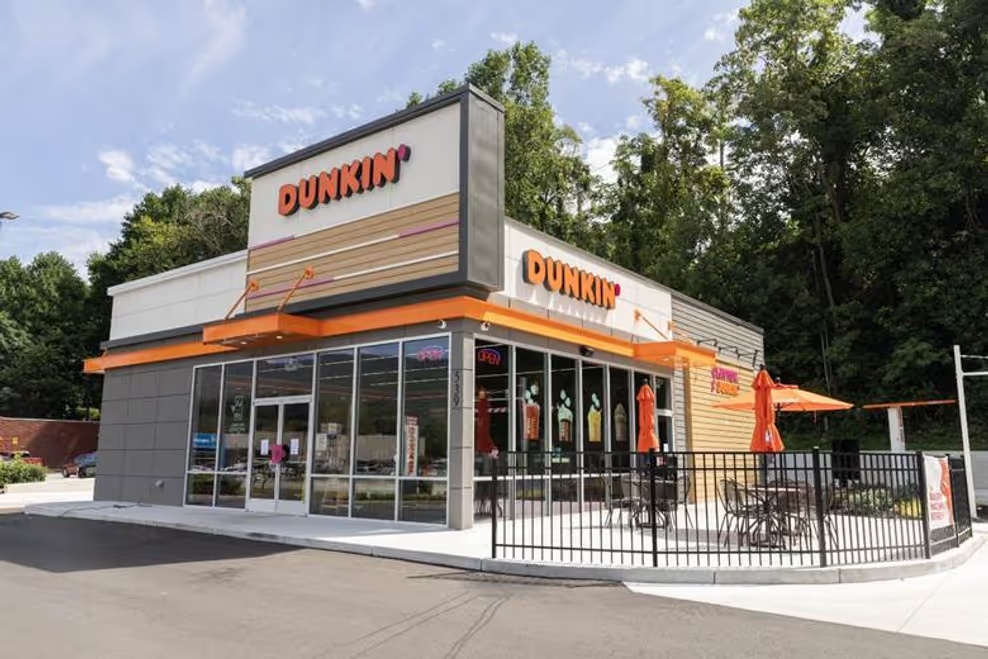

Dunkin’ Donuts is preparing for a major return to Canada, nearly 10 years after the coffee-and-doughnut chain disappeared from the country. The comeback is not being pitched as a small test run. Canadian restaurant franchisor Foodtastic says it plans to open hundreds of Dunkin’ locations across Canada, with the first store expected in late 2026 or early 2027.
The move brings back one of America’s best-known coffee brands to a market where it once had a meaningful presence, especially in Quebec. Dunkin’ operated in Canada for decades before gradually losing ground to Tim Hortons and other competitors. Its last remaining Canadian stores closed in 2018, ending a long but difficult chapter for the chain north of the border.
Now, the brand is coming back with a different partner and a much larger national ambition. Foodtastic, the Montreal-based company behind restaurant names such as Second Cup, Freshii and Pita Pit, will manage Dunkin’s Canadian market development, franchise recruitment and operations.
“We are committed to growing the Dunkin’ brand thoughtfully to meet the needs of Canadian guests and communities,” Foodtastic founder and CEO Peter Mammas said in a statement cited by The Toronto Star.
Dunkin’ returns to a tougher Canadian coffee market
Dunkin’s return comes at a time when Canada’s coffee and quick-service restaurant market is far more competitive than it was during the brand’s earlier peak. Tim Hortons remains the dominant national player, while Starbucks, McDonald’s McCafé, Second Cup and independent cafés continue to fight for daily coffee traffic.
That makes the timing interesting. Dunkin’ is not just returning with doughnuts and drip coffee. The modern Dunkin’ brand has spent years repositioning itself around iced coffee, espresso drinks, cold beverages, breakfast sandwiches, snacks and app-driven convenience. That broader menu could help the chain reach younger customers who treat coffee shops as all-day beverage destinations rather than morning-only stops.
Foodtastic says Canadian Dunkin’ locations will offer hot and iced coffees, espresso beverages, teas, sandwiches, snacks and doughnuts. That menu mix gives the brand a chance to compete beyond nostalgia, especially in urban and suburban markets where cold drinks, breakfast items and affordable grab-and-go food are important traffic drivers.
Still, the challenge will be significant. Dunkin’ has strong name recognition, but Tim Hortons has something harder to buy: daily habit. For many Canadians, Tim Hortons is not simply a coffee chain. It is tied to commuting, workplaces, hockey arenas, road trips and local routines. Dunkin’ will need to give customers a reason to switch, not just a reason to remember it.
The first phase of the rollout will be closely watched. Foodtastic has not yet confirmed the first Canadian city, exact opening date or province-by-province expansion plan. Those details are expected as development progresses. A launch in Quebec would make historical sense because Dunkin’ was once strongest there, but major markets such as Toronto, Vancouver, Calgary and Ottawa could also be attractive for a national comeback.
Why Foodtastic matters in Dunkin’s comeback
The choice of Foodtastic is central to the story. The company has built a large restaurant portfolio in Canada and has experience managing franchise growth across multiple food categories. That local operating knowledge could give Dunkin’ a better chance than a direct U.S.-style rollout.
Read More
- Latest News on Swikblog
- Hannah Harper wins American Idol 2026 after string cheese finale moment
- Spring & Mulberry chocolate recall over salmonella risk
- Lamb of God and Trivium announce Australia tour 2026
- Heytesbury buys 11 live export ships from Vroon
- Israel Eurovision 2026 controversy grows amid Gaza boycott calls
Foodtastic already operates or franchises several familiar Canadian restaurant brands, including Second Cup, Freshii and Pita Pit. That background matters because real estate selection, franchisee support, supply chains and local menu execution can decide whether an international brand succeeds in Canada.
Dunkin’s parent company, Inspire Brands, appears to be leaning on Foodtastic’s local experience to avoid the mistakes that hurt the brand in its previous Canadian run. Michael Haley, President of International at Inspire Brands, said Dunkin’s international footprint continues to grow and that the company is excited to bring the brand back to Canada through a strong partner.
The comeback also lands during a period when food and beverage chains are putting more emphasis on limited-time drinks, loyalty rewards and social media-friendly menu items. Dunkin’ has leaned heavily into that strategy in the U.S., from seasonal coffees to celebrity-backed promotions. Swikblog has also covered how beverage chains are using promotional moments to drive customer attention, including Dunkin’s recent role in National Matcha Day 2026 drink promotions.
For Canadian customers, the biggest question is whether Dunkin’ can offer something distinct enough to stand beside Tim Hortons rather than simply chase it. Price, store locations, drink quality, breakfast value and digital ordering will all matter. So will local trust. A brand returning after years away has to prove it is serious about staying.
Dunkin’ was founded in 1950 and has grown into one of the largest coffee and doughnut chains in the world, with more than 14,000 restaurants across nearly 40 markets, according to brand and company materials. Its Canadian revival gives the chain a rare second chance in a market where it once struggled but never fully lost public recognition.
If Foodtastic can combine Dunkin’s brand power with smart Canadian execution, the comeback could become one of the biggest quick-service restaurant stories of 2026 and 2027. For now, Canadians have a clear signal: Dunkin’ Donuts is coming back, and this time the plan is national.

Make Swikblog your go-to source on Google for reliable updates, smart insights, and daily trends.