
A track-level electrical fire near New York Penn Station brought major rail disruption to Manhattan on Thursday, leaving Long Island Rail Road, Amtrak and NJ Transit passengers facing suspended service, rerouted trains and heavy delays through the afternoon commute.
The fire was reported late Thursday morning near the rail approaches around 31st Street between Seventh and Eighth avenues, close to one of the busiest transportation points in the country. Fire officials said the incident involved a feeder cable, a key electrical component used in rail operations. Smoke conditions were reported near the tracks, prompting a large emergency response from the FDNY.
More than 80 fire and EMS personnel responded to the scene. No injuries were reported, but the impact on travel was immediate. Because the fire happened in a sensitive rail area serving multiple operators, even a localized electrical problem quickly spread into a wider transportation disruption across New York City and the surrounding region.
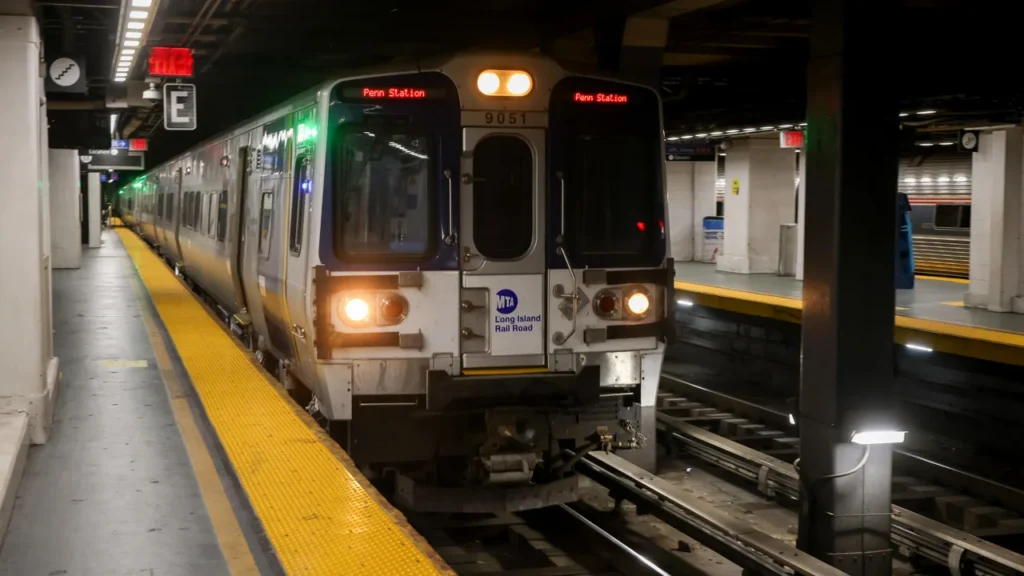
Long Island Rail Road riders were hit hardest. LIRR temporarily suspended service between Jamaica and Penn Station, forcing westbound trains bound for Manhattan to stop at Jamaica or move to alternate terminals. The MTA diverted several trains to Grand Central Madison as crews worked to reduce congestion around Penn Station.
The disruption affected several busy LIRR branches, including Babylon, Huntington, Ronkonkoma, Port Washington, Far Rockaway and Long Beach. Some trains were canceled, others were delayed, and several Penn Station-bound services were redirected. For commuters traveling from Long Island into Manhattan, the disruption created crowded platforms, longer waits and unexpected transfers during a key travel window.
Amtrak also paused service into Penn Station while emergency crews responded. Northeast Corridor trains later resumed, but passengers were told to expect delays of up to an hour because of congestion caused by the earlier suspension. The delay affected travelers using one of the most important rail routes in the country, linking New York with cities including Philadelphia, Washington and Boston.
NJ Transit also made service changes. Midtown Direct trains were diverted to reduce the number of trains entering Penn Station while FDNY activity continued near the tracks. Officials indicated the changes were made because of emergency response conditions and congestion around Penn Station, rather than because of direct damage to NJ Transit trains.
Penn Station fire creates ripple effect across NYC rail network
The fire showed how quickly a problem near Penn Station can affect transportation far beyond one platform or one rail line. Penn Station serves Amtrak, LIRR and NJ Transit, with trains moving through limited tunnels and track space. When one part of that system is restricted, the entire schedule can slow down.
For LIRR passengers, Jamaica became a major transfer point as Penn Station service was suspended. Some riders were directed toward Grand Central Madison, while others were told to use subway options where available. The MTA began cross-honoring LIRR tickets at several City Terminal Zone locations, including Penn Station, Forest Hills, Kew Gardens, Jamaica Center-Parsons/Archer on the E line, Grand Central on the 4, 5, 6 and 7 lines, and Woodside on the 7 line.
Read More
Passengers were urged to check live train updates before heading to stations. The official MTA Long Island Rail Road service page remains the best source for updated LIRR schedules, cancellations and service changes.
The fire was reported out by early afternoon, but rail service did not immediately return to normal. After an incident like this, operators must manage delayed trains, crowded terminals and limited track availability. That is why passengers continued to see delays even after emergency crews brought the fire under control.
The incident also raised fresh concern about the strain on aging rail infrastructure around Penn Station. Electrical equipment, tunnel approaches and track systems near the station carry an enormous daily load. When one feeder cable fails or catches fire, the effect can reach thousands of commuters because so many services depend on the same rail corridor.
Thursday’s disruption became a major search trend in New York as riders looked for updates on Penn Station, LIRR delays, Amtrak service and NJ Transit reroutes. The timing added to the pressure, with the incident unfolding ahead of the evening commute and affecting passengers trying to move between Manhattan, Long Island, New Jersey and the Northeast Corridor.
For commuters, the most important advice is to avoid assuming normal service has resumed immediately. Rail agencies may restore trains in stages, and residual delays can continue for hours after the original emergency ends. Riders should check train apps, station announcements and official agency alerts before traveling.
No injuries were reported, but the Penn Station fire created a serious travel breakdown across the region. The incident underlined how central Penn Station remains to New York’s daily movement — and how one electrical fire near the tracks can disrupt LIRR, Amtrak and NJ Transit service at the same time.

Make Swikblog your go-to source on Google for reliable updates, smart insights, and daily trends.