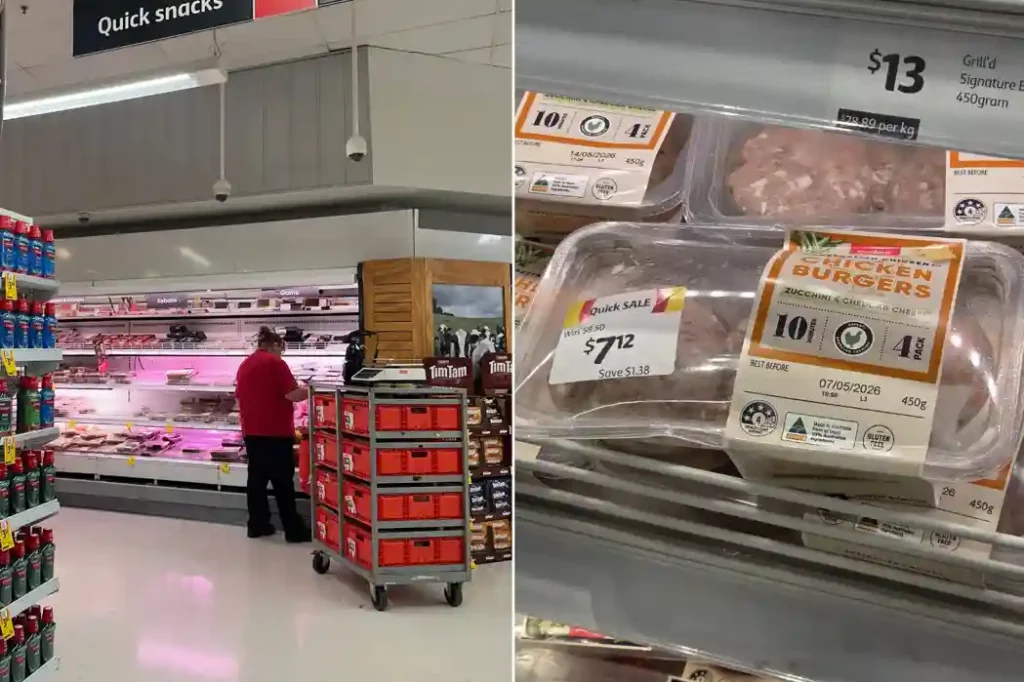

A marked-down chicken product seen at a Coles store has put supermarket shoppers on alert, after its unusually swollen packaging raised fresh questions about how to spot unsafe meat before it reaches the kitchen.
The item, a pack of chicken burgers carrying a quick-sale price of $7.12, was photographed by a shopper who noticed the packet looked inflated compared with other products nearby. The discount itself was small, saving $1.38, but the packaging detail quickly became the focus after people online pointed out that bloated meat packs can sometimes be a warning sign of spoilage.
Another detail made the situation more concerning. The pack reportedly showed a best-before date of May 7, while other similar items around it displayed May 14. That difference led shoppers to question whether the product should have remained available for sale at all.
Food safety specialist Edward McCartney, director at Food Safety Plus, reviewed the image and warned that the meat shown in the photo should not be eaten. He said swollen packaging may point to the growth of spoilage organisms, which can be connected to failures in temperature control, storage or handling.
While some spoiled meat may only cause stomach discomfort, McCartney warned that contaminated meat can be far more serious if illness-causing bacteria are present. In severe cases, foodborne pathogens linked to unsafe meat can lead to serious consumer harm.
Yahoo News reported that the product had been left available for sale by mistake.
Coles said fresh food products that are past their use-by date or have compromised packaging should not be on shelves. The supermarket also urged customers to speak with team members immediately if they notice anything that appears unsafe, damaged or unsuitable for sale.
Why one swollen meat pack can be a warning sign
Supermarket meat is usually sold in sealed packaging to help protect the product from contamination and extend shelf life. But when a packet becomes unusually puffed up, especially when surrounding packs look normal, shoppers should treat it with caution.
Swelling can happen when bacteria or spoilage organisms release gas inside the pack. That does not always mean a product will smell bad straight away, and it does not always mean the danger is visible. This is why food safety experts often advise shoppers not to rely only on smell or appearance once packaging already looks suspicious.
Potentially hazardous foods such as meat must be kept under strict temperature control. Food Standards Australia New Zealand advises that food businesses need to manage temperature carefully to reduce the risk of bacterial growth in foods that can become unsafe if mishandled. More guidance is available from Food Standards Australia New Zealand.
McCartney said retailers are responsible for keeping products at the correct refrigeration temperature of 5°C or below, rotating stock properly, removing outdated or damaged items and making sure packaging stays intact during storage and display.
That responsibility sits with supermarkets, but shoppers also play an important role at the final stage. A product can look like a bargain because of a quick-sale sticker, but the date, temperature and condition of the packaging matter more than the discount.
The Coles incident comes at a time when many Australians are paying closer attention to grocery prices. Marked-down meat can help households reduce food bills, but experts say shoppers should never buy chilled meat if the packet is swollen, leaking, torn, warm to touch or past its safe date.
Food safety concerns around meat products are not limited to one supermarket. Swikblog has previously reported on a Woolworths meat recall linked to listeria concerns, showing how quickly meat safety issues can become a public health matter when contamination risks are identified.
Read More
What shoppers should check before buying discounted meat
The first check should always be the date label. If a fresh meat product is past its use-by date, it should not be purchased. If it is close to expiry but still within date, shoppers should only buy it if they plan to cook or freeze it promptly and the packaging looks completely normal.
The second check is the packaging. Avoid meat packs that are swollen, leaking, split, sticky, crushed or have broken seals. A safe packet should look intact and properly sealed, not stretched tight by trapped gas.
The third check is temperature. Meat should feel cold when picked up from the refrigerated section. If it feels warm, has been left outside the fridge area or appears to be stored incorrectly, it is safer to leave it and alert staff.
Shoppers should also look for visible changes in the product, including unusual colouring, excess liquid, slime or any sign that the meat has separated or deteriorated inside the pack. A strong smell is another warning sign, but the absence of a smell does not guarantee safety.
Once meat is purchased, it should be taken home quickly and placed in the fridge or freezer. On hot days, using an insulated bag can help keep chilled products cold during the trip home.
The key lesson from the Coles case is simple: a reduced price should never outweigh basic food safety checks. If meat packaging looks bloated or compromised, shoppers should not open it, taste it or try to cook it “just to be safe”. The best step is to leave it on the shelf, notify supermarket staff and choose another product.
For consumers, the incident is a reminder that small packaging details can reveal bigger food safety problems. For supermarkets, it reinforces the importance of strict stock rotation, cold-chain control and removing any product that may no longer be suitable for sale.

Make Swikblog your go-to source on Google for reliable updates, smart insights, and daily trends.