
The UK government has formally launched an assessment into whether the north of England could host a future Olympic and Paralympic Games in the 2040s, opening a major national debate over where Britain’s next Olympics should be held.
The proposal would mark the first time in history that the Olympic Games could be staged outside London if the idea eventually develops into a formal bid. Ministers have commissioned UK Sport to conduct what officials described as an “initial strategic assessment” into the viability of hosting the Games across northern England.
The review will examine projected costs, infrastructure requirements, stadium readiness, transport systems, social and economic impact, and the likelihood of any British bid succeeding with the International Olympic Committee.
The announcement immediately sparked political tensions between London and northern leaders, with London Mayor Sadiq Khan’s office warning it would be a mistake to sideline the capital despite its existing Olympic infrastructure from the 2012 Games.
Government backs Olympic ambitions for northern England
Culture Secretary Lisa Nandy has become the leading political figure behind the proposal, arguing that the north of England has been overlooked for too long despite its sporting history, fan culture and stadium infrastructure.
Nandy described the move as a chance to bring major global investment beyond London, saying the Olympics could become a catalyst for regeneration, transport improvements and economic growth across northern cities.
“For too long we have been told the Olympics is simply too big and too important to be hosted in the North,” Nandy said while announcing the assessment.
Chancellor Rachel Reeves also strongly backed the proposal and linked it directly to broader plans for the Northern Growth Corridor. Reeves said the government wants to use Britain’s sporting reputation to support communities, infrastructure and local economies outside the capital.
The government also confirmed the launch of a “Stadium Regeneration Accelerator” programme, designed to support projects capable of revitalising surrounding communities through stadium and sports infrastructure investment.
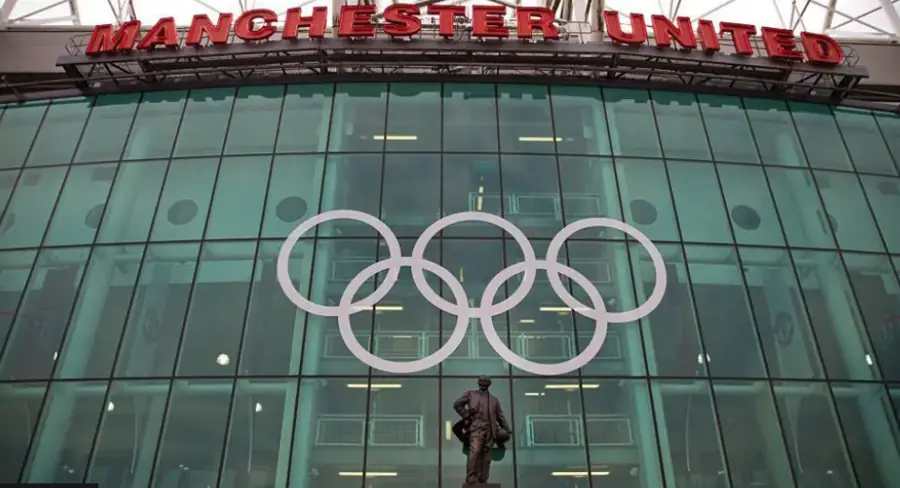
Several major northern stadium developments are already underway or planned. Manchester United want a new 100,000-seat stadium completed by 2035, Everton’s new waterfront stadium project is nearing completion, while Leeds United continue exploring expansion plans around Elland Road.
Supporters believe these developments could eventually form the backbone of a regional Olympic model built around existing infrastructure instead of expensive new venues.
Read More
Why Manchester and the north are central to the proposal
Manchester is expected to play a major role in any future bid because of its existing sports infrastructure and history of hosting international events.
The city previously failed with Olympic bids for 1996 and 2000 but later hosted the 2002 Commonwealth Games successfully. Many of those facilities still exist today, including the National Cycling Centre, aquatics facilities and major football stadiums.
Old Trafford also hosted football matches during London 2012, showing that northern venues have already contributed to previous Olympic events.
Elsewhere, Liverpool’s waterfront has previously been discussed as a possible sailing venue in wider sporting conversations, while the Lake District has been mentioned for open-water competitions.
Unlike London 2012, any future northern Olympics would likely be spread across several cities instead of relying on one central Olympic Park. That approach reflects how the International Olympic Committee has shifted toward supporting regional and multi-city hosting models to reduce costs and avoid unnecessary construction. More details about the modern Olympic hosting strategy can be found on the IOC Future Host Commission page.
The government’s focus on using existing infrastructure is important because hosting the Olympics has become increasingly expensive for modern host nations. London 2012 ultimately cost around £8.77bn, significantly above its original estimate, although supporters argue the Games transformed east London and boosted tourism and investment.
Polling conducted after London 2012 showed that most British people still believed the event was worth the money despite the rising costs.
However, the north of England proposal still faces major questions. Athletics infrastructure remains one of the biggest challenges because Olympic Games require world-class track and field facilities capable of hosting opening ceremonies and large-scale international events.
Nandy acknowledged there are “particular challenges” around athletics venues but argued those upgrades would benefit the region regardless of whether an Olympic bid succeeds.
London pushes back against being left out
The announcement has also reopened debate around London’s own Olympic ambitions.
Sadiq Khan has repeatedly argued that London could host the “greenest Olympics ever” in the 2040s by reusing venues built for 2012 instead of constructing entirely new infrastructure.
A spokesperson for the mayor said London remains the “sporting capital of the world” and warned that excluding the capital from any future Olympic plans would mean Britain fails to maximise existing infrastructure and international visibility.
Khan’s team believes a country-wide Olympic model involving both northern England and London could strengthen Britain’s chances while reducing costs and environmental impact.
That argument highlights the biggest issue facing the government’s assessment: should Britain pursue a fully northern Olympics, or should it combine northern regeneration ambitions with London’s proven sporting infrastructure?
At this stage, no formal Olympic bid has been submitted. UK Sport’s assessment is only the first step, and any final decision would eventually involve the British Olympic Association and negotiations with Olympic authorities.
Still, the political significance of the announcement is already clear. For the first time since London 2012, Britain is seriously exploring whether the Olympic Games could become a defining project for northern England rather than returning directly to the capital.
The discussion also comes as Britain continues to host and attract major international sporting events. Swikblog recently covered Sabastian Sawe’s headline-making London Marathon performance, highlighting how UK sporting events continue to generate global attention and economic impact.

Make Swikblog your go-to source on Google for reliable updates, smart insights, and daily trends.