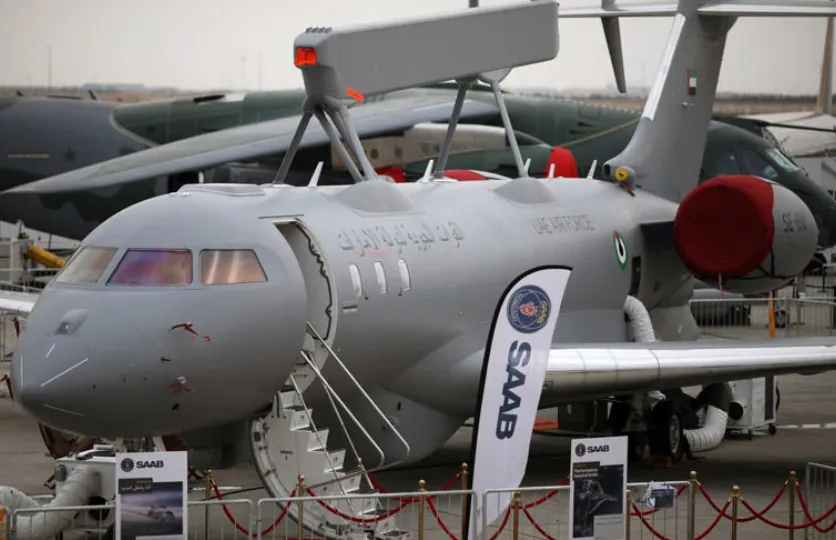

Canada has officially entered negotiations with Swedish defence giant Saab to purchase the GlobalEye airborne early warning and surveillance aircraft, a major development that signals a stronger focus on Arctic security, domestic aerospace manufacturing and military independence.
Prime Minister Mark Carney announced the negotiations during the opening of the CANSEC defence trade show in Ottawa on Wednesday. Speaking to defence contractors and military officials, Carney said the GlobalEye aircraft would become a key part of Canada’s strategy to monitor and defend its Arctic territory.
“With a suite of advanced sensors and mission systems, Saab’s GlobalEye will be a key resource for the Canadian Armed Forces to detect and deter threats across the Arctic,” Carney said during the event.
The announcement comes as Canada faces increasing pressure to strengthen surveillance across the Arctic region, where geopolitical tensions and military activity have intensified in recent years. NATO allies have become increasingly concerned about Russian military operations in the north as well as growing strategic competition in Arctic shipping routes.
What Makes Saab’s GlobalEye Important
The GlobalEye is an advanced airborne early warning and control aircraft capable of monitoring threats in the air, at sea and on land simultaneously. Saab says the aircraft can track targets at distances of up to 650 kilometres using long-range radar and integrated sensor systems.
The aircraft combines Saab’s Erieye radar technology with Bombardier’s Global 6500 executive jet platform, which is manufactured in Toronto. That local production element is politically important because it could support Canadian aerospace jobs and expand domestic defence manufacturing capabilities.
Canada’s Royal Canadian Air Force had already planned to acquire up to six airborne early warning aircraft for domestic patrol missions and overseas military operations. However, rising concerns about Arctic surveillance gaps reportedly accelerated the urgency of the project.
More technical details about the aircraft and its surveillance systems are available on Saab’s official GlobalEye product page.
Read More
Boeing Competition and F-35 Questions
Saab’s GlobalEye was competing against Boeing’s E-7 Wedgetail and the L3Harris Aeris X surveillance aircraft. The negotiations are drawing additional attention because Saab had previously linked its GlobalEye proposal with its pitch to sell Gripen-E fighter jets to Canada.
Saab earlier promised technology transfer and local production opportunities if Canada selected both systems. While Canada previously chose the American-made F-35 fighter jet, parts of that procurement process have remained under government review for more than a year.
Carney did not confirm whether the Saab negotiations could affect future F-35 purchases, but defence analysts see the move as part of a broader effort by Canada to diversify defence partnerships and reduce dependence on U.S. military suppliers.
The aircraft is also gaining international momentum. NATO is reportedly evaluating the GlobalEye as a possible replacement for its aging Boeing E-3 Sentry airborne warning fleet, potentially strengthening Saab’s global position in military surveillance technology.
Canada’s changing defence priorities are unfolding alongside broader economic concerns. Readers can also explore Swikblog’s related report here: Canada GDP Forecast Slashed 20% as ‘Wobbly’ Economy Raises Red Flags.

Make Swikblog your go-to source on Google for reliable updates, smart insights, and daily trends.