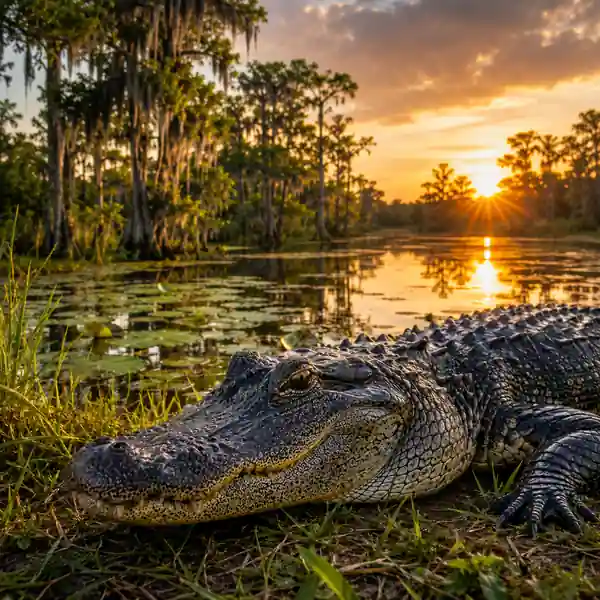

National Alligator Day will be celebrated on May 29, 2026, shining a spotlight on one of North America’s oldest and most misunderstood reptiles. While alligators are often associated with danger, conservationists say the annual observance is really about education, wildlife awareness, and recognizing the important role these animals play in healthy wetland ecosystems.
The day was established by Wild Florida in 2021 to encourage people to learn more about alligators and their contribution to nature. Since then, National Alligator Day has grown into an opportunity for wildlife organizations, educators, and nature enthusiasts to share facts about alligator conservation, habitat protection, and safe coexistence with wildlife.
A Conservation Success Story Worth Celebrating
The American alligator is one of the most remarkable wildlife recovery stories in the United States. During the mid-20th century, populations declined sharply because of unregulated hunting, habitat destruction, and illegal trade. The species was listed as endangered in 1967.
Thanks to federal protections, habitat management, and public conservation efforts, alligator numbers rebounded dramatically. According to the U.S. Fish & Wildlife Service, the American alligator was removed from the endangered species list in 1987 and is now considered one of the most successful examples of wildlife conservation in the country.
Today, more than a million alligators live in Florida and Louisiana alone, with additional populations across Georgia, Alabama, Mississippi, Texas, Arkansas, and the Carolinas.
Read More
Why Alligators Matter to Wetland Ecosystems
Alligators are considered a keystone species because their activities help support entire ecosystems. One of their most important contributions is the creation of “gator holes”—depressions they dig that retain water during dry periods. These natural pools provide shelter for fish, turtles, birds, amphibians, and countless other species when water levels drop.
Scientists believe alligator ancestors have existed for more than 37 million years, making them among the oldest surviving reptile species on Earth. Despite their ancient lineage, they continue to play a vital role in modern ecosystems.
National Alligator Day also helps correct common misconceptions. Unlike large crocodile species, alligators generally do not view humans as prey and usually avoid people unless they feel threatened or are fed by humans. Wildlife experts consistently advise maintaining a safe distance and never feeding wild alligators.
Another important focus of the day is global conservation. While the American alligator has recovered, the Chinese alligator remains critically endangered due to habitat loss and declining wild populations, highlighting the ongoing need for conservation efforts worldwide.
People can mark National Alligator Day by visiting wildlife parks, learning about wetland conservation, supporting habitat protection programs, or sharing educational resources online. Readers interested in broader biodiversity conservation can also explore Swikblog’s coverage of International Day for Biological Diversity 2026, which examines the importance of protecting species and ecosystems around the world.
National Alligator Day 2026 is more than a wildlife observance. It is a reminder that conservation works, that wetlands matter, and that understanding wildlife is often the first step toward protecting it.

Make Swikblog your go-to source on Google for reliable updates, smart insights, and daily trends.