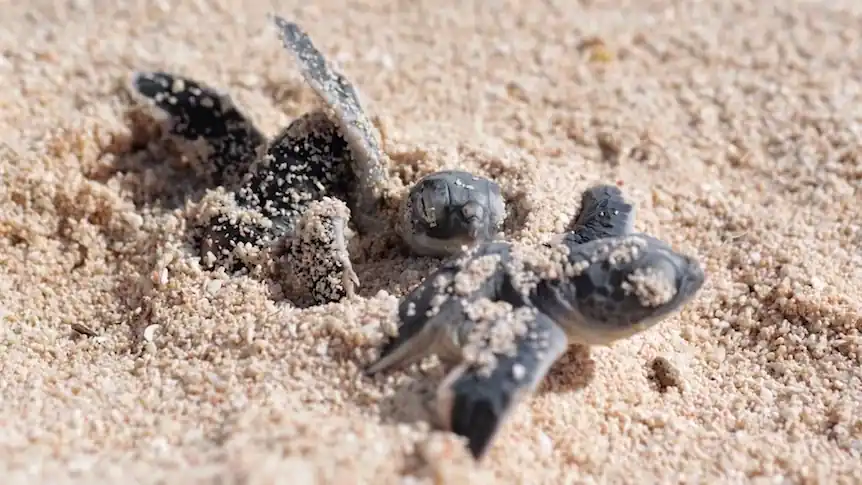

A major turtle conservation effort in the northern Great Barrier Reef has delivered a hopeful result, with thousands of baby green sea turtles reaching the water after researchers moved vulnerable eggs away from one of the species’ most threatened nesting sites.
The project focused on eggs laid at Raine Island, a small coral cay that supports the world’s largest nesting population of northern Great Barrier Reef green sea turtles. The island is globally important for the species, but it is also becoming increasingly difficult for eggs and hatchlings to survive there as rising seas, hotter sand and unstable beach conditions reshape the nesting environment.
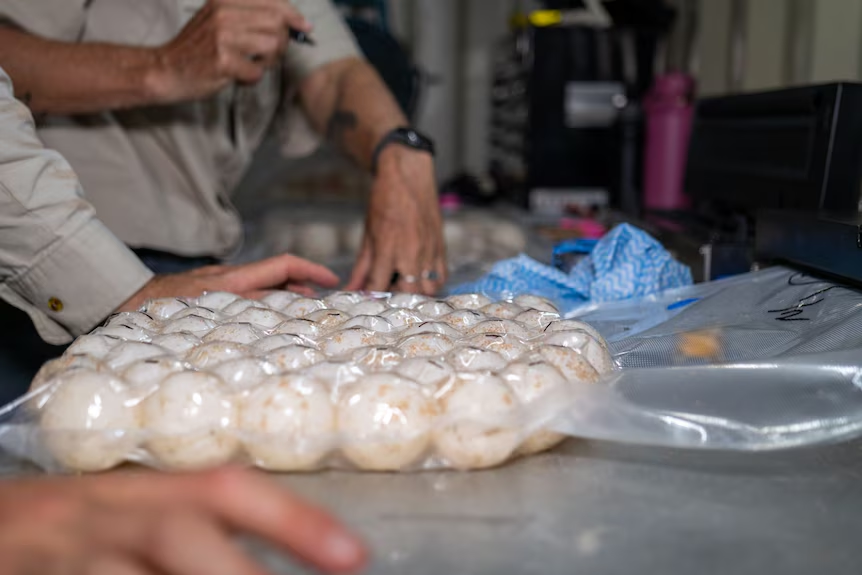
In the latest relocation effort, researchers moved close to 9,000 eggs from Raine Island to Sir Charles Hardy Island, about 80 kilometres away by boat. The results were strong: around 82% of the relocated eggs hatched successfully, allowing more than 9,100 hatchlings to begin the difficult journey from sand to sea.
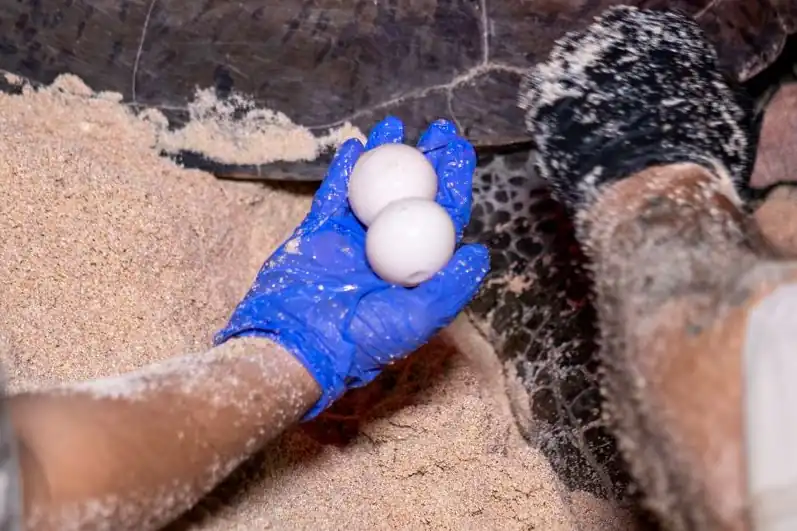
The outcome builds on an earlier 2024 trial, when about 3,000 eggs from 38 nests were relocated and roughly 70% hatched. This time, the program was expanded to more than 100 nests, giving scientists a larger test of whether egg relocation can help protect the population as climate pressure increases.
Raine Island remains vital to the future of green sea turtles in the region. About 90% of the northern Great Barrier Reef green sea turtle population nests there, and in busy years as many as 100,000 females can come ashore. But the same nesting ground is facing serious environmental stress. Higher tides can wash through nests, while steep beach edges can leave hatchlings trapped, exhausted or overturned before they reach the ocean.
Temperature is another major concern. Green sea turtle sex is influenced by nest temperature, meaning warmer sand produces more females and cooler conditions are needed for males. Researchers have warned that this population is now heavily female-skewed, which could create long-term breeding problems if too few males survive into adulthood.
To reduce that risk, the relocated eggs were placed under specially built shade structures on Sir Charles Hardy Island. These structures lowered sand temperature by about 1.5 degrees Celsius, helping create conditions more likely to produce male hatchlings.
The scientific process was carefully controlled. Eggs were collected soon after being laid, placed in nitrogen-filled vacuum-sealed bags to temporarily pause development, transported by boat and then reburied in prepared nests. The work forms part of the long-running Raine Island Recovery Project, which aims to improve nesting success and strengthen the future of the green turtle population.
The project also carries deep cultural importance. Raine Island is connected to both Wuthathi and Meriam people, while Sir Charles Hardy Island is Wuthathi Country. Traditional Owners have worked alongside scientists, bringing cultural knowledge and long-term observation of turtle behaviour into the recovery effort. For Torres Strait and Cape York communities, turtles are not only wildlife; they are tied to identity, responsibility and country.
Australia has seen other recent examples of turtles under pressure from changing environmental conditions. In one case, hundreds of turtles were found alive after an outback lake nearly dried up, showing how quickly habitat stress can become a survival issue for wildlife. Read that related conservation story on Swikblog: 500 turtles found alive after outback lake nearly dried up.
Read More
Scientists say the next question is not only how many hatchlings reach the water, but how strong they are once they get there. James Cook University researchers are studying whether relocated hatchlings match naturally hatched turtles in size, crawling speed, swimming ability and overall fitness through tests nicknamed the “turtle Olympics.”
For now, the latest results give conservationists a practical reason for optimism. Egg relocation will not remove the wider threat of climate change, but the success at Sir Charles Hardy Island shows that carefully managed intervention can improve survival chances for one of Australia’s most important marine species.

Make Swikblog your go-to source on Google for reliable updates, smart insights, and daily trends.