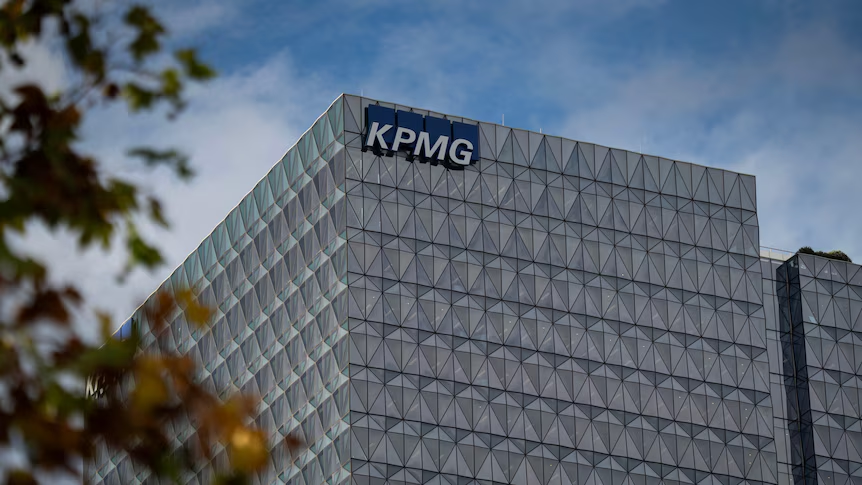

KPMG Australia is confronting growing scrutiny after new parliamentary data revealed the professional services giant currently holds 297 active federal government contracts worth approximately $653 million, despite facing a formal investigation by the Australian Securities and Investments Commission (ASIC).
The figures have shifted attention beyond the firm’s internal governance issues and toward a broader debate about government procurement practices. While regulatory investigations continue, federal agencies remain heavily reliant on KPMG for audit, consulting and advisory services, highlighting the challenges governments face when major suppliers become embroiled in controversy.
The latest data also shows that 31 federal contracts worth nearly $24 million were awarded to KPMG after the allegations became public in March, a detail likely to attract further attention from lawmakers and public sector watchdogs.
How The KPMG Controversy Began
The issue first emerged after an internal whistleblower raised concerns that confidential board papers belonging to property and infrastructure group Lendlease had been improperly used in efforts to secure audit work from other organizations, including Westpac and Dexus.
KPMG initially relied on internal and external reviews that did not substantiate the primary allegations. However, after additional complaints were raised, law firm Allens was brought in to conduct a separate review. That process reportedly identified instances of inappropriate document sharing, leading to renewed questions about internal controls and governance standards.
The controversy gained national attention when Labor senator Deborah O’Neill publicly disclosed details under parliamentary privilege, placing significant pressure on the firm and its leadership.
Executive Departures And ASIC Investigation
The fallout has already resulted in significant leadership changes at KPMG Australia.
Chief executive Andrew Yates resigned in late May, while audit partner Julian McPherson also departed the firm. Chief operating officer Eileen Hoggett was demoted after the controversy intensified.
During Senate estimates hearings earlier this month, ASIC confirmed it had launched a formal investigation into KPMG. The regulator also identified Hoggett and audit partner Paul Rogers among the registered auditors being examined.
For professional services firms, regulatory investigations can carry consequences beyond financial penalties. Reputation, client trust and independence are central to the audit profession, making governance failures particularly damaging.
Why The $653 Million Contract Exposure Matters
The scale of KPMG’s government work has become one of the most significant aspects of the story.
Among the agencies that entered contracts with KPMG after the allegations became public were ASIC, the Bureau of Meteorology, the Department of Defence, the Department of Finance and the Attorney-General’s Department.
The situation has prompted criticism from some lawmakers who argue governments should reassess major contracts when suppliers are facing serious investigations. Others note that replacing large consulting and audit providers can be difficult because of the specialized expertise and resources required for complex public sector projects.
Assistant Treasurer Daniel Mulino has indicated the government will examine its contracts with KPMG, while calls for broader reviews continue to grow.
States, Regulators And Clients Reassess Relationships
The controversy is influencing decisions well beyond Canberra.
The Reserve Bank of Australia has confirmed it will re-tender its whistleblower hotline service, effectively moving away from KPMG for that work. The Victorian government is reviewing its contracts with the firm, while Queensland, New South Wales, South Australia and the ACT have sought additional information regarding the allegations and KPMG’s response.
Lendlease, whose documents are central to the controversy, has also indicated it will put its external audit contract out to tender next year. The audit arrangement is reportedly worth around $10 million annually.
The episode highlights how governance controversies can quickly affect commercial relationships, particularly when client confidentiality is involved.
PwC Comparison Raises Broader Questions
The KPMG investigation arrives less than three years after Australia’s high-profile PwC tax leaks scandal, which triggered widespread debate about the role of major consulting firms in government work. In that case, confidential government tax information was misused to assist private clients, ultimately leading to the sale of PwC’s public sector consulting business.
The controversies are different in nature, but both have intensified discussions about oversight, transparency and accountability across the Big Four accounting firms. Similar concerns have surfaced in other corporate cases involving corporate governance concerns at publicly traded companies, highlighting the growing importance investors and regulators place on internal controls and ethical decision-making.
Attention is now turning to a parliamentary committee hearing scheduled for next Friday, where more than 30 witnesses, including current and former KPMG leaders, regulators, clients and industry representatives, are expected to provide evidence.
Read More
The outcome of those hearings, combined with ASIC’s ongoing investigation, could influence not only KPMG’s future relationships with government agencies but also wider discussions about procurement standards and governance expectations across Australia’s consulting and audit sector.
Additional information about Australia’s corporate regulatory framework is available through the Australian Securities and Investments Commission.

Make Swikblog your go-to source on Google for reliable updates, smart insights, and daily trends.