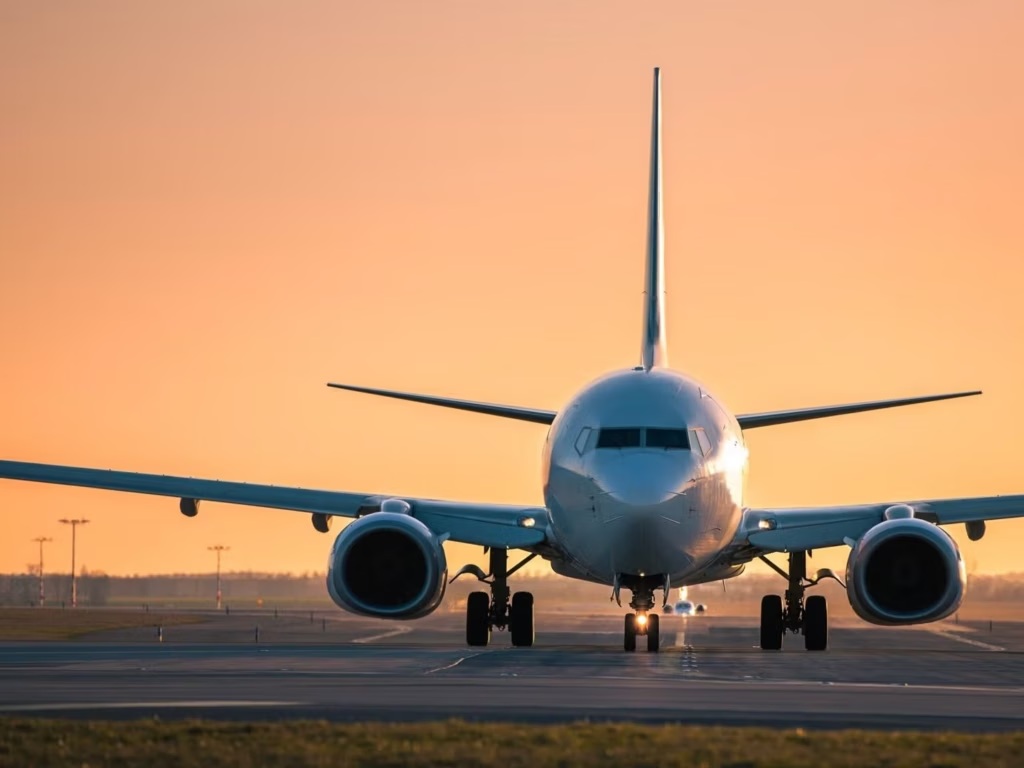

Travelers flying through Washington, D.C., over the Independence Day holiday are facing an unusually complicated summer schedule, with Ronald Reagan Washington National Airport preparing for major flight restrictions tied to America 250 celebrations near the National Mall.
Airport officials have warned that Reagan National Airport, known by its DCA code, will have no scheduled flights after noon on July 4. Terminal services will also operate on a reduced schedule until normal flight operations resume on July 5, creating a rare holiday travel disruption at one of the country’s most closely monitored airports.
The disruption is not simply the result of heavy July 4 passenger demand. It is linked to planned airspace restrictions around Washington as the capital hosts large-scale America 250 events, including fireworks, flyovers, aerial demonstrations, parachute jumps and rehearsals. The celebrations are expected to draw large crowds to central Washington while temporarily limiting how aircraft can move in and out of DCA.
Passengers booked through Reagan National during the holiday window are being urged to check airline alerts closely and review updates from Reagan National Airport before leaving for the airport. Even travelers whose flights are not scheduled on July 4 could see delays if aircraft and crews are affected by earlier restrictions.
Reagan National’s Location Makes July 4 Restrictions More Disruptive
Reagan National Airport is unusually close to the center of federal Washington. Its runways sit along the Potomac River, just across from the National Mall, the U.S. Capitol area, major monuments, government buildings and heavily secured airspace.
That location is convenient for travelers, but it also means the airport has less flexibility when major national events take place nearby. Aerial displays, fireworks zones, security operations and large public gatherings can require temporary flight restrictions that directly affect arrivals and departures.
For a normal July 4 celebration, short airspace pauses around fireworks are not unusual in Washington. This year’s America 250 programming is broader, with multiple events across the summer and a larger concentration of aerial activity around Independence Day. That is why the impact at DCA is expected to be more significant than a routine holiday delay.
July 3 and July 4 Are The Most Important Dates For DCA Travelers
The biggest travel impact is expected on July 4, when no flights are scheduled at Reagan National after noon. Travelers with morning flights should still allow extra time because airport road access, security screening patterns and airline operations may be affected by crowds and event planning across Washington.
July 3 may also bring complications. Planned rehearsals and event preparations are expected to require several hours of airspace restrictions during the day, which could cause temporary flight holds or schedule adjustments before the holiday itself.
Airport authorities and airlines have also flagged other summer event dates that may affect DCA operations. Travelers should pay particular attention to June 24-25, June 28, July 3-4, July 10 and August 22-23, when America 250-related activities and other high-profile events near the National Mall could create additional restrictions.
The listed dates do not mean every flight will be canceled or delayed. They do mean passengers should treat DCA schedules as more vulnerable than usual, especially if their trip includes a tight connection, a late-day departure or a return flight immediately after the holiday.
Airlines Have Adjusted Schedules, But Delays Can Still Spread
Some airline schedules have already been adjusted to avoid the most restrictive operating windows. That may reduce the number of last-minute cancellations, but it does not remove the risk of delays across the wider airline network.
Reagan National is a busy domestic airport used by business travelers, government workers, tourists and connecting passengers. Aircraft that arrive at DCA often continue to other cities later in the day. If one plane is held outside Washington or delayed on the ground, that disruption can carry into later flights in other markets.
This ripple effect is especially important during peak summer travel, when airline schedules are already stretched by full planes, weather risks and crew timing rules. Even a planned pause at one airport can become more complicated if thunderstorms, ground traffic or air traffic control limits develop at the same time.
Travelers following wider airport disruption patterns may also want to read this Swikblog report on flight delays at U.S. airports, which explains how pressure at one part of the system can quickly affect passengers elsewhere.
Travelers Should Check Flights Earlier Than Usual
Passengers flying through DCA around Independence Day should check their booking more often than they normally would. Airline apps, text alerts and email updates are usually the fastest way to spot gate changes, adjusted departure times, cancellations or rebooking options.
Anyone with a connection should look carefully at the time between flights. A short connection that might normally feel safe could become risky if the first leg is delayed by airspace restrictions or if the aircraft is arriving from Washington after an earlier hold.
Travelers should also look for airline-issued travel waivers. When major disruptions are expected, airlines sometimes allow passengers to change flights without the usual fees or fare differences, depending on the route, travel dates and ticket rules.
For some passengers, using another regional airport may be worth considering. Washington Dulles International Airport and Baltimore/Washington International Thurgood Marshall Airport may offer alternatives, though availability will depend on the airline, route and timing. Switching airports can also add ground transportation costs, so passengers should compare the full trip rather than just the flight time.
Read More
Ground travel around Washington may also be slower than usual. Large crowds near the National Mall, road closures, security checkpoints and event-related traffic could affect how long it takes passengers to reach airport terminals, especially on July 3 and July 4.
The airport warning does not mean every DCA flight this summer will be disrupted. But the July 4 schedule change is significant: with no scheduled flights after noon and reduced terminal services until July 5, passengers using Reagan National should plan with more caution than they would for a normal holiday weekend.
For travelers with fixed plans, the safest approach is to confirm flight status repeatedly, arrive with extra time, keep airline notifications turned on and avoid relying on tight same-day connections through Washington during the most restricted event periods.

Make Swikblog your go-to source on Google for reliable updates, smart insights, and daily trends.