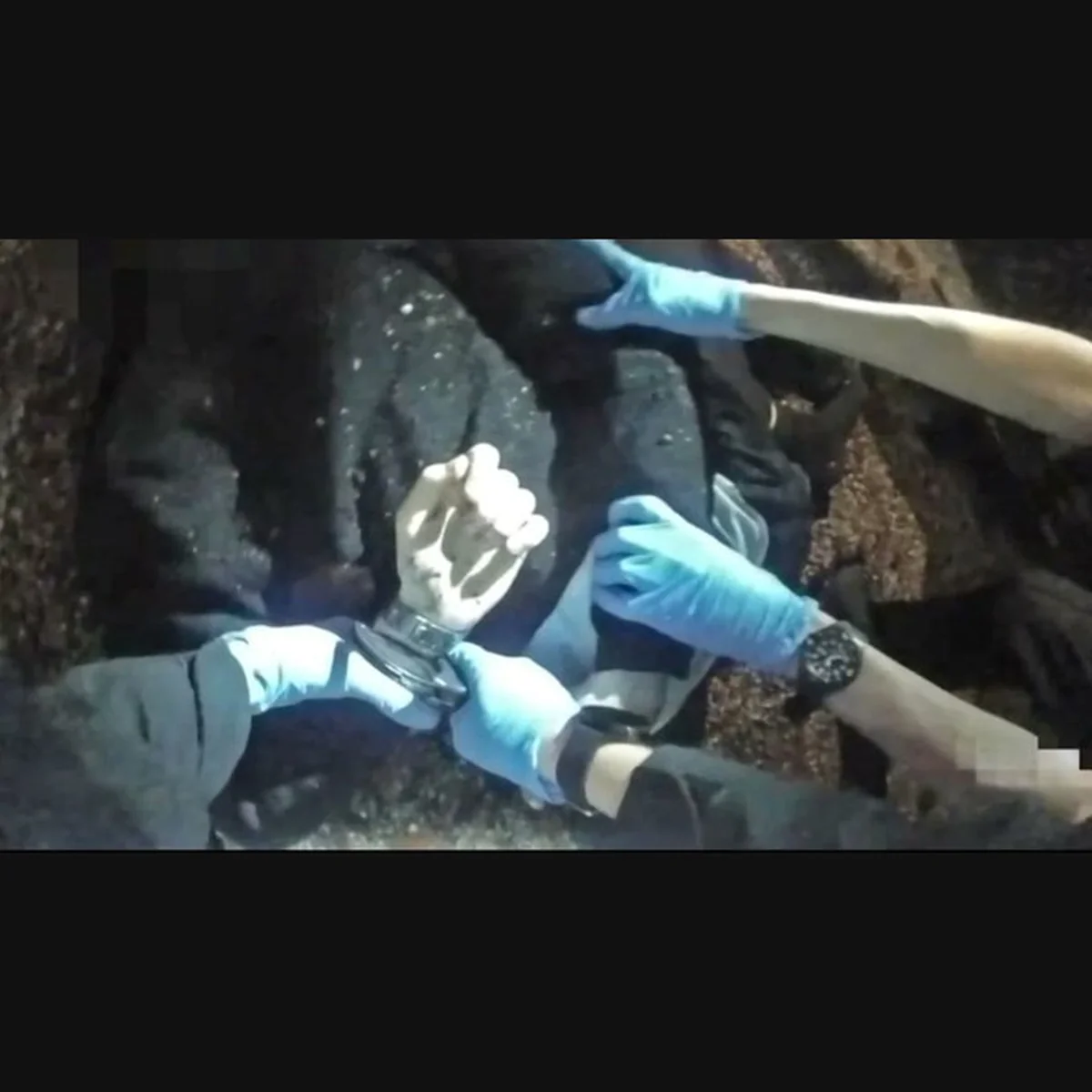

What began as a routine run toward the finish line quickly turned into one of the most talked-about moments of the Tour de Suisse Femmes after Slovenian cyclist Urska Žigart suffered a heavy crash that left her hospitalized with a fractured jaw.
The 29-year-old rider went down during Stage 2 in Locarno after striking a speed bump at race pace near the start of the final kilometre. With riders accelerating toward the finish, the incident unfolded in seconds but carried consequences that extended far beyond the race itself.
Žigart’s crash immediately drew attention across the cycling world, not only because of its severity but also because her partner, four-time Tour de France champion Tadej Pogačar, learned about the accident shortly before beginning his own race on the same day.
High-Speed Fall Ends Stage 2 in Dramatic Fashion
The accident occurred as the peloton approached the closing stages of the race. Riding at more than 50 km/h, Žigart lost control after hitting a speed bump and crashed heavily onto the road.
Witnesses saw the Slovenian rider roll and slide across the tarmac before coming to a stop. The sudden fall left riders behind with little room to react, triggering additional crashes as competitors attempted to avoid the incident.
Crashes in the final kilometre are often among the most dangerous in professional cycling because riders are packed closely together and travelling at maximum speed. Even a minor obstacle can become a major hazard under those conditions.
Medical Update Brings Some Relief
Following the crash, Žigart was transported to hospital for further examination. Her team later confirmed that she had suffered a fractured jaw.
Despite the violent nature of the incident, medical assessments reportedly found no additional injuries. That update provided a measure of relief for teammates, competitors and fans who watched the crash unfold.
Doctors and team medical staff are now evaluating the best treatment approach and recovery timeline. While a jaw fracture is a significant injury, avoiding additional trauma was an encouraging outcome given the speed of the impact.
Recovery from facial injuries can present unique challenges for professional cyclists. Nutrition, hydration and training routines often require adjustments, particularly during the initial healing period.
Tadej Pogačar Receives the News Before Racing
The story took on an emotional dimension because of Žigart’s relationship with Tadej Pogačar, one of the sport’s biggest stars.
Pogačar was preparing for the men’s Tour de Suisse stage at the same venue when he was informed about the crash. According to UAE Team Emirates-XRG manager Mauro Gianetti, the news arrived shortly before the start.
Gianetti later revealed that he personally checked on Žigart before reassuring Pogačar that, although the crash was serious, medical examinations had not revealed further major injuries.
The team manager acknowledged the emotional difficulty of the situation, noting that Pogačar understandably did not appear to be in the mindset to race after hearing what had happened.
Even so, the Slovenian champion completed the stage, successfully defended his overall lead, and then headed to the hospital to be with Žigart.
Renewed Attention on Safety in Professional Cycling
Incidents involving road furniture have become an increasingly important topic in professional cycling. Speed bumps, traffic islands and other fixed obstacles can create additional risks, particularly near sprint finishes where riders are competing for position at high speed.
Race organizers typically review courses extensively before competition begins, but crashes involving road features continue to spark discussion throughout the sport.
The issue has received growing attention from the Union Cycliste Internationale (UCI), which has introduced a range of safety initiatives in recent years aimed at reducing risks for riders.
Read More
Concerns about race safety have surfaced repeatedly in major events. Earlier this season, cycling fans debated course management and rider protection during the Pogačar railway crossing controversy at Flanders 2026, another incident that generated widespread discussion across the sport.
What Comes Next for Urska Žigart?
Attention now turns to Žigart’s recovery and the treatment plan recommended by specialists. Her team has emphasized that her health and wellbeing remain the immediate priority.
While the fractured jaw is expected to keep her away from competition in the short term, the absence of other injuries has offered optimism that she can focus fully on rehabilitation.
For many cycling fans, the crash served as a reminder of how quickly fortunes can change in elite racing. One moment, riders are battling for position near the finish; the next, an unexpected obstacle can alter the course of an athlete’s season.
As the Tour de Suisse continues, the cycling community will be watching closely for further updates on Žigart’s condition and hoping for a smooth recovery from one of the most dramatic incidents of this year’s race.

Make Swikblog your go-to source on Google for reliable updates, smart insights, and daily trends.