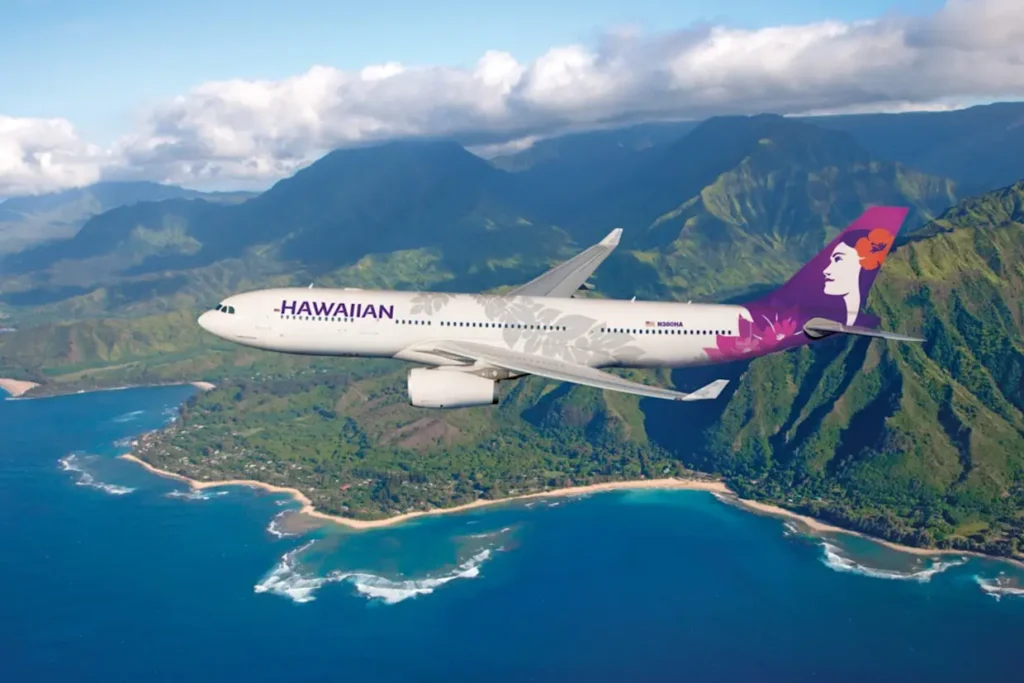

Hawaiian Airlines is making one of the biggest changes to its economy-class experience in years, ending complimentary meal service for most passengers traveling between Hawaii and the U.S. mainland.
Beginning July 1, 2026, Main Cabin travelers on most domestic transpacific routes will no longer receive the free meal that has traditionally been included with their ticket. Instead, the airline is introducing a pre-order dining program that allows passengers to purchase meals before departure.
The move places Hawaiian Airlines in line with a broader airline industry trend toward paid onboard dining and comes at a time when carriers are increasingly looking for ways to reduce waste, control costs, and offer more customized travel experiences.
For many travelers, however, the change represents the loss of one of the few remaining complimentary perks still available on longer domestic flights in the United States.
Which Hawaiian Airlines Flights Are Affected?
The new policy applies to most domestic transpacific flights between Hawaii and mainland U.S. destinations.
There is one major exception. Hawaiian Airlines has confirmed that Main Cabin passengers traveling on the Honolulu–New York (JFK) route will continue to receive a complimentary meal. Given that the flight is among the longest domestic services operated by a U.S. airline, the carrier has chosen to maintain meal service on that route.
Passengers flying between Hawaii and cities such as Los Angeles, San Francisco, Seattle, Las Vegas, Phoenix, Portland, San Diego, Sacramento, Salt Lake City, Austin, Boston and other mainland destinations should expect the new paid dining model to apply.
What Replaces the Free Economy Meal?
Rather than serving the same complimentary sandwich to all passengers, Hawaiian Airlines is introducing a menu featuring Hawaii-inspired meals developed with local culinary partners.
The airline says the expanded menu will offer travelers more variety while showcasing flavors associated with the islands.
Among the featured options are dishes created by Maui-based chef Sheldon Simeon, a restaurateur and James Beard Award finalist.
Meal choices include crispy mochiko chicken with garlic noodles priced at $16.99, barbecue teriyaki chicken bento served over rice, and corned beef hash with eggs.
For morning departures between 6 a.m. and 9:59 a.m., passengers can choose breakfast options such as Hawaiian bread French toast with eggs and Portuguese sausage for $15.99, banana pancakes served with scrambled eggs and Portuguese sausage for $15.99, coconut overnight oats for $10.99, and a cheese omelet for $13.99.
Flights departing between 10 a.m. and 8:29 p.m. will feature lunch and dinner selections, including a grilled chicken bánh mì made with bread from Honolulu’s La Tour Bakehouse and a teriyaki cheeseburger topped with American cheese and house-made pickles.
Most menu items are priced between $10.99 and $16.99.
Passengers Must Order Before Departure
The new system requires advance planning. Hawaiian Airlines says passengers can begin selecting meals up to two weeks before departure, with ordering remaining available until 20 hours before takeoff.
Travelers who fail to place an order before the deadline should not assume a full meal will be available onboard. The pre-order model is designed to match catering more closely with customer demand.
The airline already offers meal pre-selection for First Class passengers, and complimentary meal service will continue in the premium cabin.
Why Hawaiian Airlines Is Making This Change
According to the airline, the shift toward pre-order dining is intended to reduce food and packaging waste while giving passengers more choice than the previous one-size-fits-all meal offering.
Food waste has become a growing concern throughout the aviation industry. Airlines routinely load extra meals to account for changing passenger numbers and operational uncertainties, resulting in food that often goes unused.
By requiring travelers to select meals in advance, Hawaiian Airlines believes it can better align meal production with actual demand while offering a wider range of dishes.
The strategy also reflects the continued evolution of airline business models, where optional services increasingly generate additional revenue while allowing carriers to keep base fares competitive.
What Economy Passengers Still Receive for Free
Although complimentary full meals are disappearing from most affected routes, passengers will not be left entirely without refreshments.
Hawaiian Airlines says Main Cabin guests will continue receiving a welcome beverage, a locally produced snack, and a signature “mahalo” sweet treat before arrival.
For travelers who previously relied on the complimentary meal during a five- or six-hour flight, however, the onboard experience will look noticeably different after July 1.
What the Change Means for Travelers
Hawaiian Airlines had remained one of the last major U.S. carriers still offering complimentary meals to economy passengers on many domestic routes. Its decision highlights how quickly airline service standards have evolved over the past decade.
The financial impact may be modest for individual travelers, but it can add up for families. A family of four purchasing meals priced between $10.99 and $16.99 could spend roughly $44 to $68 extra each way, turning what was once an included benefit into an additional travel expense.
The change may also affect international passengers connecting through Honolulu. Travelers arriving from Australia, New Zealand, Japan, South Korea and other international markets may continue receiving meals on long-haul international sectors, but onward mainland U.S. flights could now require a separate meal purchase.
For travelers planning upcoming trips, it may be worth reviewing both airline policies and broader travel requirements before departure. Recent changes affecting U.S. airport security checkpoints are also expected to influence the travel experience at several airports this year.
Part of a Larger Airline Industry Trend
Hawaiian Airlines is not alone in reassessing complimentary onboard services. Several airlines have reduced or eliminated free meals in economy class over the past few years as they seek to balance operating costs with passenger expectations.
Read More
Virgin Australia ended complimentary meals on domestic economy flights in 2021, while some U.S. carriers have scaled back food and beverage service on shorter routes.
What makes Hawaiian Airlines’ decision notable is that it was among the few remaining airlines still providing a complimentary meal on many domestic flights of significant duration.
Starting July 1, passengers flying between Hawaii and most mainland U.S. destinations will need to decide whether to pre-order a meal, bring their own food, or rely on the complimentary snacks provided onboard. For many frequent travelers, it marks the end of an era when a meal was simply part of the ticket.
For additional passenger rights and travel information, travelers can review guidance from the U.S. Department of Transportation.

Make Swikblog your go-to source on Google for reliable updates, smart insights, and daily trends.