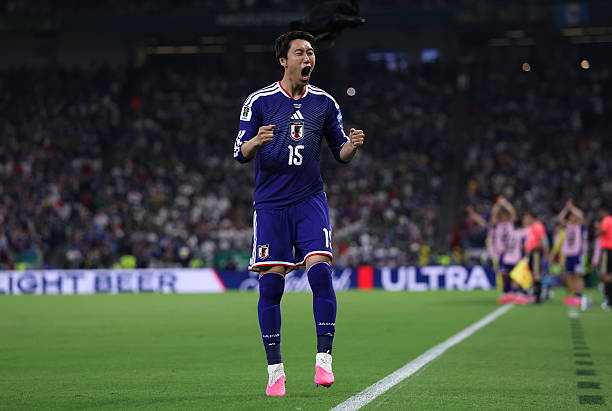

Daichi Kamada has quickly become Japan’s most decisive World Cup problem-solver. After rescuing a point with a late equaliser against the Netherlands, the Crystal Palace midfielder struck again against Tunisia, scoring in the 4th minute to give Japan an early 1-0 lead at Estadio Monterrey.
The goal gave Japan the perfect start in a Group F match carrying historic weight. Tunisia vs Japan was also being marked as the 1,000th match in World Cup history, turning Kamada’s early finish into a milestone moment as well as a crucial tournament goal.
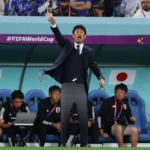
For Japan, the timing mattered. Hajime Moriyasu’s side had shown resilience in their opening 2-2 draw with the Netherlands, when Kamada struck late to level the match. Against Tunisia, he did not wait until the closing minutes. He arrived early, finished quickly and immediately pushed the pressure onto a Tunisia team already trying to recover from a heavy opening defeat.
Match summary: Japan started sharply against Tunisia and went ahead through Daichi Kamada in the 4th minute. The early goal rewarded Japan’s front-foot approach and forced Tunisia into a difficult chase almost immediately. Tunisia entered the match under pressure after a heavy defeat to Sweden, while Japan carried confidence from their comeback draw against the Netherlands, where Kamada had scored the late equaliser. The match also carried extra significance as the 1,000th game in World Cup history.
Who is Daichi Kamada?
Daichi Kamada is a Japanese midfielder born in Iyo, Ehime, on 5 August 1996. He plays for Crystal Palace in the Premier League and the Japan national team, usually operating as an attacking midfielder, central midfielder or advanced No. 8 depending on the system.
Kamada’s official Crystal Palace profile describes him as a Japan international who joined the club in 2024 after leaving Lazio, bringing top-level experience from Germany, Italy and international football.
His route to the World Cup began far from Europe’s biggest stages. Kamada played youth football at Kids FC, Gamba Osaka’s junior setup and Higashiyama High School before beginning his professional career with Sagan Tosu in 2015. His talent was clear early: he was technically sharp, calm under pressure and unusually good at finding space between midfield and attack.
In 2017, Kamada made the major step abroad by joining Eintracht Frankfurt. That move shaped his career. German football sharpened his pressing, tactical awareness and ability to play at high tempo, while a loan spell at Sint-Truiden in Belgium gave him regular attacking responsibility and helped unlock his scoring confidence.
At Frankfurt, Kamada became one of the most important Japanese players in Europe. He was part of the side that won the DFB-Pokal in 2018 and the UEFA Europa League in 2022, a run that turned him into a familiar name for fans across Germany and beyond.
That Europa League triumph remains one of the defining achievements of his club career. Under Oliver Glasner, Kamada developed into a midfielder who could do more than create chances. He learned to press in a structured system, cover space intelligently and still arrive in decisive attacking areas.
That same connection later followed him to England. After a season with Lazio, Kamada moved to Crystal Palace in 2024 and reunited with Glasner, the manager who had helped bring the best out of him at Frankfurt. At Palace, his value has often been about tactical intelligence rather than headline numbers: linking play, pressing in the right moments and helping the team keep balance between midfield and attack.
Japan role, quiet personality and World Cup timing
Kamada is not the loudest star in Japan’s squad, but he has become one of the most important. His game is built on calm decisions, clever positioning and the ability to appear in the right place at the right time. That is exactly what made his goals against the Netherlands and Tunisia so important.
Against the Netherlands, he scored in the 89th minute to rescue a 2-2 draw. Against Tunisia, he scored in the 4th minute to give Japan control almost immediately. Those two moments show the range of his tournament value: he can save a match late or shape one early.
His playing style fits Japan’s wider identity under Moriyasu. Japan are organised, quick in transition and comfortable pressing in coordinated waves. Kamada gives that structure an extra layer because he understands when to slow the game down and when to make a direct run into the box.
There is also a deeper tactical reason he has become so useful. Kamada has spent years learning European systems in Germany, Italy and England. That experience helps him read different opponents quickly. Against Tunisia, a team trying to stay compact after their difficult opening match, his early movement gave Japan a way through before the game could become tense.
His rise has not always been smooth. Kamada’s move to Lazio did not fully settle, and his early Crystal Palace period required adjustment to the pace and physicality of the Premier League. But his career has repeatedly shown a pattern: when placed in a system that suits his intelligence, he becomes a player who can decide matches without needing to dominate the ball.
That is why his World Cup impact feels so important. Japan’s squad has several eye-catching attacking names, but Kamada brings a different kind of threat. He is efficient rather than flashy, composed rather than chaotic, and often at his best when a match needs one clean decision.
The Tunisia goal also gave Japan a strong platform in Group F. Sweden’s earlier win over Tunisia had put pressure on both Japan and the Netherlands, and Japan needed a result to strengthen their route toward the knockout stage. Kamada’s early strike gave them exactly the start they wanted.
For readers following Japan’s tournament, his back-to-back scoring moments now make him one of the central figures in their campaign. The equaliser against the Netherlands showed his nerve; the early goal against Tunisia showed his instinct. Together, they explain why Kamada remains one of Japan’s most trusted big-match midfielders.
His career has moved from Ehime to Sagan Tosu, Frankfurt, Sint-Truiden, Lazio, Crystal Palace and now another World Cup spotlight. But the story is becoming simpler with every match: when Japan need a decisive touch, Daichi Kamada keeps finding it.

Make Swikblog your go-to source on Google for reliable updates, smart insights, and daily trends.